Forecast
Delhi
Local time--:--
Asia/KolkataWeather Forecast
Delhi, IndiaOpen-Meteo forecast.
Delhi city overview
Delhi works best as a base in India when you anchor days around Red Fort, India Gate and Qutub Minar. Use those sights to understand the city's history, street life and visitor rhythm. Delhi Indira Gandhi handles the main arrival flow, so hotel choice should balance the centre, transfer time and day-trip plans.
Worth seeing
Red Fort
Red Fort is a clear heritage marker in Delhi, best used as a fixed point when grouping nearby streets, monuments and viewpoints.
View on map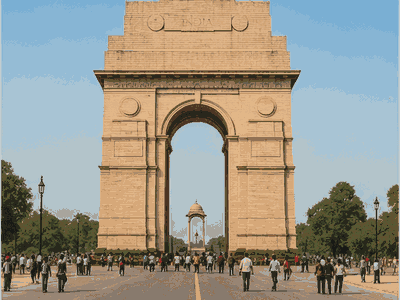
India Gate
India Gate is a clear heritage marker in Delhi, best used as a fixed point when grouping nearby streets, monuments and viewpoints.
View on map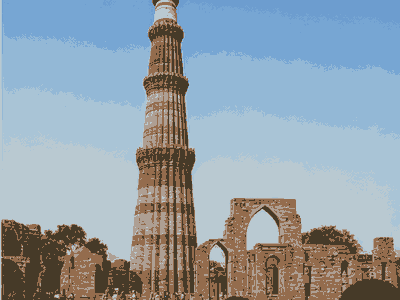
Qutub Minar
Qutub Minar is a named stop in Delhi worth keeping on the route when it fits the day's transport, timing and neighborhood plan.
View on map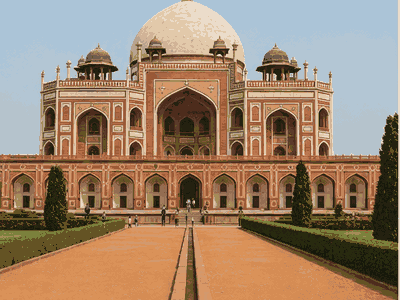
Humayun's Tomb
Humayun's Tomb is a named stop in Delhi worth keeping on the route when it fits the day's transport, timing and neighborhood plan.
View on map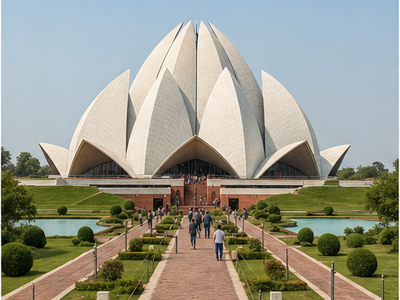
Lotus Temple
Lotus Temple anchors the historic and ceremonial side of Delhi, making it a practical stop for architecture, local memory and orientation.
View on map
Chandni Chowk
Chandni Chowk is a named stop in Delhi worth keeping on the route when it fits the day's transport, timing and neighborhood plan.
View on mapStay overview
Start with City centre for the easiest first Delhi stay, then compare Old Town and Waterfront when price, nightlife, quieter evenings or transfer timing matter more than being beside every major sight.
Hotels & areas
Delhi hotel choice is mostly about repeat journeys: use City centre for sightseeing, Old Town for a different local base, and Waterfront or Airport area when views, parking, airport timing or longer stays matter.
City centre
City centre is the most practical first base in Delhi, keeping main sights, restaurants and short local transfers close.
Best for: first visits, sightseeing, restaurantsSee hotel optionsOld Town
Old Town is the most practical first base in Delhi, keeping main sights, restaurants and short local transfers close.
Best for: first visits, sightseeing, restaurantsSee hotel optionsWaterfront
Waterfront suits travellers who want views, evening walks and a calmer base while still keeping central Delhi reachable.
Best for: views, quieter evenings, walksSee hotel optionsAirport area
Airport area works mainly for early departures, late arrivals or car pickup, not for a first Delhi sightseeing base.
Best for: early flights, late arrivals, car pickupSee hotel optionsFlights & airports
Indira Gandhi International Airport (DEL) arrival plan
- Indira Gandhi International Airport (DEL)About 17 km from the centre
Compare airport access against hotel location, arrival time, rental car pickup, late flights and onward driving before choosing the first night base.
- Noida International Airport (DXN)About 64 km from the centre
Compare airport access against hotel location, arrival time, rental car pickup, late flights and onward driving before choosing the first night base.
Rental cars
Delhi day-trip car use
Do not rent a car for central Delhi unless parking and traffic are part of the plan; use one mainly for regional day trips.
Compare rental carsTravel tips
Best base
Choose City centre for a first stay because it keeps main sights, restaurants and practical local movement close.
Airport timing
Leave extra time for Delhi Indira Gandhi, especially for early flights, late arrivals, traffic or unfamiliar transfer routes.
Local movement
Plan each day in clusters around Red Fort and India Gate so transfers do not consume the best sightseeing hours.
Day trips
Keep one flexible slot for nearby routes from Delhi, checking weather, transport and opening hours before committing.
Upcoming events
City history
At 72.5 m (238 ft), the Qutb Minar, a UNESCO World Heritage Site in Delhi, was completed during the reign of Sultan Illtutmish in the 13th century.
Tomara Rajput King Anang Pal built the Lal Kot and several temples in 1052 CE.
The Chauhan Rajputs under Vigraharaja IV conquered Lal Kot in the mid-12th century and renamed it Qila Rai Pithora. Late medieval period Prithviraj Chauhan was defeated in 1192 by Muhammad Ghori in the second.
However, the recovery was short-lived and the sultanate was destroyed in 1526 by Babur, founder of the Mughal dynasty. Early modern period In 1526, Babur, a descendant of Genghis Khan and Timur from the.
Shah Jahan built the seventh city of Delhi that bears his name Shahjahanabad, which served as the capital of the Mughal Empire from 1638 and is today known as the Old City or Old.
The city was sacked again in 1757 by the forces of Ahmad Shah Durrani, although it was not annexed by the Afghan Empire and being its vassal state under the Mughal emperor.
In 1911, it was announced that the capital of the British Indian Empire was to be transferred from Calcutta to Delhi.
New Delhi was officially declared as the capital of the Union of India after the country gained independence on 15 August 1947. Partition and post-independence During the partition of India, around five hundred thousand.
The States Reorganisation Act, 1956 created the Union Territory of Delhi from its predecessor, the Chief Commissioner's Province of Delhi.
The Constitution (Sixty-ninth Amendment) Act, 1991 declared the Union Territory of Delhi to be formally known as the National Capital Territory of Delhi.
Asher, the topographical description of the Mahabharata matches the area of Purana Qila, a 14th-century CE fort of the Delhi sultanate, but the analogy does not go much further.
Qutb-ud-din Aibak, was given the responsibility of governing the conquered territories of India after Ghori returned to his capital, Ghor.
They built several forts and townships that are part of the seven cities of Delhi.
In an attempt to bring the whole of the Deccan under control, he moved his capital to Daulatabad, Maharashtra in central India.