Forecast
Rabat
Local time--:--
Africa/CasablancaWeather Forecast
Rabat, MoroccoOpen-Meteo forecast.
Rabat city overview
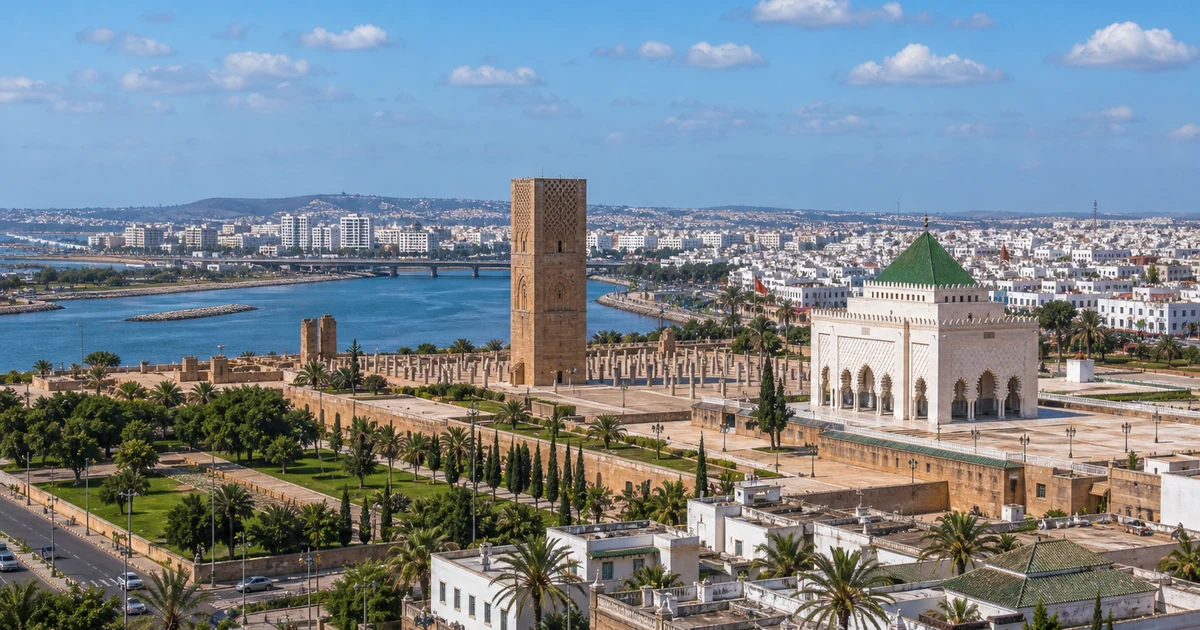
Rabat is Morocco's coastal capital, a calmer counterpart to Marrakech and Fes with royal palaces set among wide boulevards and gardens. First-time visitors should climb the unfinished Hassan Tower beside its mausoleum, wander the blue-and-white lanes of the Kasbah of the Udayas, and explore the Roman and Merinid ruins at Chellah. Rabat-Sale Airport sits just across the river, making the capital an easy, low-key base.
Worth seeing
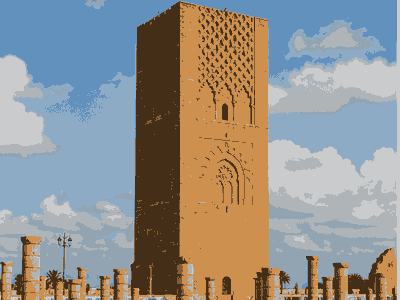
Hassan Tower
Hassan Tower is a clear heritage marker in Rabat, best used as a fixed point when grouping nearby streets, monuments and viewpoints.
View on map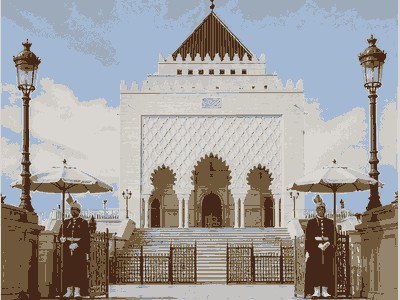
Mausoleum of Mohammed V
Mausoleum of Mohammed V is a named stop in Rabat worth keeping on the route when it fits the day's transport, timing and neighborhood plan.
View on map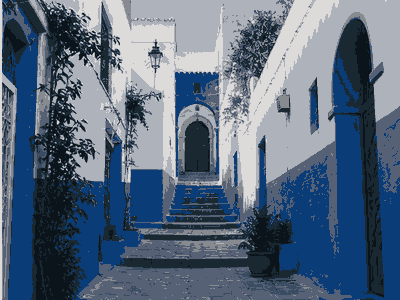
Kasbah of the Udayas
Kasbah of the Udayas is a named stop in Rabat worth keeping on the route when it fits the day's transport, timing and neighborhood plan.
View on map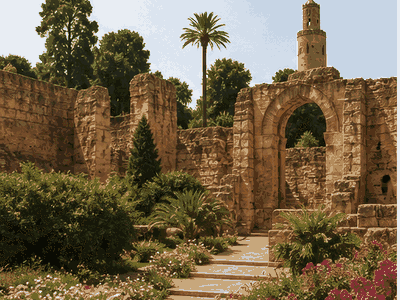
Chellah
Chellah is a named stop in Rabat worth keeping on the route when it fits the day's transport, timing and neighborhood plan.
View on map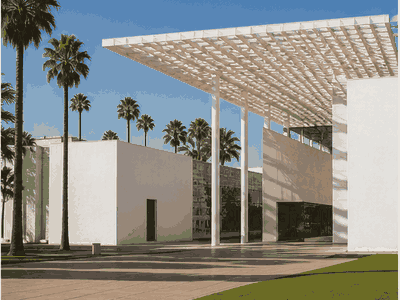
Mohammed VI Museum of Modern and Contemporary Art
Mohammed VI Museum of Modern and Contemporary Art is a key Rabat culture stop, useful for understanding local history, collections and rainy-day planning near the main sightseeing route.
View on map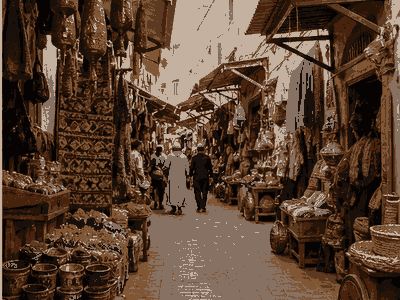
Rabat Medina
Rabat Medina is a clear heritage marker in Rabat, best used as a fixed point when grouping nearby streets, monuments and viewpoints.
View on mapStay overview
Stay in the Medina or Hassan district for walkable access to the Kasbah of the Udayas, Hassan Tower and the train station, or choose Agdal for a quieter, more residential base with modern cafes and shops. Rabat's compact size makes most areas easy to combine.
Hotels & areas
Rabat's Medina and Hassan district hold guesthouses and mid-range hotels close to the main sights, while Agdal offers newer business hotels suited to longer stays or government-related visits.
Kasbah of the Udayas
The Kasbah of the Udayas is a fortified blue-and-white quarter overlooking the river mouth, with narrow lanes, a museum and Andalusian gardens.
Best for: history, views, walkingSee hotel optionsMedina
Rabat's Medina is smaller and calmer than Fes or Marrakech, with souks, guesthouses and easy access to the train station.
Best for: souks, budget stays, convenienceSee hotel optionsAgdal
Agdal is a modern residential and business district with shops, cafes and government offices, popular with longer-stay visitors.
Best for: business stays, diningSee hotel optionsHassan
Hassan is the central district around the Hassan Tower and its mausoleum, walkable to the Medina and train station.
Best for: sightseeing, central accessSee hotel optionsFlights & airports
Rabat-Salé Airport (RBA) arrival plan
- Rabat-Salé Airport (RBA)About 9 km from the centre
Compare airport access against hotel location, arrival time, rental car pickup, late flights and onward driving before choosing the first night base.
- Mohammed V International Airport (CMN)About 100 km from the centre
Compare airport access against hotel location, arrival time, rental car pickup, late flights and onward driving before choosing the first night base.
Rental cars
Rabat day-trip car use
A rental car is useful for day trips along the coast or to nearby Meknes, but unnecessary for getting around compact central Rabat.
Compare rental carsTravel tips
Combine with Sale
Cross the Bou Regreg river by tram or boat to the sister city of Sale for a quieter medina and fewer crowds.
Visit Chellah for the storks
Time a Chellah visit for late afternoon to see storks nesting on the ruined minaret alongside the Merinid tombs.
Dress respectfully at the mausoleum
Dress modestly when visiting the Mohammed V Mausoleum, an active royal site with guards in traditional dress.
Use the tram
Rabat's tram line is an easy, inexpensive way to move between the Medina, Agdal and Sale without needing a taxi.
Nearby ideas
Town · about 20 min · tram line 2 over the Bou Regreg
Salé
The corsair town across the river, with a medersa of carved cedar and far fewer visitors.
View on mapNature · about 50 min · train north from Rabat Ville
Kenitra and the Sidi Boughaba lake
A freshwater lake behind the dunes, with marbled teal and flamingos in winter.
View on mapCity history
1143–1145) built a new ribat on the site of the current kasbah as part of his efforts to hold back the Almohads.
In 1150 or 1151 the Almohad caliph Abd al-Mu'min built a new kasbah (citadel) to replace the former ribat, within which he included a palace and a mosque.
This name is short for رباط الفتح (Ribāṭu al-Fatḥ) meaning the ribat of conquest or stronghold of victory—a title given by the Almohads when they established the city as a naval base in 1170..
1184–1199) embarked on an ambitious project to construct a new fortified imperial capital, called al-Mahdiyya or Ribat al-Fath, on the site of what is now the medina (old city) of Rabat, with new walls.
In 1515 Leo Africanus reported that Rabat had declined so much that only 100 inhabited houses remained.
1672–1727) expanded the kasbah southward and built a royal residence within it towards the end of the 17th century (it serves as a museum today).
1757–1790), a new royal palace, the Dar al-Makhzen, was established in the southwest part of the Almohad walled area towards the end of the 18th century.
1792–1822) built another palace along the seaside called Dar al-Bahr and built new mosques such as the Moulay Slimane Mosque.
1822–1859) further developed and completed the Dar al-Makhzen palace in the southwest corner of this enclosure.
However, Sala began to be abandoned in the 5th century and was mostly in ruins when the Muslim Arabs arrived in the 7th century and established Islamic influence in the region. Medieval Islamic period.
It was controlled by the ancient Berber Mauretanian Kingdom until it was formally annexed by Rome in the first century BC.
During the Marinid dynasty period (13th to 15th centuries), the town of Salé across the river grew more important than the settlements of the south bank.
The most important demographic shift after independence was the exodus of foreign nationals and their replacement by Moroccans, who gradually took over the jobs and functions that the foreigners had occupied.
Following World War II, the United States had established a military presence in Rabat at the former French air base.