Forecast
Marrakech
Local time--:--
Africa/CasablancaWeather Forecast
Marrakech, MoroccoOpen-Meteo forecast.
Marrakech city overview
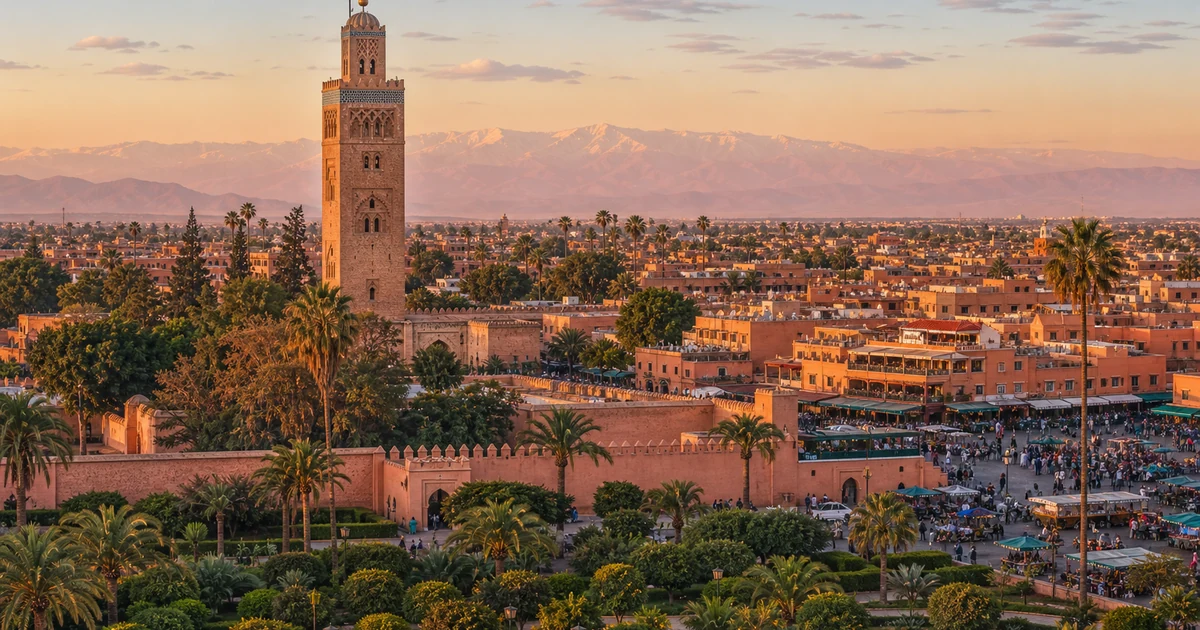
Marrakech is Morocco's red-walled imperial city, where the medina's Jemaa el-Fnaa square turns from a daytime market into a nightly spectacle of food stalls and performers. First-time visitors should look up at the Koutoubia Mosque's minaret, wander the tiled courtyards of Bahia Palace, and cool off among the cacti of Majorelle Garden. Marrakech Menara Airport sits minutes from the medina, making the city an easy first or last stop in Morocco.
Worth seeing
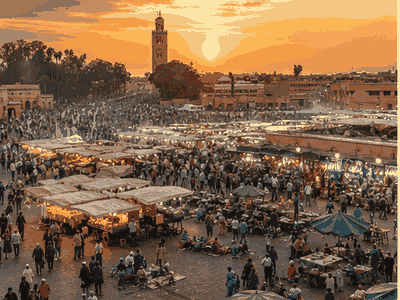
Jemaa el-Fnaa
Jemaa el-Fnaa is a named stop in Marrakech worth keeping on the route when it fits the day's transport, timing and neighborhood plan.
View on map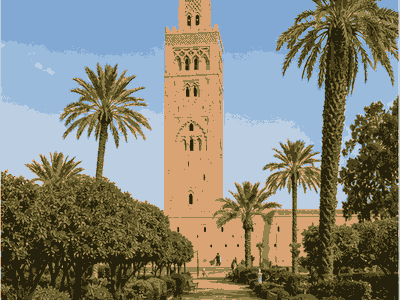
Koutoubia Mosque
Koutoubia Mosque anchors the historic and ceremonial side of Marrakech, making it a practical stop for architecture, local memory and orientation.
View on map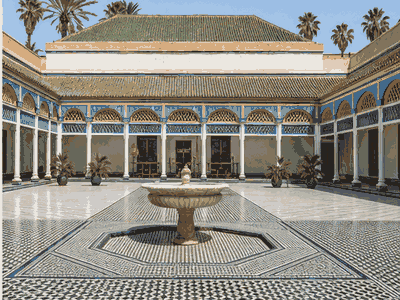
Bahia Palace
Bahia Palace anchors the historic and ceremonial side of Marrakech, making it a practical stop for architecture, local memory and orientation.
View on map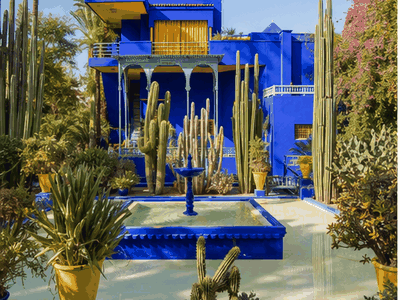
Majorelle Garden
Majorelle Garden adds outdoor time to a Marrakech stay, with open space, views or waterfront breathing room between denser city sights.
View on map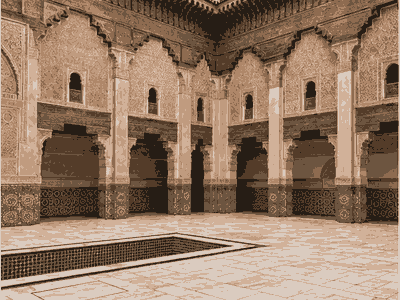
Ben Youssef Madrasa
Ben Youssef Madrasa is a named stop in Marrakech worth keeping on the route when it fits the day's transport, timing and neighborhood plan.
View on map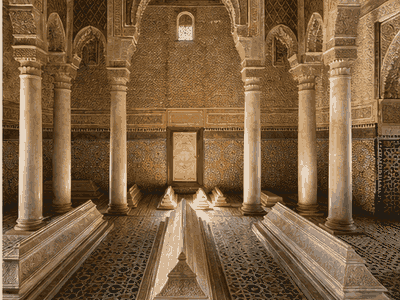
Saadian Tombs
Saadian Tombs is a named stop in Marrakech worth keeping on the route when it fits the day's transport, timing and neighborhood plan.
View on mapStay overview
Stay inside the Medina for a classic riad experience close to Jemaa el-Fnaa and Bahia Palace, or choose Gueliz for modern restaurants near Majorelle Garden. Hivernage and Palmeraie suit travelers wanting resort-style hotels and pools outside the old city walls.
Hotels & areas
Riads inside the Medina offer the most atmospheric stays near the souks and Koutoubia Mosque, while Gueliz and Hivernage suit visitors wanting swimming pools, modern dining and easier vehicle access than the old city allows.
Medina
The Medina is Marrakech's walled old city, centred on Jemaa el-Fnaa square and packed with souks, riads and historic monuments.
Best for: history, souks, riadsSee hotel optionsGueliz
Gueliz is the modern new town west of the medina, with contemporary restaurants, boutiques and Majorelle Garden nearby.
Best for: dining, shopping, modern hotelsSee hotel optionsHivernage
Hivernage is a leafy district of resort-style hotels and nightclubs between the medina and Gueliz, popular for longer stays.
Best for: resort hotels, nightlifeSee hotel optionsPalmeraie
Palmeraie is Marrakech's palm-grove suburb of villas and luxury resorts, a quieter, spread-out option outside the city walls.
Best for: luxury resorts, golf, quiet staysSee hotel optionsFlights & airports
Marrakesh Menara Airport (RAK) arrival plan
- Marrakesh Menara Airport (RAK)About 5 km from the centre
Compare airport access against hotel location, arrival time, rental car pickup, late flights and onward driving before choosing the first night base.
Rental cars
Marrakech day-trip car use
A rental car is unnecessary inside the Medina's pedestrian lanes, but useful for day trips to the Atlas Mountains or Essaouira on the coast.
Compare rental carsTravel tips
Visit Jemaa el-Fnaa at dusk
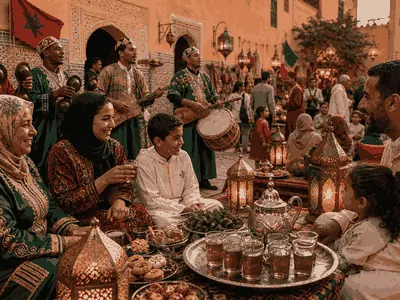
Arrive at Jemaa el-Fnaa around sunset to see the square fill with food stalls, musicians and storytellers as the day cools.
Book Majorelle Garden ahead
Reserve a timed ticket for Majorelle Garden in advance, since the small garden regularly sells out during peak season.
Negotiate in the souks
Expect to bargain for carpets, lamps and leather goods in the Medina's souks, where first-quoted prices are rarely final.
Plan an Atlas day trip
Set aside a full day for the nearby Atlas Mountains or Ourika Valley if the itinerary allows time beyond the city.
Nearby ideas
Mountain · about 1 h · grand taxi or bus south on the R2017
Ourika Valley
A river valley into the High Atlas with Berber villages and seven waterfalls at Setti Fatma.
View on mapNature · about 50 min · car south-west on the R203
Lalla Takerkoust
A reservoir below the Atlas used for swimming and kayaking, with camel rides on the shore.
View on mapNature · about 40 min · car south-west on the Guemassa road
Agafay desert
A stone desert of bare hills, close enough that camps run dinner under the stars.
View on mapCity history
The date most commonly used by modern historians is 1070, although 1062 is still cited by some writers. Imperial capital The Almoravids, a Berber dynasty seeking to reform Islamic society, ruled an emirate stretching.
He also fortified the city with city walls for the first time in 1126–1127 and expanded its water supply by creating the underground water system known as the khettara.
In 1147, shortly after the city's conquest, Abd al-Mu'min founded the Kutubiyya Mosque (or Koutoubia Mosque), next to the former Almoravid palace, to serve as the city's new main mosque.
1184–1199), possibly on the orders of his father Abu Ya'qub Yusuf, was responsible for building the Kasbah, a citadel and palace district on the south side of the city.
After al-Ma'mun's death in 1232, his widow attempted to forcibly install her son, acquiring the support of the Almohad army chiefs and Spanish mercenaries with the promise to hand Marrakesh over to them for.
El Badi Palace, begun by Ahmad al-Mansur in 1578, was made with costly materials including marble from Italy.
After the death in 1900 of the grand vizier Ba Ahmed, who had been designated regent until the designated sultan Abd al-Aziz became of age, and the 1906 Algeciras Conference, which limited Moroccan sovereignty.
While Marrakesh remained a major city, it lost its capital status to Fez and underwent a period of relative decline. Saadi period In the early 16th century, Marrakesh again became the capital of Morocco.
The latter episode set in motion the country's return to independence, when Morocco officially became المملكة المغربية (al-Mamlaka al-Maġribiyya, "The Maghreb Kingdom"), its name no longer referring to the city of Marrakesh.
They used Marrakesh as their capital and established its first structures, including mosques and a fortified residence, the Ksar al-Hajjar, near the present-day Kutubiyya Mosque.
It grew rapidly and established itself as a cultural and religious centre, supplanting Aghmat, which had long been the capital of Haouz.
Andalusi craftsmen from Cordoba and Seville built and decorated numerous monuments, importing the Cordoban Umayyad style characterised by carved domes and cusped arches.
When sufism was at the height of its popularity during the late 17th-century reign of Moulay Ismail, the festival of these saints was founded by Abu Ali al-Hassan al-Yusi at the request of the.
The tombs of several renowned figures were moved to Marrakesh to attract pilgrims, and the pilgrimage associated with the seven saints is now a firmly established institution.