Forecast
Tripoli
Local time--:--
Africa/TripoliWeather Forecast
Tripoli, LibyaOpen-Meteo forecast.
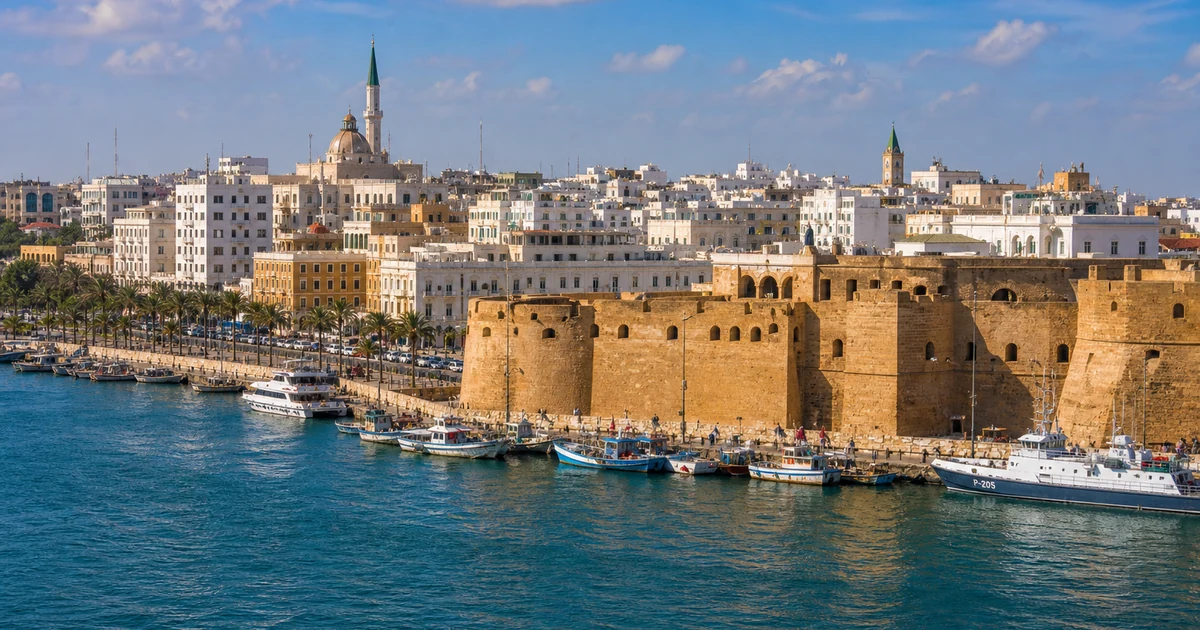
Tripoli city overview
Tripoli is Libya's Mediterranean capital, layered with Phoenician, Roman, Ottoman and Italian-era history around its old walled medina. Visitors should walk the Arch of Marcus Aurelius, explore the Red Castle housing the Libya National Museum, and browse the covered souks near Martyrs' Square. Mitiga International Airport currently handles the city's flights; check current travel advisories closely before planning any visit.
Worth seeing
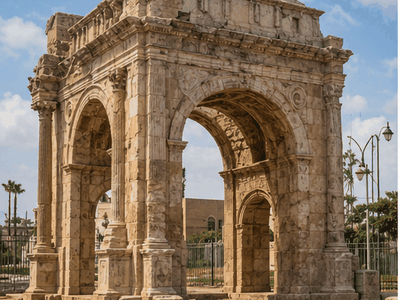
Arch of Marcus Aurelius
Arch of Marcus Aurelius is a clear heritage marker in Tripoli, best used as a fixed point when grouping nearby streets, monuments and viewpoints.
View on map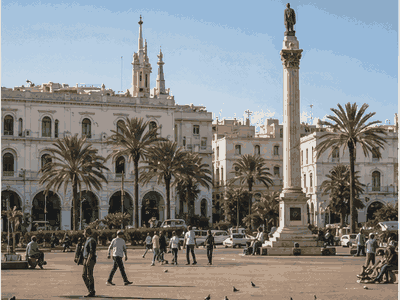
Martyrs' Square Tripoli
Martyrs' Square Tripoli gives Tripoli a strong culture stop for museums, exhibitions or local collections, and works best as an indoor anchor in the day's route.
View on map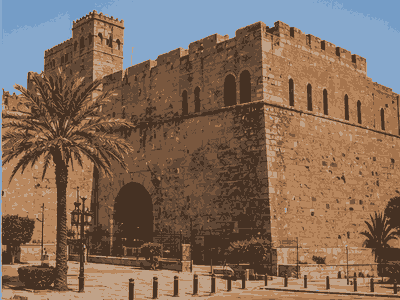
Red Castle Museum
Red Castle Museum is a key Tripoli culture stop, useful for understanding local history, collections and rainy-day planning near the main sightseeing route.
View on map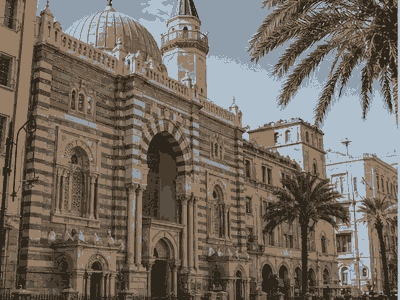
Gurgi Mosque
Gurgi Mosque anchors the historic and ceremonial side of Tripoli, making it a practical stop for architecture, local memory and orientation.
View on map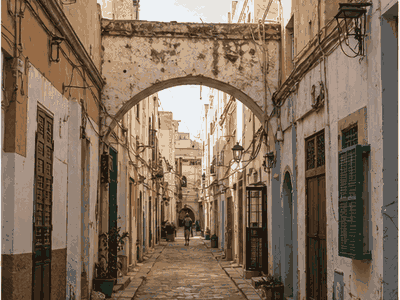
Tripoli Medina
Tripoli Medina is a clear heritage marker in Tripoli, best used as a fixed point when grouping nearby streets, monuments and viewpoints.
View on map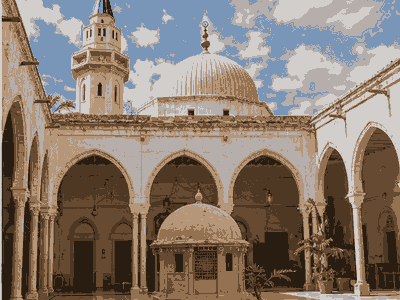
Karamanli Mosque
Karamanli Mosque anchors the historic and ceremonial side of Tripoli, making it a practical stop for architecture, local memory and orientation.
View on mapStay overview
Most visitors base themselves near the Medina or Martyrs' Square for walking access to the Arch of Marcus Aurelius and the Red Castle, while Gargaresh offers coastal hotels and restaurants further from the old city. Confirm current safety guidance for any district before booking.
Hotels & areas
Hotel choice in Tripoli depends heavily on current security conditions: central options near Martyrs' Square suit short stays close to the medina's landmarks, while Gargaresh's coastal hotels suit longer business trips. Always check the latest advisories before confirming a booking.
Medina (Old City)
The Medina is Tripoli's historic walled quarter, packed with souks, Ottoman-era mosques and the Red Castle, best explored by day with a guide.
Best for: history, souks, walkingSee hotel optionsMartyrs' Square
Martyrs' Square, also called Green Square, borders the medina and is a central landmark for orientation and evening gatherings.
Best for: sightseeing, central accessSee hotel optionsGargaresh
Gargaresh is a coastal district west of the centre with hotels, restaurants and embassies, a common base for business travelers.
Best for: business stays, restaurantsSee hotel optionsHay Andalus
Hay Andalus is a modern residential and diplomatic district east of the centre, offering a quieter alternative to downtown.
Best for: quiet stays, diplomatic visitsSee hotel optionsFlights & airports
Mitiga International Airport (MJI) arrival plan
- Mitiga International Airport (MJI)About 9 km from the centre
Compare airport access against hotel location, arrival time, rental car pickup, late flights and onward driving before choosing the first night base.
Rental cars
Tripoli day-trip car use
Self-driving is not advisable in Tripoli given checkpoints and unpredictable security conditions; arrange a trusted local driver or pre-booked transfer instead.
Compare rental carsTravel tips
Check advisories first
Confirm current government travel advisories before booking any Tripoli trip, since security conditions can change quickly and affect which districts are safe.
Arrange transfers in advance
Book airport and hotel transfers with a trusted local contact ahead of arrival, since ride-hailing options are limited and self-driving is not recommended.
Explore the medina by day
Visit the Arch of Marcus Aurelius, Red Castle and covered souks during daylight hours with a local guide for the easiest, safest orientation.
Carry cash
Bring cash in small denominations, as card payments are unreliable outside major hotels and currency exchange can be limited.
Nearby ideas
Ruins
Leptis Magna
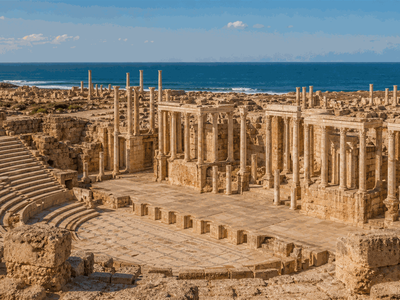
Leptis Magna, one of the best-preserved Roman cities in the Mediterranean, lies east along the coast and rewards a full day trip from Tripoli.
View on mapRuins
Sabratha
Sabratha's Roman theatre and coastal ruins sit west of Tripoli, a quieter alternative day trip to Leptis Magna.
View on mapUpcoming events
City history
In 1711, Ahmed Karamanli, a Janissary officer of Turkish origin, killed the Ottoman governor, the "Pasha", and established himself as ruler of the Tripolitania region.
By 1714, he had asserted a sort of semi-independence from the Ottoman Sultan, heralding in the Karamanli dynasty.
This order of things continued under the rule of his descendants, accompanied by the brazen piracy and blackmailing until 1835 when the Ottoman Empire took advantage of an internal struggle and re-established its authority.
On 1 October 1911, a naval battle was fought at Prevesa, Greece, and three Ottoman vessels were destroyed.
The first airport in Libya, the Mellaha Air Base was built by the Italian Air Force in 1923 near the Tripoli racing circuit.
The Italians created the Tripoli Grand Prix, an international motor racing event first held in 1925 on a racing circuit outside Tripoli.
Furthermore, in 1927, the Italians founded the Tripoli International Fair, with the goal of promoting Tripoli's economy.
In the coast of the province was built in 1937–1938 a section of the Litoranea Balbia, a road that went from Tripoli and Tunisia's frontier to the border of Egypt.
Tripoli was then governed by the British until independence in 1951.
The United Nations sanctions against Libya imposed in April 1992 under Security Council Resolution 748 were lifted in September 2003, which increased traffic through the Port of Tripoli and through airports in Libya.
In spite of centuries of Roman habitation, the only visible Roman remains, apart from scattered columns and capitals (usually integrated in later buildings), is the Arch of Marcus Aurelius from the 2nd century AD.
Oea and Tripolitania The city was founded in the 7th century BC by the Phoenicians, who gave it the Libyco-Berber name Oyat (Punic: 𐤅𐤉𐤏𐤕, wyʿt), suggesting that the city may have been built upon.
The fact that Tripoli has been continuously inhabited, unlike e.g., Sabratha and Leptis Magna, has meant that the inhabitants have either quarried material from older buildings (destroying them in the process) or built on.
His body was taken from Malta, where he had fallen during the Ottoman siege of the island, to a tomb in the Sidi Darghut Mosque which he had established close to his palace in.