Forecast
Accra
Local time--:--
Africa/AccraWeather Forecast
Accra, GhanaOpen-Meteo forecast.
Accra city overview
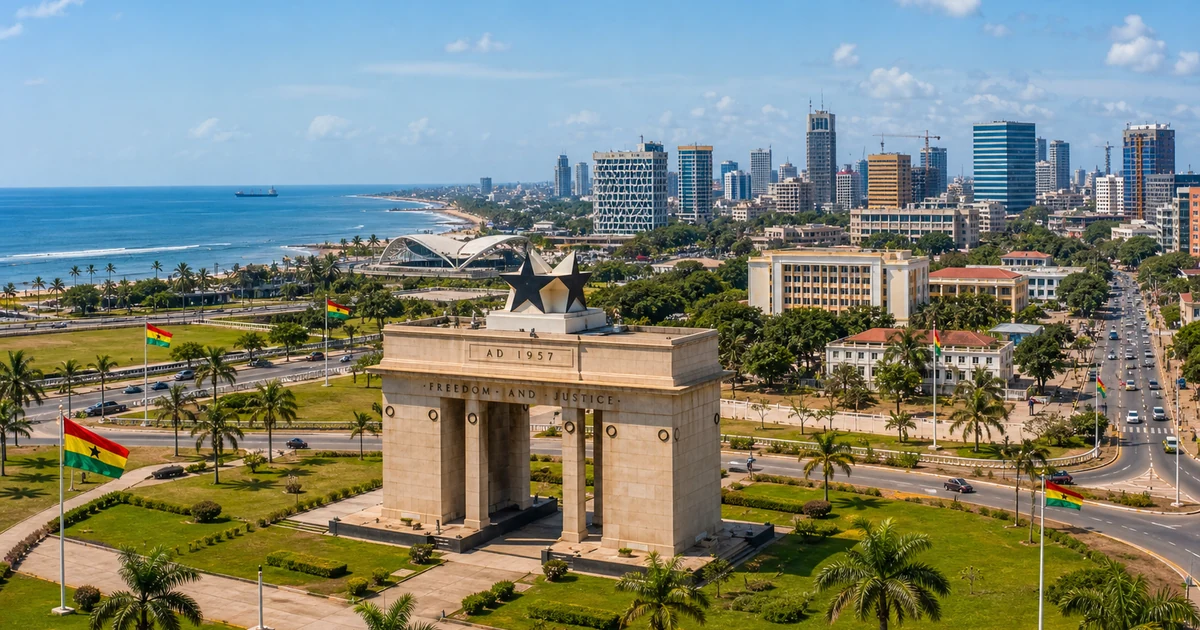
Accra is Ghana's capital and West Africa's laid-back beach-city gateway, mixing colonial-era forts with a fast-growing skyline along the Gulf of Guinea. First-time visitors should stand at Independence Square, wander the fishing lanes and murals of Jamestown, and pay respects at the Kwame Nkrumah Memorial Park. Kotoka International Airport puts Cape Coast's slave-fort history and Aburi's hills within easy day-trip range.
Worth seeing
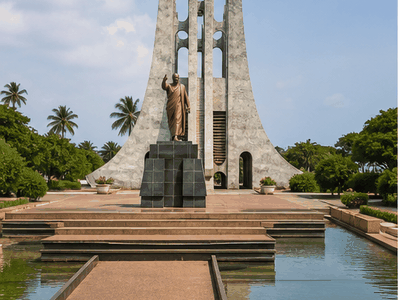
Kwame Nkrumah Memorial Park
Kwame Nkrumah Memorial Park adds outdoor time to a Accra stay, with open space, views or waterfront breathing room between denser city sights.
View on map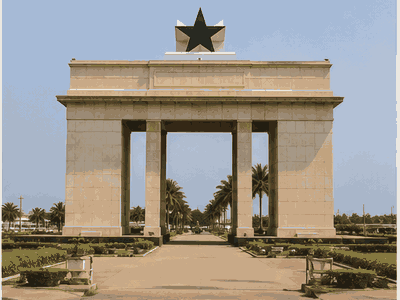
Independence Square Accra
Independence Square Accra is a clear heritage marker in Accra, best used as a fixed point when grouping nearby streets, monuments and viewpoints.
View on map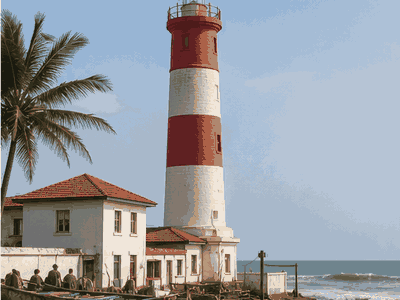
Jamestown Lighthouse
Jamestown Lighthouse is a named stop in Accra worth keeping on the route when it fits the day's transport, timing and neighborhood plan.
View on map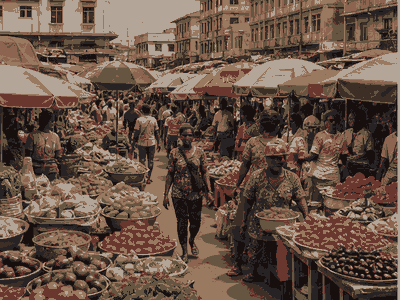
Makola Market
Makola Market gives Accra a concrete street-life stop, with food, everyday shopping and local movement that helps visitors read the city.
View on map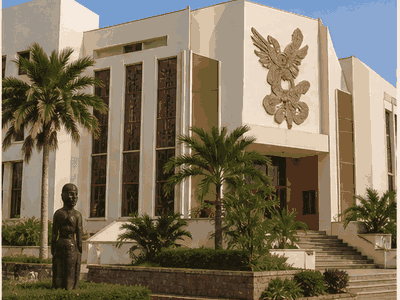
National Museum of Ghana
National Museum of Ghana is a key Accra culture stop, useful for understanding local history, collections and rainy-day planning near the main sightseeing route.
View on map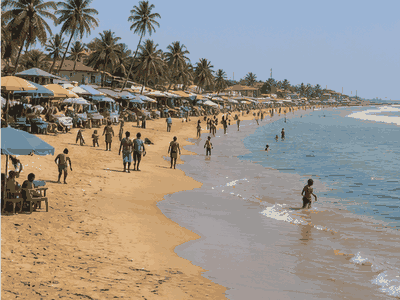
Labadi Beach
Labadi Beach adds outdoor time to a Accra stay, with open space, views or waterfront breathing room between denser city sights.
View on mapStay overview
Base in Osu for nightlife, restaurants and beach access, or choose Airport Residential Area and Cantonments for embassies and easy airport transfers. East Legon suits longer stays needing malls, space and a quieter residential feel away from the coastal bustle.
Hotels & areas
Accra hotel choice depends on purpose: Osu suits first-time visitors wanting restaurants and beach nightlife, Airport Residential Area and Cantonments suit business travelers near embassies and the airport, while East Legon offers newer hotels and malls for longer stays.
Osu
Osu is Accra's liveliest strip, packed with restaurants, bars and shops along Oxford Street, and a short walk from Labadi Beach.
Best for: nightlife, restaurants, beach accessSee hotel optionsAirport Residential Area
Airport Residential Area surrounds Kotoka International Airport with leafy streets, embassies and business hotels, convenient for short stays and early flights.
Best for: business trips, airport convenienceSee hotel optionsEast Legon
East Legon is Accra's upscale suburb of malls, restaurants and gated homes, popular with longer-stay visitors wanting more space.
Best for: longer stays, malls, quiet residentialSee hotel optionsCantonments
Cantonments is a quiet, embassy-lined district near Osu, offering calm streets with easy access to restaurants and the airport.
Best for: diplomatic visits, quiet staysSee hotel optionsFlights & airports
Kotoka International Airport (ACC) arrival plan
- Kotoka International Airport (ACC)About 6 km from the centre
Compare airport access against hotel location, arrival time, rental car pickup, late flights and onward driving before choosing the first night base.
Rental cars
Accra day-trip car use
A rental car helps for day trips to Cape Coast or Aburi, but Accra's traffic makes ride-hailing apps the easier choice around the city.
Compare rental carsTravel tips
Best base
Choose Osu or Airport Residential Area for an easy first stay near restaurants, embassies and quick airport transfers.
Traffic
Accra traffic is heavy at rush hour, so build extra time into airport transfers and cross-city trips, especially on the N1 highway.
Cash and cards
Carry Ghanaian cedi in small notes for markets and taxis, since card acceptance is inconsistent outside hotels and malls.
Day trips
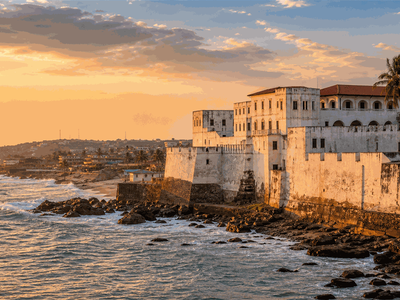
Set aside a full day for Cape Coast's slave-fort history or a cooler half-day at the Aburi Botanical Gardens in the hills.
Nearby ideas
Park · about 1 h · trotro north from Tema station to Aburi
Aburi Botanical Gardens
Colonial-era gardens on the Akuapem ridge, cooler than the coast, with a woodcarving market.
View on mapNature · about 1 h 15 min · car north-east on the Accra-Akosombo road
Shai Hills Resource Reserve
Baboons and antelope on savanna inselbergs, with ancestral caves in the hills.
View on mapBeach · about 1 h 15 min · trotro east along the coast road
Ada Foah
Where the Volta meets the Atlantic, with sandbar islands and turtle nesting from November.
View on mapUpcoming events
City history
An early Portuguese fort was destroyed by the local inhabitants in 1576; trade afterwards was conducted on the beaches.
In 1873, after decades of tension between the British and Ashantis, the British captured Kumasi, destroying portions of the city.
The British then captured Accra in 1874, and in 1877, at the end of the second Anglo-Asante War, Accra replaced Cape Coast as the capital of the British Gold Coast.
As the newly established Gold Coast's administrative functions were moved to Accra (1877), an influx of British colonial administrators and European settlers grew around the Christiansborg (modern Osu, Ministries, Ridge, Labone, and Cantonments) began.
In 1918, the Grand Orange Lodge of Ghana was established in Accra to oversee and govern the local Ghanaian Orange Lodges.
For example, the segregation of European and African neighbourhoods was mandated by law until 1923, and all new buildings were required to be built out of stone or concrete.
In 1948, Ghana remained a colony of Great Britain following World War II.
However, the British Gold Coast ended before the Fry/Treavallion plan was enacted. Nkrumah Plan After Kwame Nkrumah became Ghana's first Prime Minister in 1957, he created his own plan for Accra's development.
By the late 15th century, the kingdom of Accra ruled the area from the capital at Ayawaso.
The Dutch later built the nearby Fort Crèvecœur while the British and the Swedes built James Fort and Christiansborg castles, respectively, in the mid-17th century.
Ofori and his people survived for a few years, until the Akwamu fomented a rebellion amongst the Danish garrison, and the fort was turned over to the Portuguese.
Until this time, the settlement of Accra was confined between Ussher Fort to the east and the Korle Lagoon to the west.
Before reaching the castle, the veterans were fired upon, after being ordered by the colonial police chief to disperse.
The city is also a transportation hub, home to Accra International Airport, and railway links to Tema, Sekondi-Takoradi and Kumasi.