Forecast
Libreville
Local time--:--
Africa/LibrevilleWeather Forecast
Libreville, GabonOpen-Meteo forecast.
Libreville city overview
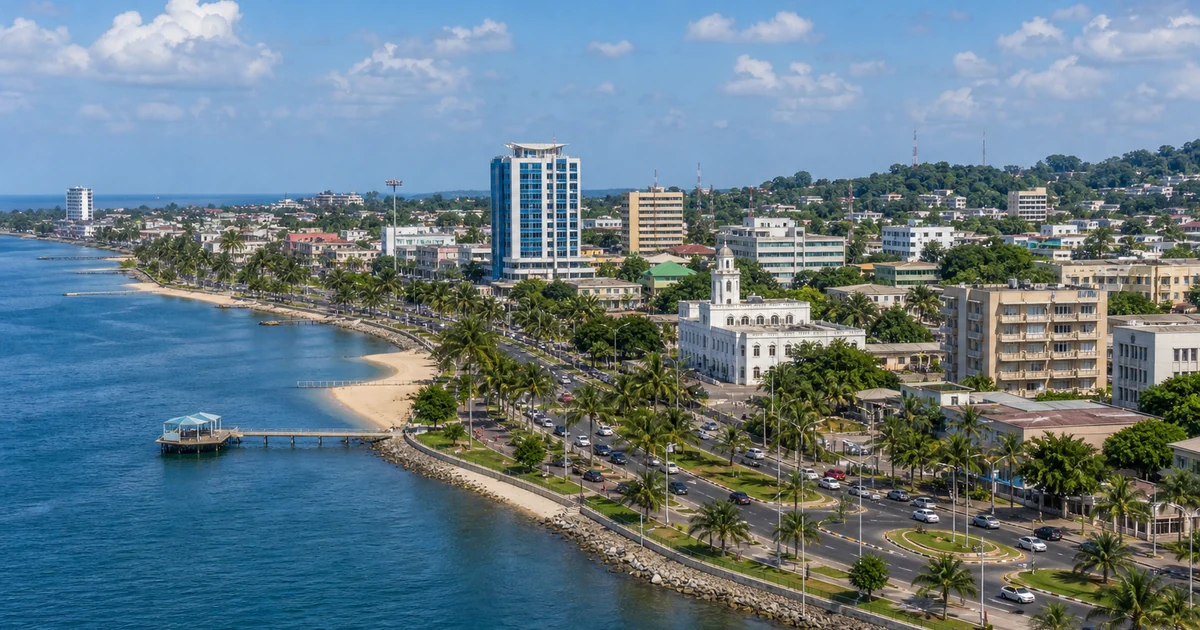
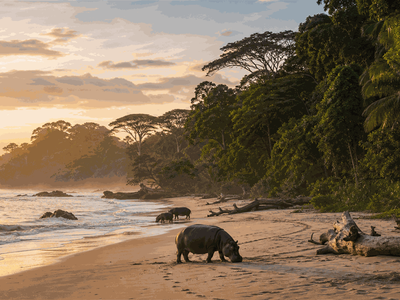
Libreville is Gabon's Atlantic capital, founded by freed slaves in 1849 and now a modern port city framed by rainforest and lagoons. First-time visitors should browse the crafts at the Village des Artisans, see the Cathédrale Saint-Marie for its striking colonial-era design, and relax at Pointe Denis beach across the bay. Léon-Mba International Airport connects Libreville to the rest of Central Africa and beyond.
Worth seeing
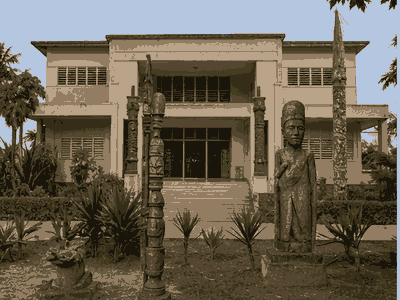
National Museum of Arts and Traditions
National Museum of Arts and Traditions is a key Libreville culture stop, useful for understanding local history, collections and rainy-day planning near the main sightseeing route.
View on map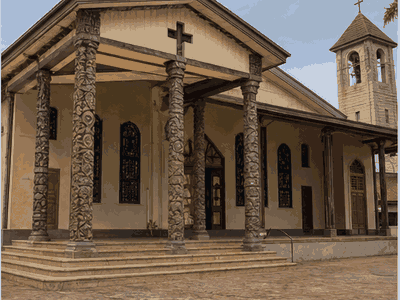
L'Eglise St-Michel
L'Eglise St-Michel is a named stop in Libreville worth keeping on the route when it fits the day's transport, timing and neighborhood plan.
View on map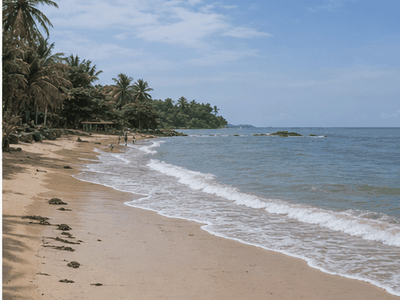
Pointe-Denis Beach
Pointe-Denis Beach adds outdoor time to a Libreville stay, with open space, views or waterfront breathing room between denser city sights.
View on map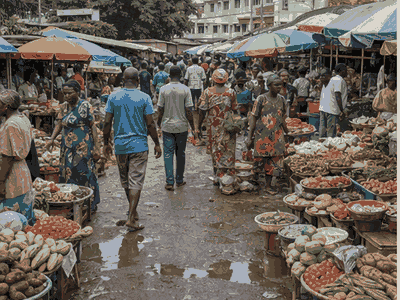
Mont-Bouet Market
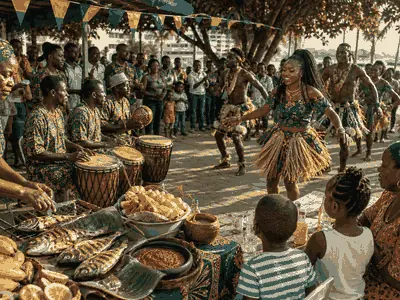
Mont-Bouet Market gives Libreville a concrete street-life stop, with food, everyday shopping and local movement that helps visitors read the city.
View on map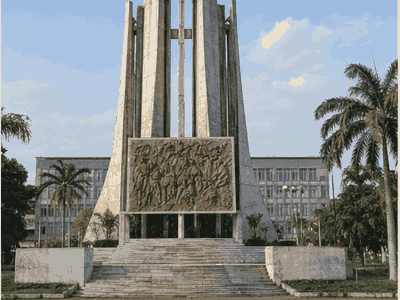
Leon Mba Memorial
Leon Mba Memorial is a clear heritage marker in Libreville, best used as a fixed point when grouping nearby streets, monuments and viewpoints.
View on map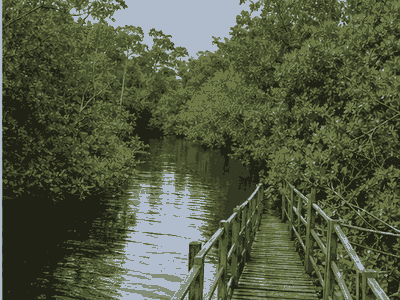
Akanda National Park
Akanda National Park adds outdoor time to a Libreville stay, with open space, views or waterfront breathing room between denser city sights.
View on mapStay overview
Base in Batterie IV for beachfront hotels and easy airport access, or Louis for a central stay near shops and offices. Glass suits travellers interested in the city's founding history and older architecture.
Hotels & areas
Libreville hotel choice depends on setting: Batterie IV holds the city's beachfront international hotels, Louis keeps you close to central shops and offices, and Glass offers a quieter base steeped in the city's founding history.
Glass
Glass is Libreville's oldest district, founded by freed slaves and home to some of the city's earliest churches and colonial buildings.
Best for: history, walkingSee hotel optionsLouis
Louis is a central commercial district with shops, markets and government offices, a practical base for a first stay.
Best for: first visits, shops, businessSee hotel optionsBatterie IV
Batterie IV is an upscale beachfront district with international hotels and restaurants, popular with business travellers and longer stays.
Best for: business trips, beachfront hotelsSee hotel optionsFlights & airports
Libreville Leon M'ba International Airport (LBV) arrival plan
- Libreville Leon M'ba International Airport (LBV)About 9 km from the centre
Compare airport access against hotel location, arrival time, rental car pickup, late flights and onward driving before choosing the first night base.
- Corisco International Airport (OCS)About 59 km from the centre
Compare airport access against hotel location, arrival time, rental car pickup, late flights and onward driving before choosing the first night base.
Rental cars
Libreville day-trip car use
A rental car or hired driver helps for reaching Pointe Denis and destinations beyond the compact centre, including nearby national parks.
Compare rental carsTravel tips
Best base
Choose Batterie IV for beachfront hotels close to the airport, or Louis for a central stay near shops and offices.
Getting to Pointe Denis
Book a boat transfer in advance for the short crossing to Pointe Denis beach, since departures aren't always frequent.
Cash
Carry Central African CFA francs for markets and small vendors, since card acceptance is limited outside larger hotels.
Rainy season
Plan around Gabon's long rainy season from October to May, when heavy downpours can disrupt outdoor plans with little notice.
Upcoming events
City history
French admiral Édouard Bouët-Willaumez negotiated a trade and protection treaty with the local Mpongwé ruler, Antchoué Komé Rapontcombo (known to the French as King Denis), in 1839.
American missionaries from New England established a mission in Baraka, Gabon, on what is now Libreville, in 1842.
In 1846, the Brazilian slave ship L'Elizia, carrying slaves from the Congo, was captured near Loango by the French navy which was tasked with contributing to the British Blockade of Africa.
Fifty-two of the freed slaves were resettled on the site of Libreville (French for "Freetown") in 1849.
Libreville was the administrative capital of France's Congo-Gabon colony between 1888 and 1904, when the capital moved to Brazzaville.
In 1910, Gabon became part of French Equatorial Africa (Afrique équatoriale française, AEF).
Construction of the Congo–Ocean Railway began in 1921, and Libreville was surpassed by the rapid growth of Pointe-Noire, farther down the coast.
Libreville received its first bank branch when Paris-based Banque de l'Afrique Occidentale opened a branch in 1930.
In 1940, Libreville was the central focus of the Battle of Gabon as Charles de Gaulle's Free French forces, supported by the Royal Navy, moved to consolidate control over French Equatorial Africa.
With national independence on the horizon, Léon M'ba won Libreville's first free mayoral election in 1956.
Various native peoples lived in or used the area that is now Libreville before colonization, including the Mpongwé tribe.
It soon became necessary to build a railroad that would connect Brazzaville, the terminus of the river navigation on the Congo River and the Ubangi River, with the Atlantic coast.
As rapids make it impossible to navigate on the Congo River past Brazzaville, and the coastal railroad terminus site had to allow for the construction of a deep-sea port, authorities chose the site of.