Forecast
Malabo
Local time--:--
Africa/MalaboWeather Forecast
Malabo, Equatorial GuineaOpen-Meteo forecast.
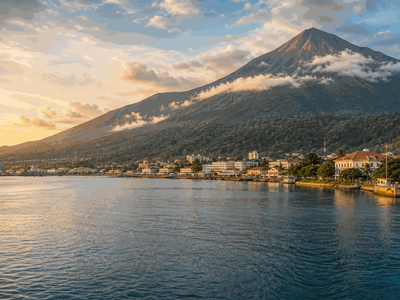
Malabo city overview
Malabo is Equatorial Guinea's capital, a compact colonial-era port city on Bioko Island in the Gulf of Guinea. First-time visitors should see the Catedral de Santa Isabel anchoring the old quarter, browse the Mercado Central for fish, produce and carved wood, and wander the pastel-painted streets of Casco Antiguo. Malabo International Airport sits a short drive from the centre, connecting the island to the mainland and beyond.
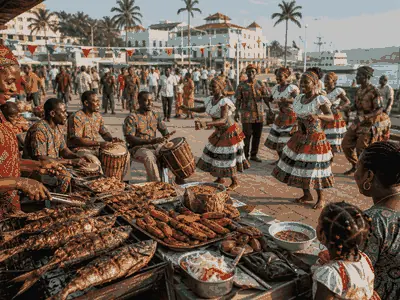
Worth seeing
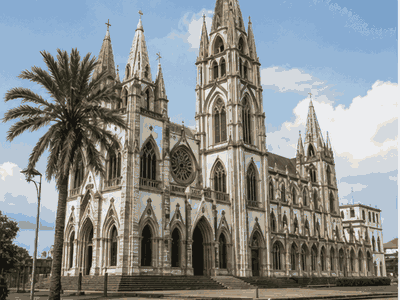
Santa Isabel Cathedral
Santa Isabel Cathedral anchors the historic and ceremonial side of Malabo, making it a practical stop for architecture, local memory and orientation.
View on map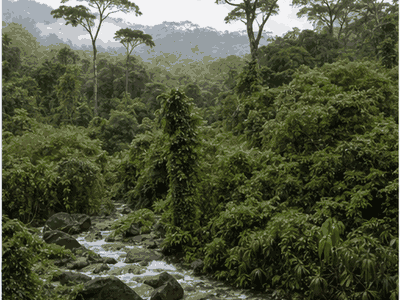
Malabo National Park
Malabo National Park adds outdoor time to a Malabo stay, with open space, views or waterfront breathing room between denser city sights.
View on map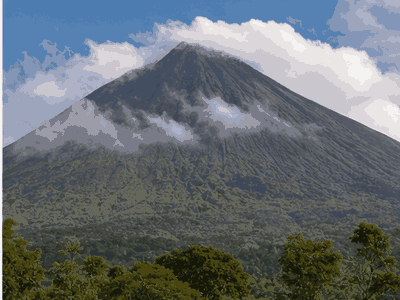
Pico Basilé
Pico Basilé is a named stop in Malabo worth keeping on the route when it fits the day's transport, timing and neighborhood plan.
View on map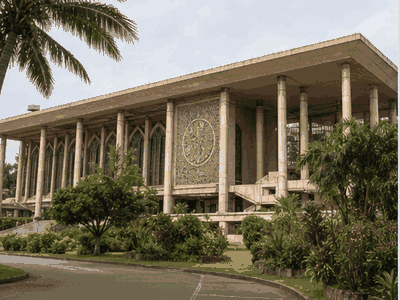
Malabo Cultural Centre
Malabo Cultural Centre gives Malabo a strong culture stop for museums, exhibitions or local collections, and works best as an indoor anchor in the day's route.
View on map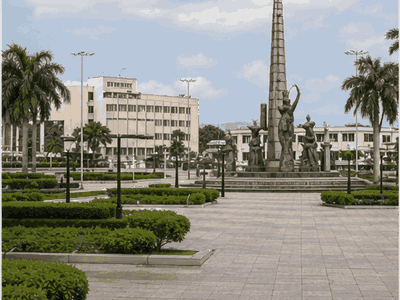
Independence Square Malabo
Independence Square Malabo is a clear heritage marker in Malabo, best used as a fixed point when grouping nearby streets, monuments and viewpoints.
View on map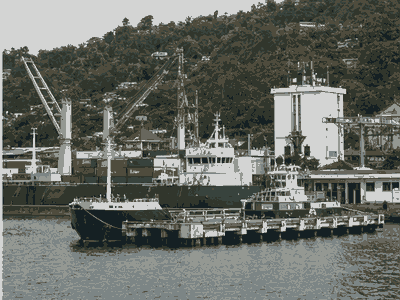
Port of Malabo
Port of Malabo adds the water-facing side of Malabo, making it a good break from museums, traffic and dense historic streets.
View on mapStay overview
Stay in Casco Antiguo for walking access to the cathedral and old quarter, or choose Malabo II for newer hotels and restaurants. Punta Europa suits travellers wanting to be close to the airport and energy-sector offices.
Hotels & areas
Malabo hotel choice mostly comes down to setting: Casco Antiguo puts the cathedral and historic streets within walking distance, Malabo II offers newer, pricier hotels, and Punta Europa suits airport convenience over central sightseeing.
Casco Antiguo (Old Town)
Casco Antiguo is Malabo's historic colonial quarter, with narrow streets and brightly painted Spanish-era houses near the cathedral.
Best for: first visits, history, walkingSee hotel optionsMalabo II
Malabo II is a newer development area with modern hotels and restaurants, a comfortable if pricier option outside the old centre.
Best for: modern hotels, business tripsSee hotel optionsPunta Europa
Punta Europa, near the airport, is an industrial and residential area convenient for early flights or business tied to the island's energy sector.
Best for: airport access, business tripsSee hotel optionsFlights & airports
Malabo International Airport (SSG) arrival plan
- Malabo International Airport (SSG)About 8 km from the centre
Compare airport access against hotel location, arrival time, rental car pickup, late flights and onward driving before choosing the first night base.
Rental cars
Malabo day-trip car use
A rental car helps for exploring Bioko Island beyond Malabo, including the beaches and rainforest of the island's south.
Compare rental carsTravel tips
Best base
Stay in Casco Antiguo for walking access to the cathedral and old quarter, or Malabo II for newer hotels.
Visa and paperwork
Confirm visa requirements well in advance, since entry rules for Equatorial Guinea can be strict and change without much notice.
Cash
Carry Central African CFA francs, since card acceptance is limited outside the larger hotels and international restaurants.
Island trips
Set aside time for Bioko Island's southern beaches and rainforest, reached by a scenic but bumpy drive from Malabo.
Nearby ideas
Nature
Moka
Moka, in Bioko Island's southern highlands, offers cool-climate hiking and rainforest scenery, a rewarding day trip from Malabo.
View on mapBeach
Ureka
Ureka on Bioko's southern coast has a striking black-sand beach, reachable on a longer day trip for those wanting the island's wilder side.
View on mapCity history
European discovery and Portuguese occupation In 1472, in an attempt to find a new route to India, the Portuguese navigator Fernão do Pó, encountered the island of Bioko, which he called Formosa.
At the beginning of the 16th century, specifically in 1507, the Portuguese Ramos de Esquivel made a first attempt at colonization on the island of Fernando Pó.
With the Treaties of San Ildefonso in 1777 and El Pardo in 1778, during the reign of the Spanish King Charles III, the Portuguese gave to the Spanish the islands of Fernando Pó, Annobón.
Thus, on 25 December 1827, Port Clarence was founded on the ruins of a previous Portuguese settlement.
Spain again took control of the island in 1855 and the capital, Port Clarence, was renamed Santa Isabel, in honor of Queen Isabella II.
Bubi clans and settlements were slow to accept Spanish sovereignty over the island, and the full conquest of the island was not achieved until 1912. Reign of Terror During the so-called Reign of Terror.
He established a factory in Concepción (now Riaba) and developed plantations of sugarcane.
He found it abandoned and founded the establishments of Melville Bay (now Riaba) and San Carlos (now Luba).
Some years later, another British captain, William Fitzwilliam Owen, decided to colonize the island and in the north of it — on the site of the present capital — erected a base for British.
These freedmen were settled in Port Clarence before the establishment of Sierra Leone as a colony for freed slaves.
During the British period, the British consul automatically became the governor of the colony, including Governor John Beecroft, a British mulatto who modernized the capital, and whose work was later recognized by Spain with.
The capital already had more dynamic and Protestant religious missions which were very successful.
The capital of the island of Fernando Pó became the capital of Equatorial Guinea.
After the Spanish killed Sas Ebuera, Malabo became the king unopposed, but with no authority.