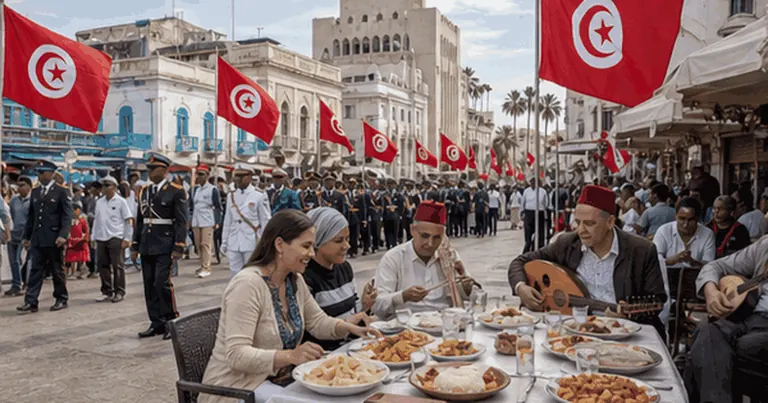
Tunisia National Day 2027


More National days
National days topic
Return to the National days index for related events.
About the event
Across Tunisia, the holiday feels Mediterranean and civic: couscous, brik, mint tea, pastries, family visits and seaside promenades connect the formal anniversary to everyday life.
Tunisia's first president remains central to independence memory.
Why this day
20 March marks the day in 1956 when Tunisia became independent from France. The date ended the French protectorate and made Habib Bourguiba the central figure in the creation of the modern Tunisian state.
The day became the national independence celebration, but Tunisia's story also includes the 2011 revolution, which began the Arab Spring and gave the country another powerful modern freedom date. Independence and revolution now sit together in public memory.
Today Independence Day is marked with official ceremonies, flags, speeches and cultural programming, especially in Tunis. Visitors see red flags with crescent and star, medina streets, coastal cafés, school events and references to Bourguiba's state-building legacy.
Across Tunisia, the holiday feels Mediterranean and civic: couscous, brik, mint tea, pastries, family visits and seaside promenades connect the formal anniversary to everyday life.
Timeline
- 1881French protectorate established over Tunisia
- 1956Tunisia gains independence from France
- 2011Revolution removes Ben Ali and inspires Arab uprisings
Key figures
Stay for the event
Check-in 19 Mar, check-out 21 Mar 2027 — 2 nights around 20 March 2027. Change the dates to stay longer.
AREA
Find stays in TunisGetting there
- Celebratednationwide
- CapitalTunis
- Time zoneCET (UTC+1)
Host country
- Currency: Tunisian dinar
- Language: Arabic
- Driving: on the right
- Capital: Tunis
- Phone: +216
- Emergency: 190
- Electricity: 230 V, 50 Hz, plugs C/E
What to eat
Steamed semolina with vegetables, lamb, chicken or fish.
Thin pastry filled with egg, tuna and parsley, fried crisp.
Chickpea soup with garlic, cumin, bread and harissa.
Eggs cooked in spicy tomato-pepper sauce with merguez or seafood.
Grilled pepper and tomato salad with tuna, egg and olives.
Date-filled semolina pastry fried or baked and dipped in syrup.
What to drink
Sweet tea often served with pine nuts in cafés and homes.
Fig brandy traditionally associated with Tunisia's Jewish community.
Fresh lemon drink served cold in warm weather.
Culture & traditions
Tunisia's first president remains central to independence memory.
The old city's lanes, mosques and souks frame national heritage.
Ancient ruins connect Tunisia to one of the Mediterranean's great powers.
Andalusian classical music remains a refined Tunisian tradition.
Coming years
Tunisia National Day 2028
- Monday 20 March 2028Next event date
Tunisia National Day 2029
- Tuesday 20 March 2029Event date
Tunisia National Day 2030
- Wednesday 20 March 2030Event date