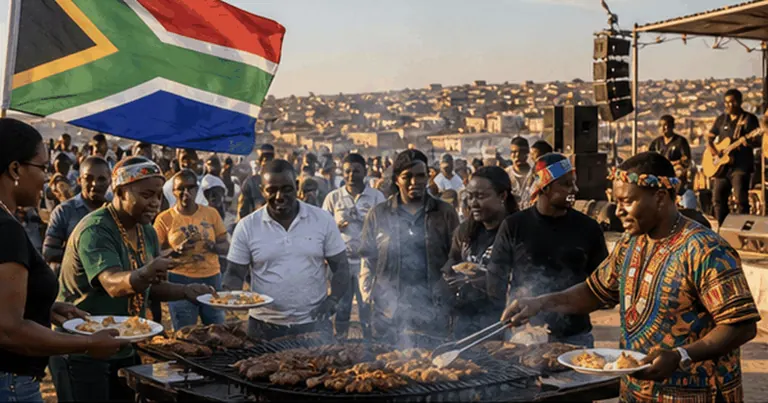
South Africa National Day 2027


More National days
National days topic
Return to the National days index for related events.
About the event
It was the first national vote in which citizens of all races could participate, ending the political system of apartheid and opening the presidency to Nelson Mandela. Visitors see a country that celebrates freedom while still openly debating inequality, land, language, memory and what liberation should mean in everyday life.
National events include speeches, music and honours for democratic struggle.
Why this day
27 April marks Freedom Day, the anniversary of South Africa's first democratic election in 1994. It was the first national vote in which citizens of all races could participate, ending the political system of apartheid and opening the presidency to Nelson Mandela.
The day became South Africa's central national holiday because it marks a profound democratic break rather than a colonial independence date. It carries memories of resistance, imprisonment, exile, township struggle and negotiations that avoided full-scale civil war.
Today Freedom Day is marked with official ceremonies, speeches, concerts, flags and reflection on the constitution. Visitors see a country that celebrates freedom while still openly debating inequality, land, language, memory and what liberation should mean in everyday life.
Across South Africa, the day is also social: braais, music, sports, family gatherings and township events give the holiday a warm public feel. The mood is proud, reflective and unfinished in the best democratic sense.
Timeline
- 1910Union of South Africa formed under British dominion
- 1994First democratic election held with universal suffrage
- 1996Post-apartheid constitution adopted by parliament
Key figures
Stay for the event
Check-in 26 Apr, check-out 28 Apr 2027 — 2 nights around 27 April 2027. Change the dates to stay longer.
AREA
Find stays in Cape TownGetting there
- Celebratednationwide
- CapitalPretoria
- Time zoneSAST (UTC+2)
Host country
- Currency: South African rand
- Language: Afrikaans, English
- Driving: on the left
- Capital: Pretoria
- Phone: +27
- Emergency: 112
- Electricity: 230 V, 50 Hz, plugs C/M/N
What to eat
Barbecued meat over coals, the classic South African social meal.
Spiced beef sausage grilled at braais and served with pap or rolls.
Cape Malay spiced minced meat bake with egg custard topping.
Maize porridge served with spicy vegetable relish.
Curry served inside hollowed bread, a Durban Indian South African icon.
Warm apricot sponge pudding served with custard or cream.
What to drink
Caffeine-free red bush tea grown in the Western Cape.
Cape wines from Stellenbosch and Franschhoek suit holiday meals.
Traditional sorghum beer used in ceremonies and social gatherings.
Culture & traditions
National events include speeches, music and honours for democratic struggle.
Mandela's prison island remains central to liberation memory.
Jazz, kwaito, amapiano and choral traditions shape public celebration.
Johannesburg site links prison history with the Constitutional Court.
Coming years
South Africa National Day 2028
- Thursday 27 April 2028Next event date
South Africa National Day 2029
- Friday 27 April 2029Event date
South Africa National Day 2030
- Saturday 27 April 2030Event date