Slovakia Constitution Day 2027


More National days
National days topic
Return to the National days index for related events.
About the event
Slovakia had been part of Czechoslovakia since 1918, but Slovak national identity was distinct from Czech — different language, different history under Hungarian rule for a thousand years, a different religious landscape and a more rural, mountainous character.
The hilltop castle above the capital and the Danube — visible from Austria and Hungary.
Why this day
Slovakia celebrates Constitution Day on 1 September — the date in 1992 when the Slovak National Council adopted the constitution of Slovakia, laying the legal groundwork for the country's independence. On 1 January 1993, Czechoslovakia peacefully dissolved into the Czech Republic and Slovakia — the so-called Velvet Divorce.
Slovakia had been part of Czechoslovakia since 1918, but Slovak national identity was distinct from Czech — different language, different history under Hungarian rule for a thousand years, a different religious landscape and a more rural, mountainous character. Calls for greater autonomy grew through the communist period and the Velvet Revolution of 1989, eventually leading to the negotiated separation.
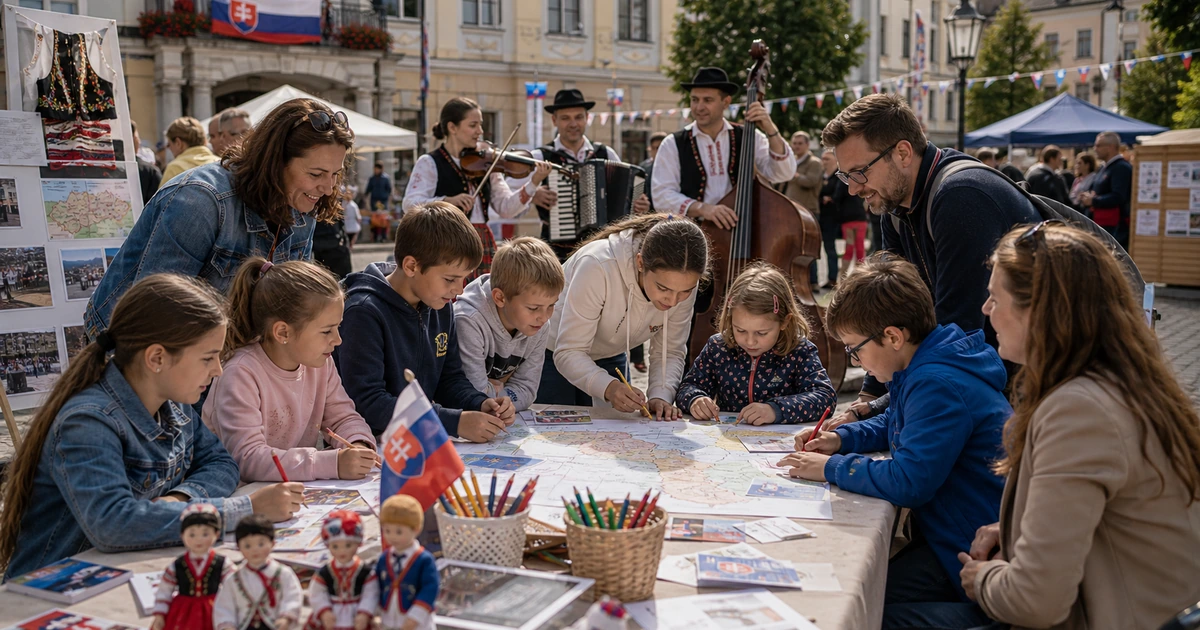
Constitution Day is celebrated with flag-raising ceremonies, official addresses and cultural events. The Slovak mountains, folk traditions and the Bratislava castle make the celebration feel rooted in landscape and history as much as politics.
Timeline
- 863Cyril and Methodius arrive in Great Moravia — Slavic literacy begins
- 1918Czechoslovakia proclaimed — Slovaks join with Czechs
- 1993Slovakia becomes independent following the Velvet Divorce
Key figures
Stay for the event
Check-in 31 Aug, check-out 2 Sep 2026 — 2 nights around 1 September 2026. Change the dates to stay longer.
AREA
Find stays in BratislavaGetting there
- Celebratednationwide
- CapitalBratislava
- Time zoneCET (UTC+1)
Host country
- Currency: euro
- Language: Slovak
- Driving: on the right
- Capital: Bratislava
- Phone: +421
- Emergency: 112
- Electricity: 230 V, 50 Hz, plugs C/E/F
What to eat
Soft potato dumplings with sheep's bryndza cheese and crispy bacon — Slovakia's national dish.
Sauerkraut soup with smoked pork and mushrooms — traditionally eaten on Christmas Eve.
Thin potato pancakes filled with goose fat or poppy seed filling — a Slovak country tradition.
Potato fritters with garlic and sour cream — a quick and beloved Slovak snack.
Honey layer cake with gingerbread sponge and cream — a Slovak celebration cake.
Potato gnocchi with poppy seeds, butter and sugar — simple, old-fashioned Slovak comfort food.
What to drink
Slovak plum brandy — clear, powerful and central to celebrations and toasting culture.
Slovak and Czech cola — less sweet than Coca-Cola, the Communist-era soda that is still beloved.
The Small Carpathians and Tokaj region in southeast Slovakia produce white wines of increasing quality.
Culture & traditions
The hilltop castle above the capital and the Danube — visible from Austria and Hungary.
Folk festivals in Východná and Terchová showcase regional costumes, music and crafts each summer.
The High Tatras — the only truly alpine mountain range in the Carpathians — draw hikers and skiers from across Europe.
The village of decorated wooden houses covered in white folk geometric patterns — unique in Europe.
Coming years
Slovakia Constitution Day 2028
- Friday 1 September 2028Next event date
Slovakia Constitution Day 2029
- Saturday 1 September 2029Event date
Slovakia Constitution Day 2030
- Sunday 1 September 2030Event date