Serbia Statehood Day 2027

More National days
National days topic
Return to the National days index for related events.
About the event
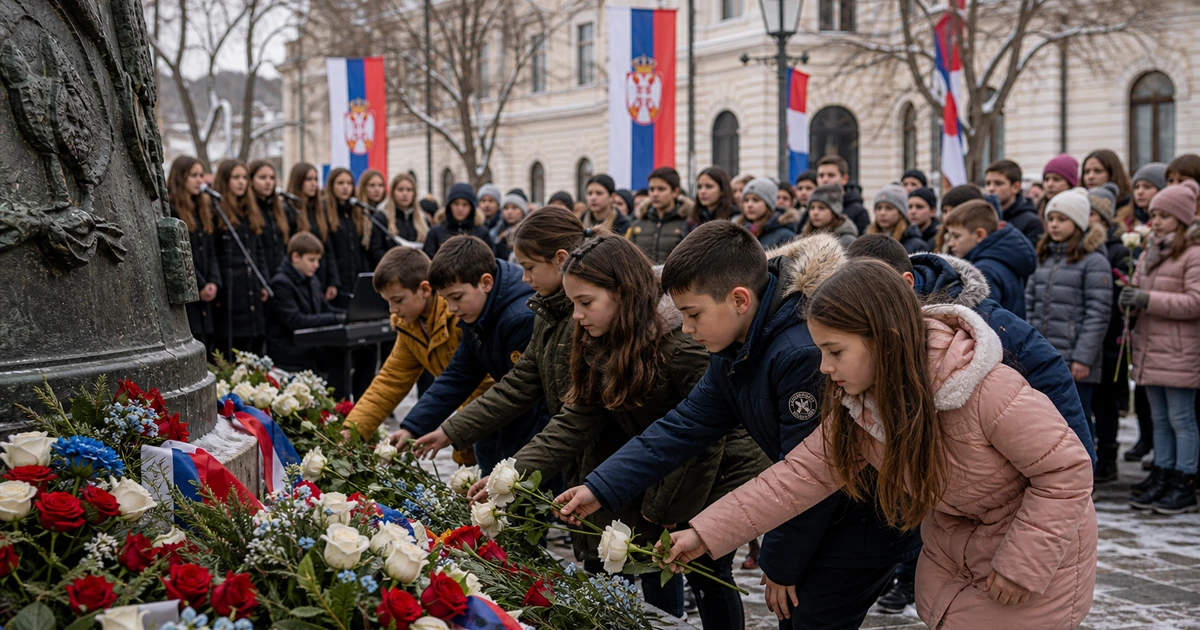
Why Serbia celebrates 15 February Serbia celebrates Statehood Day on 15 February — the date in 1804 when the First Serbian Uprising against Ottoman rule began under the leadership of Karađorđe (Black George).
The medieval fortress above the confluence of the Sava and Danube in Belgrade — the heart of Serbian history.
Why this day
Serbia celebrates Statehood Day on 15 February — the date in 1804 when the First Serbian Uprising against Ottoman rule began under the leadership of Karađorđe (Black George). The uprising eventually led to Serbian autonomy and the gradual establishment of the modern Serbian state. The date also coincides with the adoption of Serbia's first constitution in 1835.
The First Serbian Uprising was one of the first modern national liberation movements in the Balkans. Serbia had been under Ottoman rule since the Battle of Kosovo in 1389. The uprising, though ultimately suppressed, was followed by the Second Serbian Uprising in 1815, which led to full autonomy and eventually full independence, recognised internationally in 1878.
Statehood Day is a public holiday marked with official ceremonies, flag displays and cultural events. The day combines the memory of the uprising with the celebration of Serbian national identity and culture. Concerts, film screenings and sports events take place across the country on this winter holiday.
Timeline
- 1804First Serbian Uprising against Ottoman rule begins
- 1835Serbia adopts its first constitution — Sretenjski ustav
- 2006Montenegro declares independence — Serbia becomes the sole successor state
Stay for the event
Check-in 14 Feb, check-out 16 Feb 2027 — 2 nights around 15 February 2027. Change the dates to stay longer.
AREA
Find stays in BelgradeGetting there
- Celebratednationwide
- CapitalBelgrade
- Time zoneCET (UTC+1)
Host country
- Currency: Serbian dinar
- Language: Serbian
- Driving: on the right
- Capital: Belgrade
- Phone: +381
- Emergency: 192
- Electricity: 230 V, 50 Hz, plugs C/F
What to eat
Grilled minced meat sausages — Serbia's most beloved dish, served in flatbread with onion, ajvar and kajmak.
Rolled veal stuffed with kajmak cream and coated in breadcrumbs — named after the uprising leader.
Thick bean soup with smoked meat — Serbia's most comforting dish, eaten on cold winter days.
Sauerkraut cabbage rolls stuffed with minced pork and rice — the centrepiece of Serbian celebrations.
Layered filo pastry filled with eggs and Serbian white cheese — eaten for breakfast and celebrations.
Serbian plum brandy — the national spirit, home-distilled in autumn and consumed throughout the year.
What to drink
The definitive Serbian spirit — plum brandy of over 500 years of tradition, often 50% proof.
Serbia's most popular beer — a light lager brewed since 1971 and the choice at every celebration.
Warm quince tea with lemon — a traditional Serbian winter drink.
Culture & traditions
The medieval fortress above the confluence of the Sava and Danube in Belgrade — the heart of Serbian history.
Each Serbian Orthodox family celebrates the feast day of its patron saint — UNESCO-listed as cultural heritage.
One of Europe's largest music festivals — held each July in the Petrovaradin fortress in Novi Sad.
Devil's Town — bizarre natural rock formations in southern Serbia created by volcanic and erosion activity.
Coming years
Serbia Statehood Day 2028
- Tuesday 15 February 2028Next event date
Serbia Statehood Day 2029
- Thursday 15 February 2029Event date
Serbia Statehood Day 2030
- Friday 15 February 2030Event date