Sao Tome and Principe National Day 2027


More National days
National days topic
Return to the National days index for related events.
About the event
The date ended centuries of plantation colonialism on two small equatorial islands shaped by sugar, cocoa, slavery, contract labour and Atlantic trade. Visitors see a relaxed island rhythm: sea air, colonial architecture, forró music, Catholic processions and green-yellow-red-black national colours.
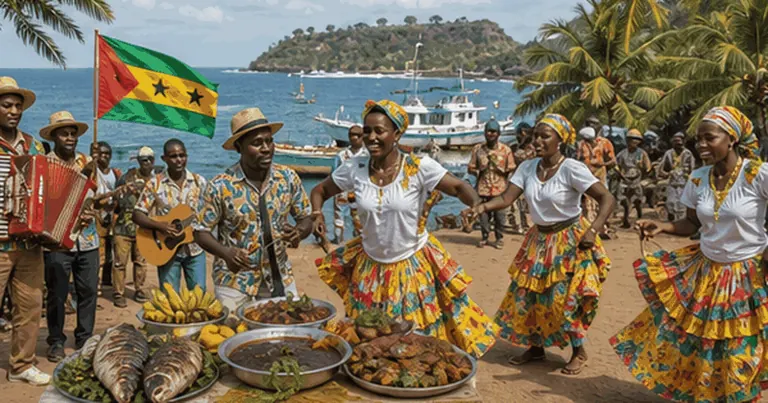
Local dance music gives celebrations a distinctly Sao Tomean sound.
Why this day
12 July marks the day in 1975 when Sao Tome and Principe became independent from Portugal. The date ended centuries of plantation colonialism on two small equatorial islands shaped by sugar, cocoa, slavery, contract labour and Atlantic trade.
The day became the national celebration because independence transformed a plantation colony into a sovereign island republic. Its meaning is closely tied to creole identity, Portuguese language, cocoa estates, coastal villages and the memory of labour on the roças.
Today Independence Day is marked with official ceremonies, flags, music, speeches and public gatherings in Sao Tome. Visitors see a relaxed island rhythm: sea air, colonial architecture, forró music, Catholic processions and green-yellow-red-black national colours.
Across the islands, the holiday is intimate rather than massive. Families gather around fish, banana, breadfruit, coffee and cocoa flavours, while beach life and neighbourhood music give the day its character.
Timeline
- 1470Portuguese sailors reach the Gulf of Guinea islands
- 1975Sao Tome and Principe gains independence from Portugal
- 1991Multi-party democracy begins after constitutional change
Key figures
Stay for the event
Check-in 11 Jul, check-out 13 Jul 2027 — 2 nights around 12 July 2027. Change the dates to stay longer.
AREA
Find stays in Sao TomeGetting there
- Celebratednationwide
- CapitalSao Tome
- Time zoneGMT (UTC+0)
Host country
- Currency: Sao Tome and Principe dobra
- Language: Portuguese
- Driving: on the right
- Capital: Sao Tome
- Phone: +239
- Emergency: 112
- Electricity: 220 V, 50 Hz, plugs C/F
What to eat
Fish or chicken stew with vegetables, palm oil and local herbs.
Fresh Atlantic fish served with banana, breadfruit or rice.
Smoked or dried fish cooked with tomato and island seasonings.
Fried banana served as a sweet or savoury side dish.
Boiled, fried or roasted breadfruit eaten with fish and sauces.
Chocolate and cocoa-based sweets reflect the islands' plantation heritage.
What to drink
Island coffee is a small but historic export and hospitality drink.
Fermented palm sap used in social and rural settings.
Sweet liqueur tied to the islands' cocoa culture.
Culture & traditions
Local dance music gives celebrations a distinctly Sao Tomean sound.
Former cocoa estates tell the islands' plantation and labour history.
The capital hosts official Independence Day speeches and public events.
Rainforest peaks and endemic wildlife are central to island identity.
Coming years
Sao Tome and Principe National Day 2028
- Wednesday 12 July 2028Next event date
Sao Tome and Principe National Day 2029
- Thursday 12 July 2029Event date
Sao Tome and Principe National Day 2030
- Friday 12 July 2030Event date