Niger National Day 2027


More National days
National days topic
Return to the National days index for related events.
About the event
Across Niger, the day carries Sahelian rhythms: millet dishes, grilled meat, tea, music, market gatherings and regional traditions from desert caravans to river communities. That gives the national day a practical environmental meaning in a country deeply affected by drought, desertification and the fragility of Sahel farming.
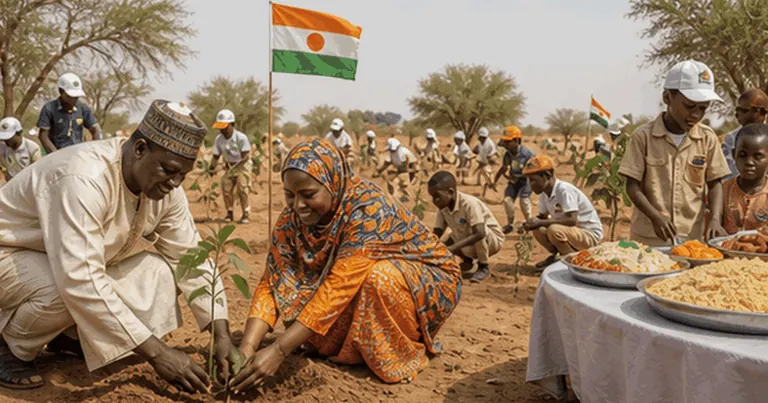
Arbor Day activities make independence visible in schools and communities.
Why this day
3 August marks the day in 1960 when Niger became independent from France. The date created a sovereign Sahelian republic across Hausa, Zarma-Songhai, Tuareg, Fulani, Kanuri and Arab communities, with the Niger River and Sahara shaping national life.
The holiday is also known as Arbor Day in Niger, because tree planting became part of the independence tradition. That gives the national day a practical environmental meaning in a country deeply affected by drought, desertification and the fragility of Sahel farming.
Today Independence Day is marked with official ceremonies, tree planting, speeches, parades and cultural performances, especially in Niamey. Visitors see flags, schoolchildren, traditional dress and a public focus on both sovereignty and land stewardship.
Across Niger, the day carries Sahelian rhythms: millet dishes, grilled meat, tea, music, market gatherings and regional traditions from desert caravans to river communities.
Timeline
- 1922Niger becomes a separate French colony
- 1960Niger gains independence from France
- 1974Military coup ends the First Republic
Key figures
Stay for the event
Check-in 2 Aug, check-out 4 Aug 2027 — 2 nights around 3 August 2027. Change the dates to stay longer.
AREA
Find stays in NiameyGetting there
- Celebratednationwide
- CapitalNiamey
- Time zoneWAT (UTC+1)
Host country
- Currency: West African CFA franc
- Language: French
- Driving: on the right
- Capital: Niamey
- Phone: +227
- Electricity: 220 V, 50 Hz, plugs A/B/C/D/E/F
What to eat
Rice served with tomato sauce, meat or fish around the Niger River.
Thick millet staple eaten with sauces or milk.
Steamed couscous-like dish made with moringa leaves and grains.
Spiced dried beef similar to jerky, associated with Hausa regions.
Fried rice cakes served with sugar or spicy sauce.
Groundnut sauce with meat or vegetables, eaten over rice or millet.
What to drink
Millet and yogurt drink served cold and lightly sweetened.
Sharp sweet ginger drink common in markets and homes.
Sweet tea shared slowly in Sahelian social settings.
Culture & traditions
Arbor Day activities make independence visible in schools and communities.
Desert jewellery and leatherwork are among Niger's best-known crafts.
Wodaabe beauty and courtship gatherings are striking cultural events.
The capital hosts official events along the Niger River setting.
Coming years
Niger National Day 2028
- Thursday 3 August 2028Next event date
Niger National Day 2029
- Friday 3 August 2029Event date
Niger National Day 2030
- Saturday 3 August 2030Event date