

About the event
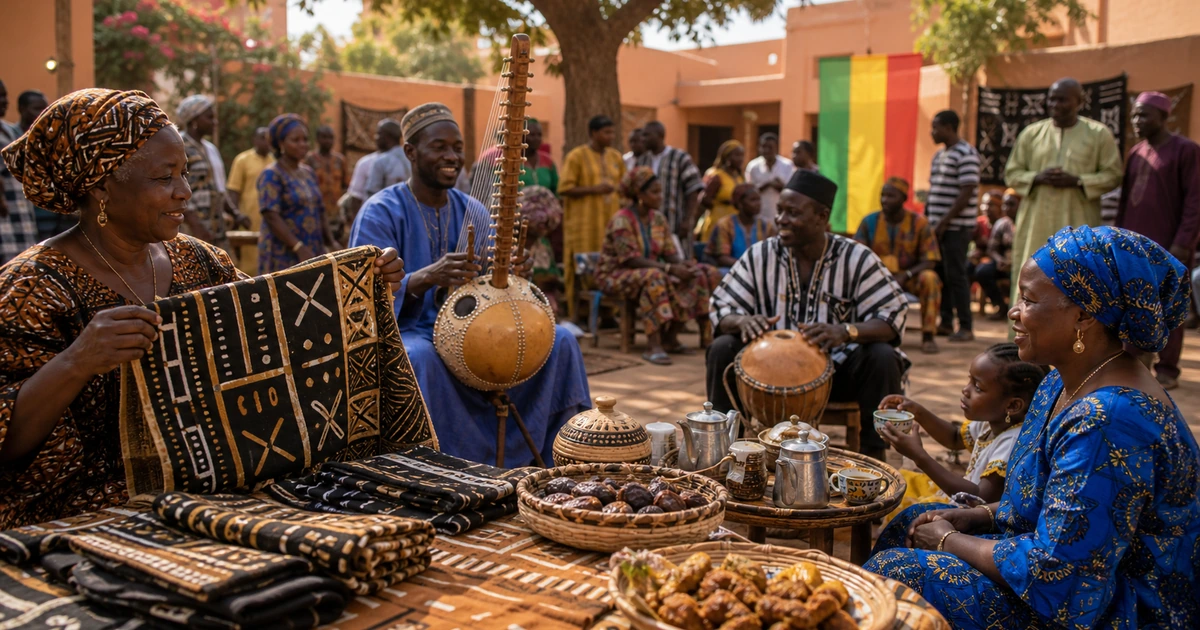
Families gather, radio plays kora and ngoni music, and meals of rice, millet, meat and sauce make the celebration feel local even when politics is tense. Visitors see a national story carried through griot music, bogolan cloth, mosque architecture, river life and the green-yellow-red flag.
Jeli musicians preserve genealogy, praise poetry and historical memory.
Why this day
22 September marks the day in 1960 when Mali became an independent republic after withdrawing from the short-lived Mali Federation with Senegal. The date gave the new state a name reaching back to one of Africa's greatest medieval empires.
The day became Mali's central national holiday because it links modern sovereignty with older Sahelian history: the Mali Empire, Mansa Musa, Timbuktu, trans-Saharan trade and Mandé political culture. Later democratic struggles and conflict in the north add more layers to the date.
Today Independence Day is marked with official ceremonies, flags, music, speeches and cultural programmes, especially in Bamako. Visitors see a national story carried through griot music, bogolan cloth, mosque architecture, river life and the green-yellow-red flag.
Across Mali, the day is both civic and musical. Families gather, radio plays kora and ngoni music, and meals of rice, millet, meat and sauce make the celebration feel local even when politics is tense.
Timeline
- 1235Mali Empire rises after the Battle of Kirina
- 1960Mali withdraws from federation and declares independence
- 1991Popular uprising ends Moussa Traore's military rule
Key figures
Stay for the event
Check-in 21 Sep, check-out 23 Sep 2026 — 2 nights around 22 September 2026. Change the dates to stay longer.
AREA
Find stays in BamakoGetting there
- Celebratednationwide
- CapitalBamako
- Time zoneGMT (UTC+0)
Host country
- Currency: West African CFA franc
- Language: French
- Driving: on the right
- Capital: Bamako
- Phone: +223
- Emergency: 112
- Electricity: 220 V, 50 Hz, plugs C/E
What to eat
Peanut sauce with meat or vegetables, served over rice or millet.
Tomato rice with meat or fish, common at gatherings and celebrations.
Leafy sauce from northern Mali, often served with rice and meat.
Niger River fish grilled or cooked in sauce for special meals.
Rice and minced meat dish associated with festive family cooking.
Steamed millet grains served with sauce in Sahelian households.
What to drink
Hibiscus and ginger drink served cold in markets and homes.
Strong ginger juice sweetened and chilled for hot days.
Attaya-style tea is brewed slowly and shared in small glasses.
Culture & traditions
Jeli musicians preserve genealogy, praise poetry and historical memory.
Historic libraries recall Mali's role in Islamic learning and trade.
Mud-dyed textiles carry symbols, stories and regional identity.
The river shapes Bamako, fishing, trade and the country's geography.
Coming years
Mali National Day 2028
- Friday 22 September 2028Next event date
Mali National Day 2029
- Saturday 22 September 2029Event date
Mali National Day 2030
- Sunday 22 September 2030Event date