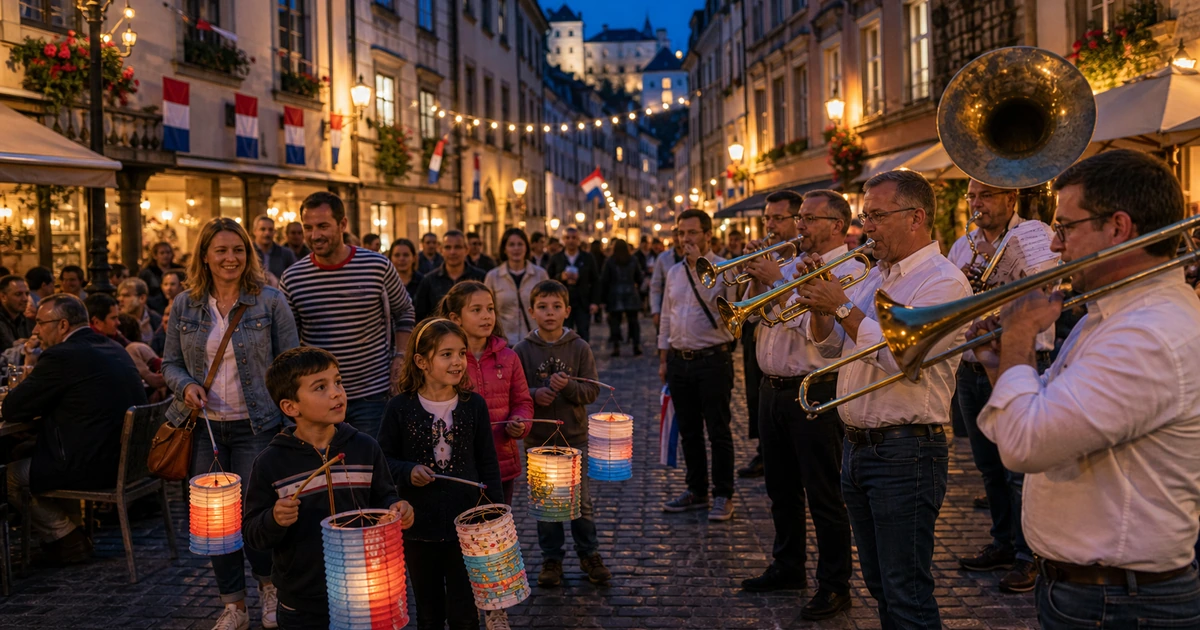
Luxembourg National Day 2027


More National days
National days topic
Return to the National days index for related events.
About the event
On 23 June itself, a Te Deum service is held at Notre-Dame Cathedral, followed by a military parade on the Boulevard Royal attended by the Grand Ducal family. Why Luxembourg celebrates 23 June Luxembourg celebrates its National Day on 23 June — the official birthday of the reigning Grand Duke, currently Henri.
Called "the most beautiful balcony in Europe" — a promenade above Luxembourg City's Alzette valley.
Why this day
Luxembourg celebrates its National Day on 23 June — the official birthday of the reigning Grand Duke, currently Henri. The holiday has been observed on this date since 1961 when Grand Duchess Charlotte held the celebration on 23 June. When Henri became Grand Duke in 2000, his actual birthday is in April, but 23 June was retained as the national holiday.
Luxembourg is one of the founding members of the European Union and hosts key EU institutions. Despite being the world's only remaining Grand Duchy and one of Europe's smallest countries, Luxembourg is its wealthiest per capita nation. Its strategic position between France, Germany and Belgium has shaped centuries of political history.
National Day begins with a torchlight procession and a concert on the Place d'Armes the evening before. On 23 June itself, a Te Deum service is held at Notre-Dame Cathedral, followed by a military parade on the Boulevard Royal attended by the Grand Ducal family. Fireworks over the Alzette valley cap the celebrations in the evening.
Timeline
- 963Count Siegfried builds a castle on the Bock promontory — Luxembourg founded
- 1867Treaty of London — Luxembourg declared perpetually neutral and fortifications demolished
- 1890Luxembourg separated from the Netherlands — Grand Duke Adolphe takes the throne
Key figures
Stay for the event
Check-in 22 Jun, check-out 24 Jun 2027 — 2 nights around 23 June 2027. Change the dates to stay longer.
AREA
Find stays in Luxembourg CityGetting there
- Celebratednationwide
- CapitalLuxembourg City
- Time zoneCET (UTC+1)
Host country
- Currency: euro
- Language: German, French
- Driving: on the right
- Capital: Luxembourg City
- Phone: +352
- Emergency: 112
- Electricity: 230 V, 50 Hz, plugs C/F
What to eat
 Judd mat Gaardebounen
Smoked collar of pork with broad beans — Luxembourg's most traditional national dish.
 Bouneschlupp
Green bean soup with potatoes, bacon and cream — a warming Luxembourg classic.
 Paschtéit
Puff pastry shell filled with a cream of veal and mushrooms — served at formal dinners.
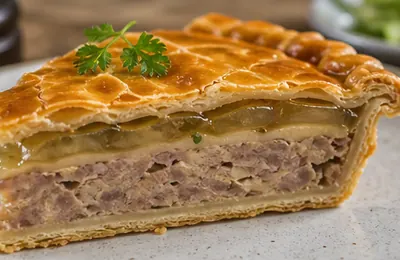 Rieslingspaschtéit
Riesling wine and pork terrine baked in pastry — a festive cold cut.
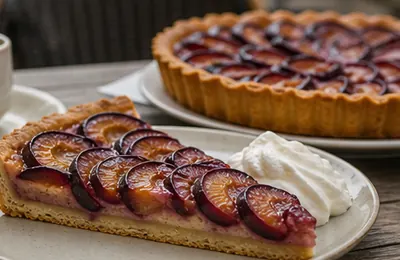 Quetschentaart
Damson plum tart — thin pastry filled with plums from Luxembourg's orchards, eaten in autumn.
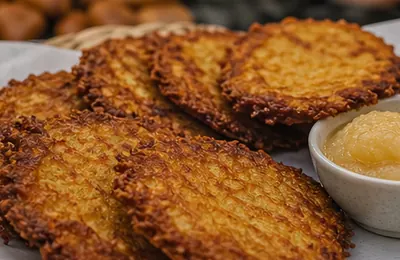 Gromperekichelcher
Potato fritters with spring onions — sold at fairs, markets and the National Day celebrations.
What to drink
 Crémant de Luxembourg
Sparkling wine from Moselle vineyards — Luxembourg's finest export, comparable to Champagne.
 Moselle Riesling
Dry, mineral white wine from the Moselle Valley — among Europe's most underrated wines.
 Bofferding beer
Luxembourg's most popular local lager — brewed since 1764 in the capital.
Culture & traditions
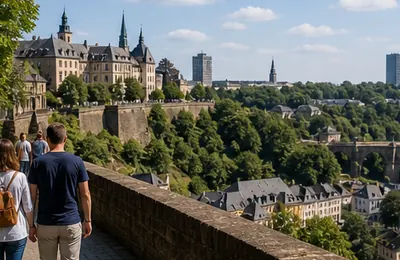 Chemin de la Corniche
Called "the most beautiful balcony in Europe" — a promenade above Luxembourg City's Alzette valley.
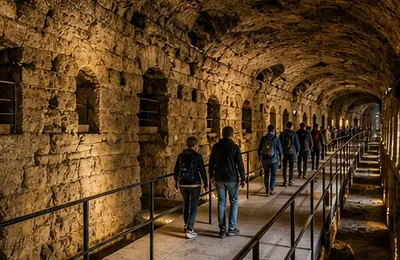 Casemates of the Bock
Cold War-era tunnel system beneath Luxembourg City — part of the UNESCO-listed Old Town fortifications.
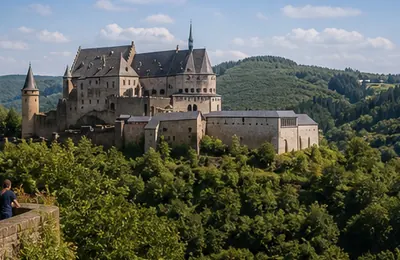 Vianden Castle
Restored medieval castle above the Our river — one of the finest Gothic castles in western Europe.
 Mullerthal Trail
Luxembourg's "Little Switzerland" — sandstone rock formations and forest trails in the eastern highlands.
Coming years
Luxembourg National Day 2028
- Friday 23 June 2028Next event date
Luxembourg National Day 2029
- Saturday 23 June 2029Event date
Luxembourg National Day 2030
- Sunday 23 June 2030Event date