

About the event
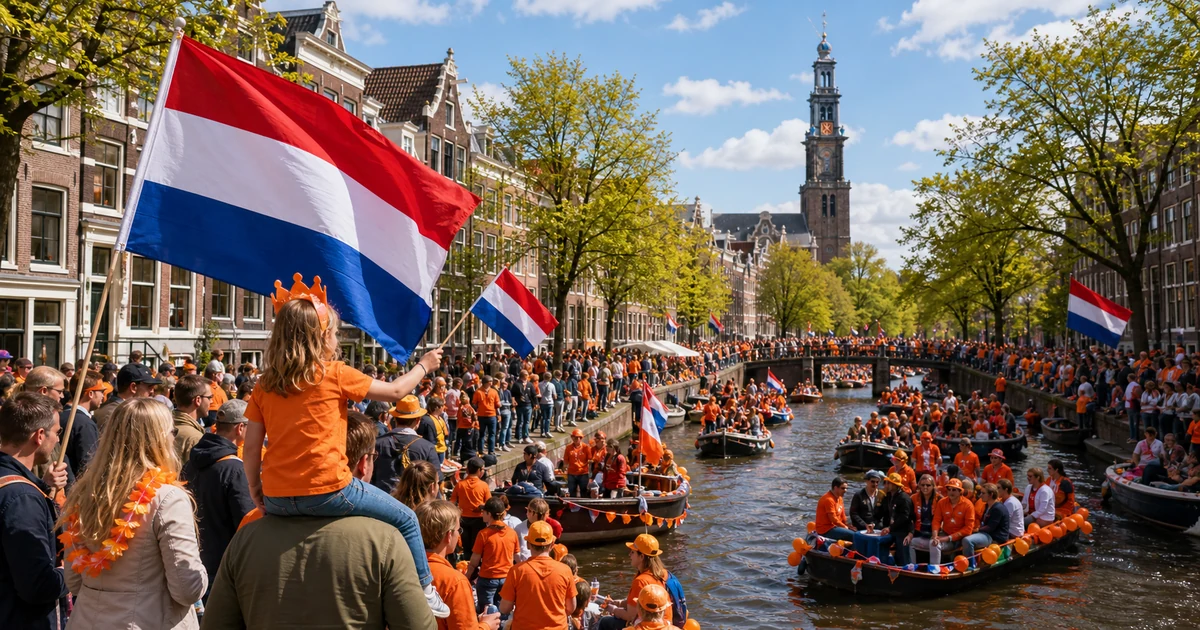
The entire country wears orange (the national colour, derived from the House of Orange-Nassau), dances to electronic music and embraces a relaxed, informal atmosphere that contrasts with the usual Dutch pragmatism.
The canal city transforms completely — boats, markets, orange crowds and DJs from every bridge.
Why this day
The Netherlands celebrates King's Day on 27 April — the birthday of King Willem-Alexander, who ascended to the throne on 30 April 2013. The holiday was previously known as Queen's Day (Koninginnedag) and was celebrated on different dates depending on which queen was reigning. The tradition of celebrating the monarch's birthday as a national holiday dates back to 1885.
King's Day is the Netherlands' biggest national street party. Every city, town and village transforms into an orange-clad outdoor festival. Amsterdam fills with flea markets along the canals — children and adults sell second-hand goods from blankets spread on the pavements, a uniquely Dutch tradition called vrijmarkt. The canals fill with decorated boats.
The celebration is a paradox of Dutch culture — highly organised chaos. The entire country wears orange (the national colour, derived from the House of Orange-Nassau), dances to electronic music and embraces a relaxed, informal atmosphere that contrasts with the usual Dutch pragmatism. The royal family travels to a different city each year for the official celebration.
Timeline
- 1885Queen's Day first established on Queen Emma's birthday
- 1949Indonesia granted independence — Netherlands loses largest colony
- 2013King's Day replaces Queen's Day — name changes with new monarch
Key figures
Stay for the event
Check-in 26 Apr, check-out 28 Apr 2027 — 2 nights around 27 April 2027. Change the dates to stay longer.
AREA
Find stays in AmsterdamHost country
- Currency: euro
- Language: Dutch
- Driving: on the right
- Capital: Amsterdam
- Phone: +31
- Emergency: 112
- Electricity: 230 V, plugs F
What to eat
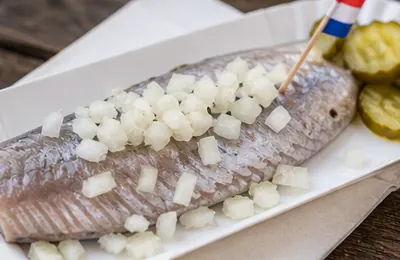 Haring
Raw herring served with onions and pickles — eaten by tilting the head back and lowering the fish into the mouth.
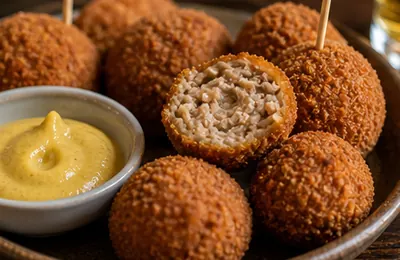 Bitterballen
Deep-fried beef ragout croquette balls — the essential Dutch pub snack, served with mustard.
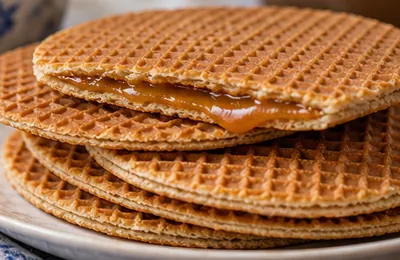 Stroopwafel
Two thin waffles joined by a caramel syrup filling — best eaten warm over a cup of coffee.
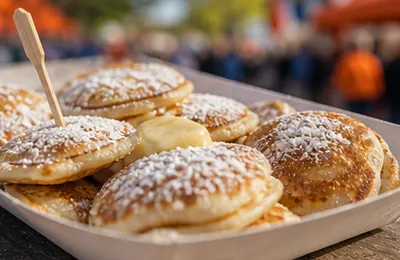 Poffertjes
Small fluffy pancakes served with butter and powdered sugar — sold at King's Day street markets.
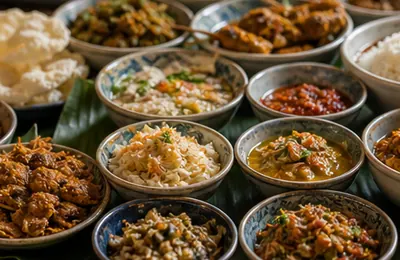 Rijsttafel
Indonesian rice table — dozens of small spiced dishes around a mountain of rice, a colonial inheritance.
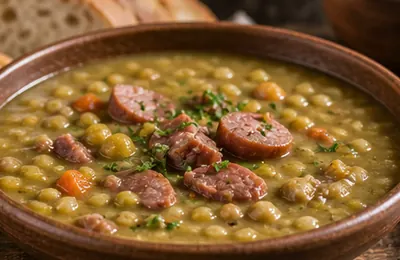 Erwtensoep
Thick split pea soup with smoked sausage — consumed in winter and at outdoor markets.
What to drink
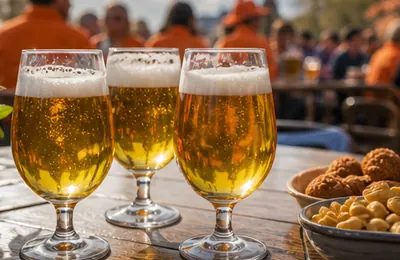 Heineken
Amsterdam's global lager brand — the beer most associated with Dutch culture internationally.
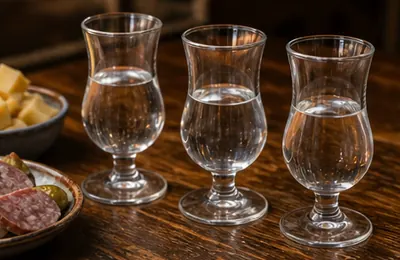 Jenever
Dutch gin — the original spirit from which British gin derived, botanically flavoured and smooth.
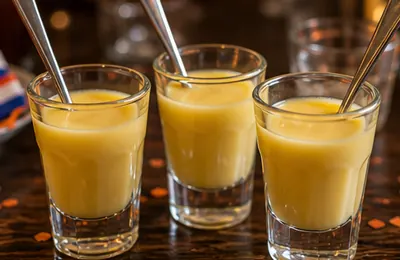 Advocaat
Thick egg liqueur — drunk on its own or used in a Snowball cocktail.
Culture & traditions
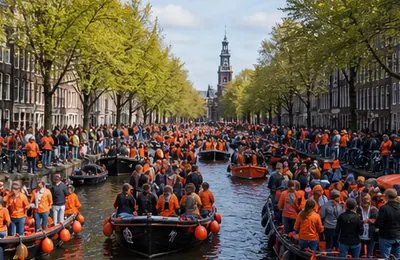 King's Day Amsterdam
The canal city transforms completely — boats, markets, orange crowds and DJs from every bridge.
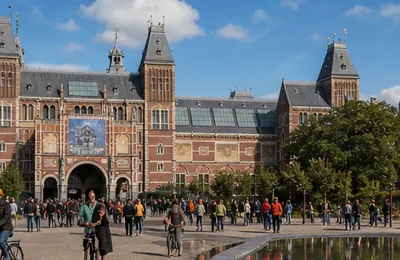 Rijksmuseum
The national museum of the Netherlands in Amsterdam — home to Rembrandt's Night Watch and Vermeer's Milkmaid.
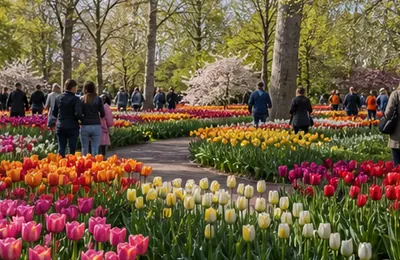 Keukenhof Gardens
The world's largest flower garden — 7 million tulip bulbs bloom every spring near Amsterdam.
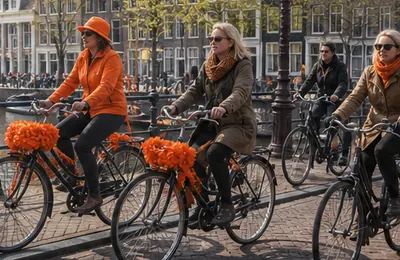 Cycling culture
The Netherlands has more bicycles than people — cycling is the primary urban transport and a national identity.
Coming years
King's Day 2028
- Thursday 27 April 2028Next event date
King's Day 2029
- Friday 27 April 2029Event date
King's Day 2030
- Saturday 27 April 2030Event date