Haiti National Day 2027

More National days
National days topic
Return to the National days index for related events.
About the event
On 1 January 1804, Jean-Jacques Dessalines proclaimed Haitian independence in Gonaïves — making Haiti the first Black republic in the world and the first Caribbean nation to gain independence.
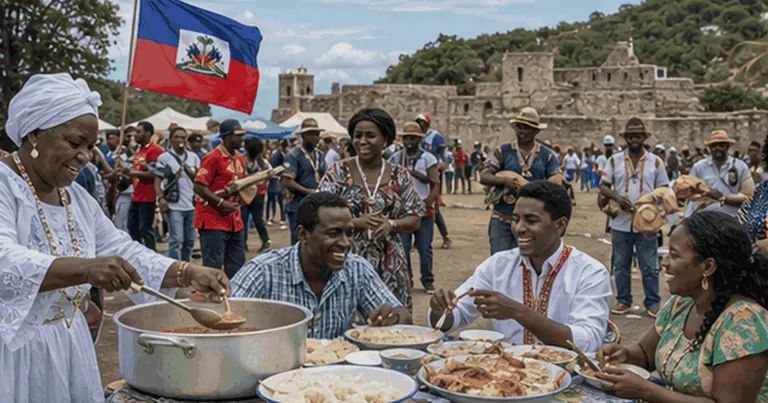
Every Haitian family eats soup joumou on January 1 — a UNESCO-listed act of collective memory and freedom.
Why this day
On 1 January 1804, Jean-Jacques Dessalines proclaimed Haitian independence in Gonaïves — making Haiti the first Black republic in the world and the first Caribbean nation to gain independence. It came after a 13-year revolution that defeated Napoleon's armies, making it one of the most remarkable military victories in history.
Haiti celebrates Independence Day on 1 January, marking the 1804 declaration of independence from France. It was the first successful revolution by enslaved people to create an independent state.
The holiday carries enormous historical weight in Haiti and far beyond it. It represents emancipation, anti-colonial struggle and the founding of the first Black republic in the modern world.
Timeline
- 1804Independence declared
- 1791Haitian Revolution began
- 1804First Black republic founded
Key figures
Stay for the event
Check-in 31 Dec, check-out 2 Jan 2027 — 2 nights around 1 January 2027. Change the dates to stay longer.
AREA
Find stays in Port-au-PrinceGetting there
- Celebratednationwide
- CapitalPort-au-Prince
- Time zoneEST (UTC-5)
Host country
- Currency: Haitian gourde
- Language: French, Haitian Creole
- Driving: on the right
- Capital: Port-au-Prince
- Phone: +509
- Emergency: 114
- Electricity: 110 V, 60 Hz, plugs A/B
What to eat
Pumpkin soup with beef, pasta and vegetables — forbidden under slavery, now eaten on January 1 as a UNESCO-recognised act of freedom.
Fried marinated pork — the most beloved Haitian dish, served with pikliz spicy pickled slaw at every celebration.
Black mushroom rice — a Haitian specialty using dried djon djon mushrooms that turn the rice black and fragrant.
Fiery Scotch bonnet pickled cabbage and vegetables — the Haitian condiment served alongside griot and fried fish.
Pressed and twice-fried plantain — golden slabs of tostones eaten as a side dish at Haitian meals.
Haitian sweet potato bread pudding with coconut milk and cinnamon — a traditional holiday dessert.
What to drink
Raw Haitian sugarcane spirit — unaged, powerful and drunk straight or in ti-punch cocktails.
Haitian coconut cream liqueur with rum and cinnamon — rich and sweet, traditionally made for celebrations.
Soursop fruit juice blended with milk and sugar — a beloved Haitian cold drink.
Culture & traditions
Every Haitian family eats soup joumou on January 1 — a UNESCO-listed act of collective memory and freedom.
Commemoration of the 1791 vodou ceremony that launched the revolution — marking Haiti's spiritual roots of resistance.
Street processions with bamboo horns, drums and crowds — performed at Haitian festivals and national celebrations.
The official state ceremony is held in Gonaïves — the city where independence was declared in 1804.
Coming years
Haiti National Day 2028
- Saturday 1 January 2028Next event date
Haiti National Day 2029
- Monday 1 January 2029Event date
Haiti National Day 2030
- Tuesday 1 January 2030Event date