Guinea-Bissau National Day 2027


More National days
National days topic
Return to the National days index for related events.
About the event
Portugal formally accepted independence in 1974 after the Carnation Revolution in Lisbon, but Guinea-Bissau's own proclamation remains the foundational moment. Creole language, mandjuandadi women's groups, gumbe music, rice fields and coastal food give the day a local texture beyond state speeches.
Cabral remains the central independence figure in speeches and public memory.
Why this day
24 September marks the day in 1973 when Guinea-Bissau unilaterally proclaimed independence from Portugal. The declaration came during a long liberation war led by the PAIGC, one of Africa's most effective anti-colonial movements.
The day became the national holiday because it honours the liberation struggle before international recognition. Portugal formally accepted independence in 1974 after the Carnation Revolution in Lisbon, but Guinea-Bissau's own proclamation remains the foundational moment.
Today the day is marked with official ceremonies, flags, music and remembrance of Amilcar Cabral, the movement's most important thinker and leader. Bissau is the centre, but the Bijagos islands, rural communities and liberation sites all carry national memory.
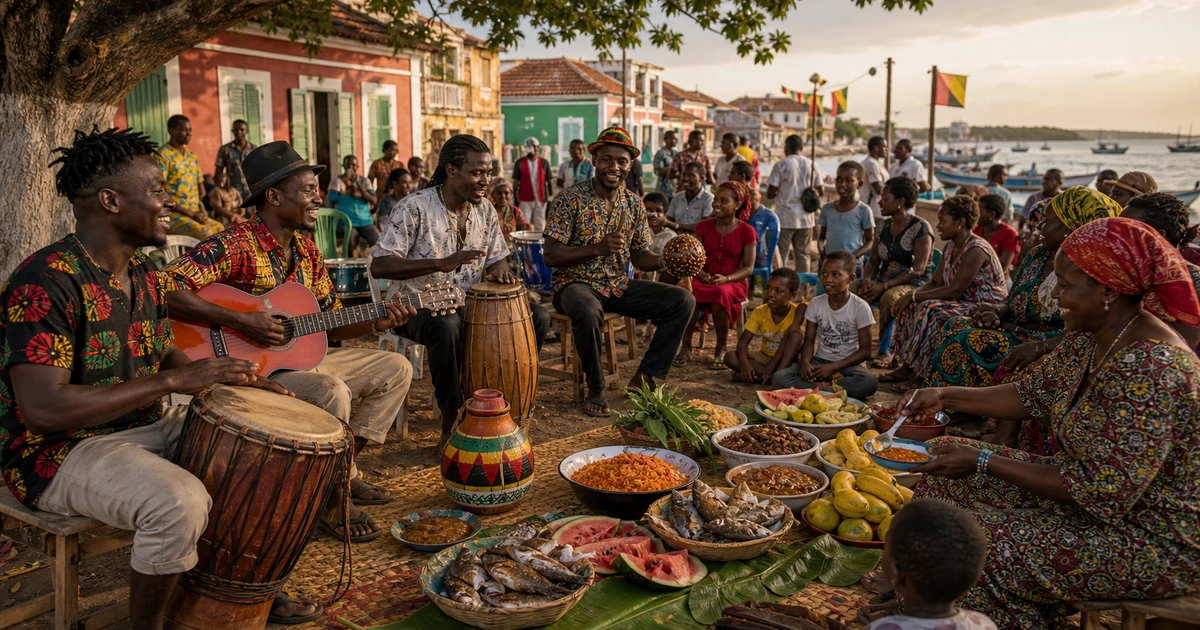
Across the country, the celebration is modest but deeply historical. Creole language, mandjuandadi women's groups, gumbe music, rice fields and coastal food give the day a local texture beyond state speeches.
Timeline
- 1956PAIGC founded to fight Portuguese colonial rule
- 1973Independence proclaimed in Madina do Boe
- 1974Portugal recognises Guinea-Bissau after Carnation Revolution
Key figures
Stay for the event
Check-in 23 Sep, check-out 25 Sep 2026 — 2 nights around 24 September 2026. Change the dates to stay longer.
AREA
Find stays in BissauGetting there
- Celebratednationwide
- CapitalBissau
- Time zoneGMT (UTC+0)
Host country
- Currency: West African CFA franc
- Language: Portuguese, Upper Guinea Creole
- Driving: on the right
- Capital: Bissau
- Phone: +245
- Emergency: 112
- Electricity: 220 V, 50 Hz, plugs C/E/F
What to eat
Tomato rice with fish or meat, common at gatherings and celebrations.
Peanut stew with chicken or meat, served with rice.
Fresh Atlantic fish grilled with lime, chilli and rice.
Mangrove oysters are harvested around coastal communities and islands.
Corn, beans and meat stew reflecting links with Cape Verdean cooking.
Sweet plantains served with fish, rice dishes or stews.
What to drink
Fermented cashew fruit drink tied to the country's major crop.
Sugarcane spirit used for strong local toasts.
Hibiscus drink served cold at markets and family events.
Culture & traditions
Cabral remains the central independence figure in speeches and public memory.
Creole rhythm and dance give national celebrations their most recognisable sound.
The archipelago preserves distinctive matrilineal traditions and coastal heritage.
The capital hosts official Independence Day events and public gatherings.
Coming years
Guinea-Bissau National Day 2028
- Sunday 24 September 2028Next event date
Guinea-Bissau National Day 2029
- Monday 24 September 2029Event date
Guinea-Bissau National Day 2030
- Tuesday 24 September 2030Event date