Eswatini National Day 2027


More National days
National days topic
Return to the National days index for related events.
About the event
In 2018, King Mswati III announced the country's English name change to Eswatini, reinforcing the local siSwati name and tying modern state language to older national identity. Visitors see a country where national identity is strongly tied to the monarchy, traditional regiments, beadwork, song and the Ezulwini and Lobamba ceremonial landscape.
The royal and legislative centre is key to national ritual and symbolism.
Why this day
6 September marks the day in 1968 when Eswatini, then internationally known as Swaziland, became independent from Britain. The date restored sovereignty to one of southern Africa's oldest monarchies and placed the king at the centre of the new state.
The day became a national celebration of independence, monarchy and Swazi identity. In 2018, King Mswati III announced the country's English name change to Eswatini, reinforcing the local siSwati name and tying modern state language to older national identity.
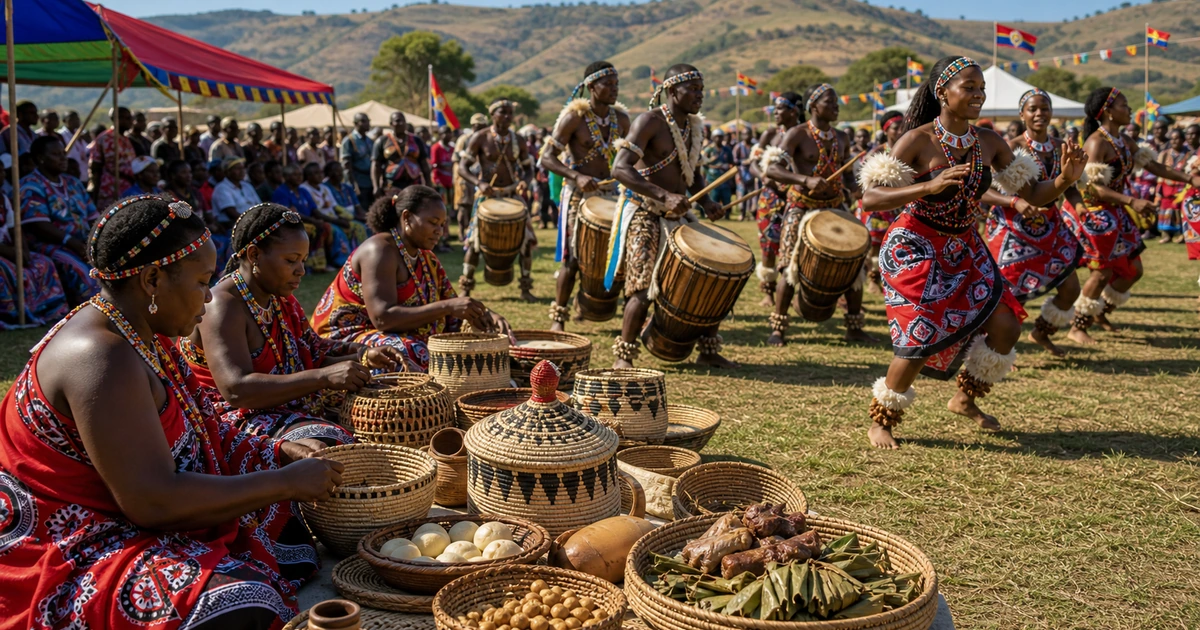
Today the day is marked with official ceremonies, royal symbolism, flags, dance and public events. Visitors see a country where national identity is strongly tied to the monarchy, traditional regiments, beadwork, song and the Ezulwini and Lobamba ceremonial landscape.
Across Eswatini, independence sits alongside major cultural gatherings such as Umhlanga and Incwala. The national rhythm is formal and traditional at once: royal protocol, community dress, cattle wealth, choirs and dance all matter.
Timeline
- 1906Swaziland becomes a British High Commission territory
- 1968Swaziland gains independence from Britain
- 2018Country officially changes its English name to Eswatini
Key figures
Stay for the event
Check-in 5 Sep, check-out 7 Sep 2026 — 2 nights around 6 September 2026. Change the dates to stay longer.
AREA
Find stays in MbabaneGetting there
- Celebratednationwide
- CapitalMbabane
- Time zoneSAST (UTC+2)
Host country
- Currency: Swazi lilangeni
- Language: English, Swazi
- Driving: on the left
- Capital: Mbabane
- Phone: +268
- Emergency: 933
- Electricity: 230 V, 50 Hz, plugs M
What to eat
Thick maize porridge served with meat, beans or vegetable relishes.
Sour fermented milk eaten with maize meal, valued as a traditional staple.
Fresh milk cooked with mealie meal for a soft, comforting dish.
Boiled whole maize kernels served plain or with beans as a filling food.
Cattle are culturally important, and grilled meat suits festive gatherings.
Leafy greens cooked simply and served with porridge or stews.
What to drink
Traditional sorghum beer used socially and in ceremonial settings.
Seasonal marula fruit drinks are associated with harvest and community gatherings.
Caffeine-free red bush tea is widely served in southern African homes.
Culture & traditions
The royal and legislative centre is key to national ritual and symbolism.
Young women present reeds in one of the country's most famous ceremonies.
Kingship ceremony marking renewal, harvest and national unity.
Energetic dance with stamping rhythms often performed at cultural events.
Coming years
Eswatini National Day 2028
- Wednesday 6 September 2028Next event date
Eswatini National Day 2029
- Thursday 6 September 2029Event date
Eswatini National Day 2030
- Friday 6 September 2030Event date