Benin National Day 2027


More National days
National days topic
Return to the National days index for related events.
About the event
Porto-Novo and Cotonou are important centres, while Ouidah and Abomey carry strong historical meaning for visitors who want to understand Benin beyond the state ceremony. The kingdom of Dahomey, the port of Ouidah, Yoruba and Fon traditions, and the Atlantic slave trade all shaped the region before French colonial rule.
The coastal city preserves major sites tied to Vodun and the slave trade.
Why this day
Benin celebrates Independence Day on 1 August, the date in 1960 when the Republic of Dahomey became independent from France. The modern state later took the name Benin, referencing the Bight of Benin rather than the older Kingdom of Benin in present-day Nigeria.
The date sits on top of a much older history. The kingdom of Dahomey, the port of Ouidah, Yoruba and Fon traditions, and the Atlantic slave trade all shaped the region before French colonial rule. Independence Day therefore connects modern sovereignty with a deep and difficult coastal history.
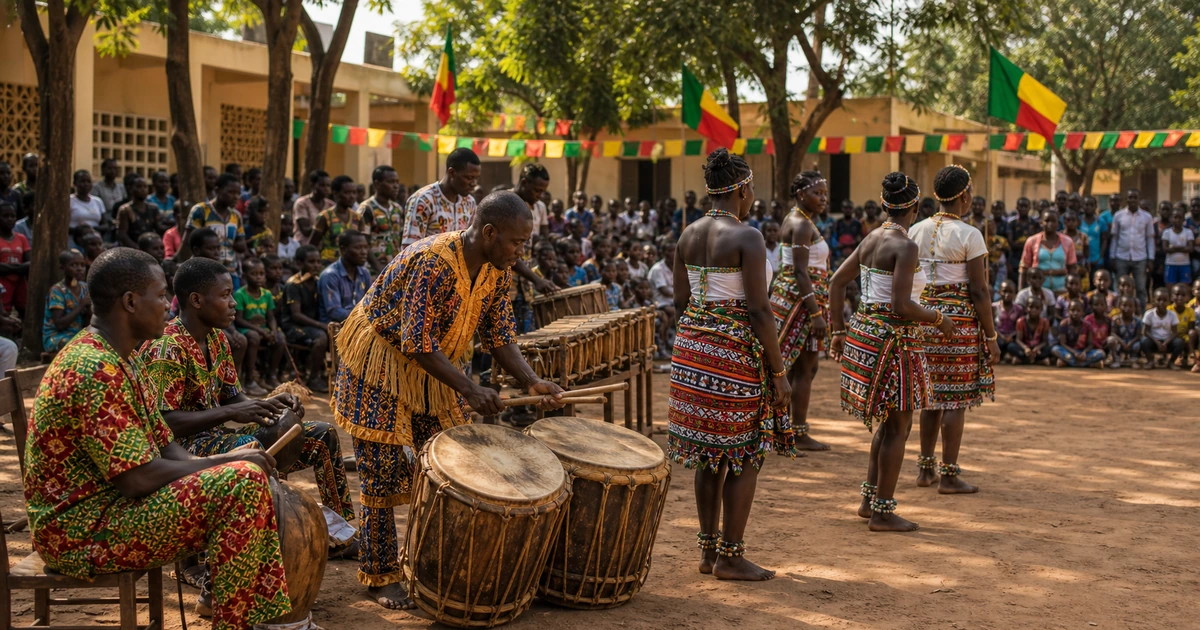
Celebrations include official ceremonies, parades, speeches and cultural performances. Porto-Novo and Cotonou are important centres, while Ouidah and Abomey carry strong historical meaning for visitors who want to understand Benin beyond the state ceremony.
Timeline
- 1894Dahomey becomes part of French West Africa
- 1960Republic of Dahomey gains independence from France
- 1975Country is renamed Benin under revolutionary government
Key figures
Stay for the event
Check-in 31 Jul, check-out 2 Aug 2027 — 2 nights around 1 August 2027. Change the dates to stay longer.
AREA
Find stays in CotonouGetting there
- Celebratednationwide
- CapitalPorto-Novo
- Time zoneWAT (UTC+1)
Host country
- Currency: West African CFA franc
- Language: French
- Driving: on the right
- Capital: Porto-Novo
- Phone: +229
- Emergency: 112
- Electricity: 220 V, 50 Hz, plugs C/E
What to eat
Red maize dough cooked with tomato and spices, often served with chicken.
Firm maize or cassava dough eaten with vegetable, peanut or tomato sauces.
Fermented corn dough with a tangy flavour, commonly served with fish sauce.
Small sweet fried dough balls sold as snacks in markets and streets.
Fresh lagoon or coastal fish grilled with chilli and served with starches.
Groundnut sauce with meat or vegetables, eaten with rice, yam or pate.
What to drink
Palm spirit used for toasts and ceremonies, especially in southern Benin.
Hibiscus drink served cold and sweet at markets and family gatherings.
Fresh palm sap drink with ritual and social importance in many communities.
Culture & traditions
The coastal city preserves major sites tied to Vodun and the slave trade.
UNESCO-listed palaces tell the history of the Dahomey kingdom.
Yoruba ancestral masquerades bring colour, music and ritual to public life.
The lake settlement shows a distinctive water-based culture near Cotonou.
Coming years
Benin National Day 2028
- Tuesday 1 August 2028Next event date
Benin National Day 2029
- Wednesday 1 August 2029Event date
Benin National Day 2030
- Thursday 1 August 2030Event date