

About the event
Today, 14 July is marked by the world's oldest and largest military parade down the Champs-Élysées, with aircraft trailing red, white and blue smoke above the Arc de Triomphe. The event sparked the French Revolution, which toppled the monarchy, proclaimed the rights of man and citizen, and remade France as a republic.
The world's oldest military parade — troops, armoured vehicles and jets stream down France's grandest avenue.
Why this day
On 14 July 1789, Parisian crowds stormed the Bastille fortress — a royal prison and symbol of royal tyranny. The event sparked the French Revolution, which toppled the monarchy, proclaimed the rights of man and citizen, and remade France as a republic. The date marks the beginning of the modern democratic era not just for France but for much of the world.
The following year, on 14 July 1790, the first Fête de la Fédération was held on the Champ de Mars in Paris. Delegates from across France gathered to celebrate national unity and the new constitutional order. This first celebration set the template for what would become the defining French national holiday.
Today, 14 July is marked by the world's oldest and largest military parade down the Champs-Élysées, with aircraft trailing red, white and blue smoke above the Arc de Triomphe. The evening brings fireworks over the Eiffel Tower — the most watched fireworks display in Europe.
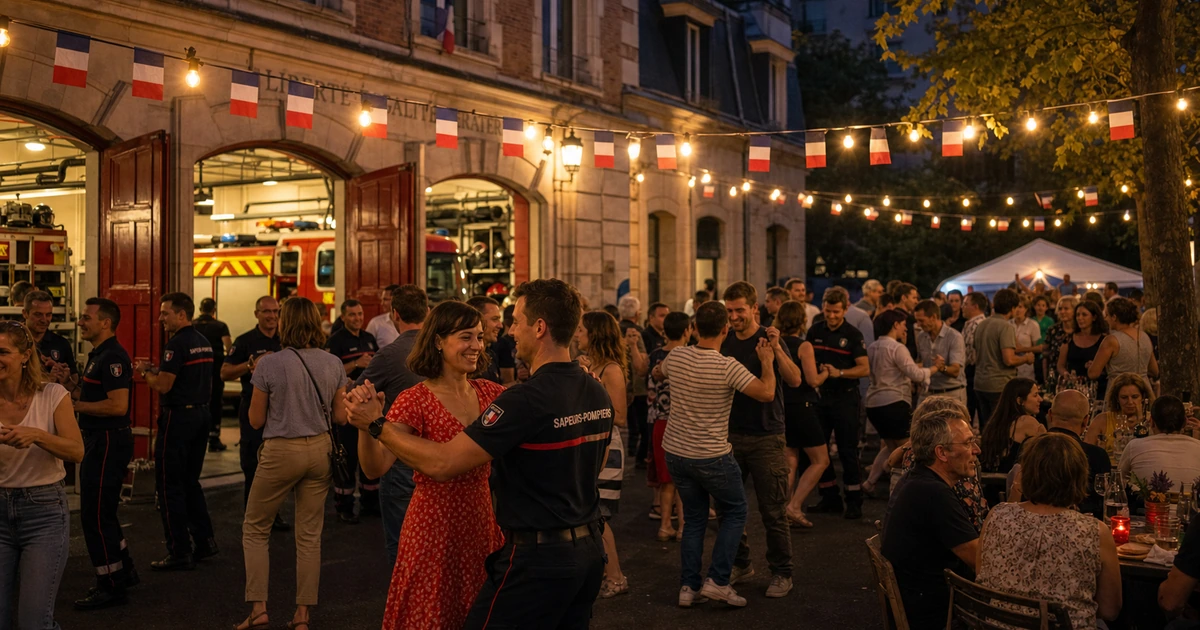
Every French city and village holds its own celebrations. Town squares host open-air balls — the Bal des Pompiers, where fire stations open their doors for dancing, is a beloved local tradition. Families gather for long lunches under the summer sun.
Timeline
- 1789Storming of the Bastille — the French Revolution begins
- 1790First Fête de la Fédération — a united French nation celebrates together
- 188014 July officially adopted as France's national holiday
Key figures
Stay for the event
Check-in 13 Jul, check-out 15 Jul 2027 — 2 nights around 14 July 2027. Change the dates to stay longer.
AREA
Find stays in ParisHost country
- Currency: euro
- Language: French
- Driving: on the right
- Capital: Paris
- Phone: +33
- Emergency: 112
- Electricity: 230 V, 50 Hz, plugs C/E
What to eat
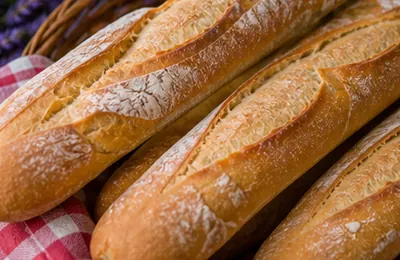 Baguette
The French baguette — crusty, airy and ubiquitous — is central to every table on 14 July.
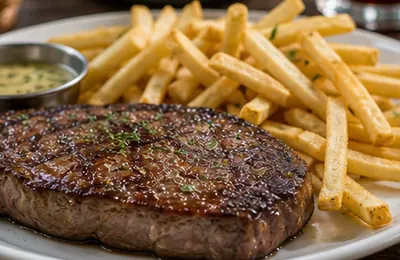 Steak-frites
Pan-seared steak with thin crispy French fries — a bistro classic eaten at outdoor terraces.
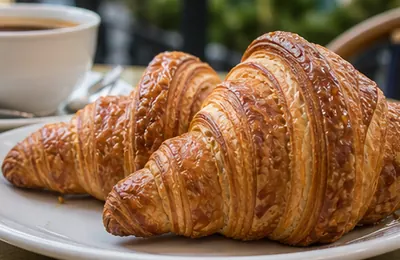 Croissant
Buttery, flaky pastry consumed at morning celebrations and street-fair stalls.
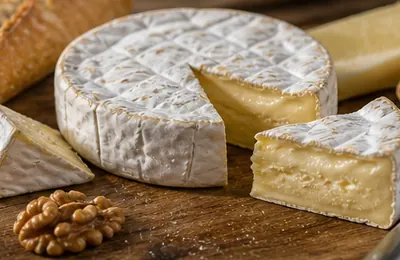 Camembert
Norman soft cheese served at room temperature with bread — a French picnic essential.
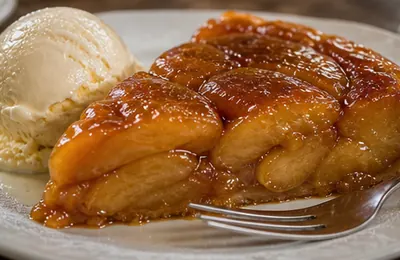 Tarte Tatin
Upside-down caramelised apple tart — a French dessert staple at summer gatherings.
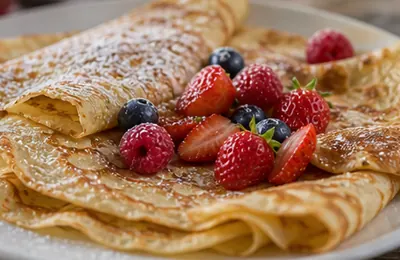 Crêpes
Thin pancakes filled with salted butter and sugar or Nutella — sold at street stalls all day.
What to drink
 Champagne
France's most famous export — popped at midnight during the fireworks on the Champ de Mars.
 Rosé wine
Pale Provence rosé is the quintessential French summer drink — served chilled in large pitchers.
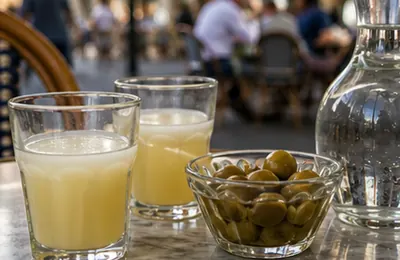 Pastis
Anise-flavoured apéritif mixed with cold water — the favourite summer drink in southern France.
Culture & traditions
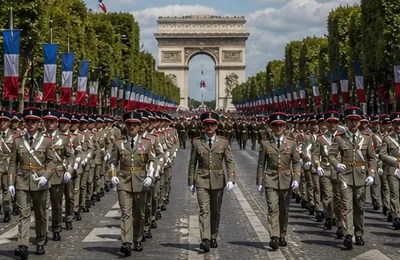 Champs-Élysées parade
The world's oldest military parade — troops, armoured vehicles and jets stream down France's grandest avenue.
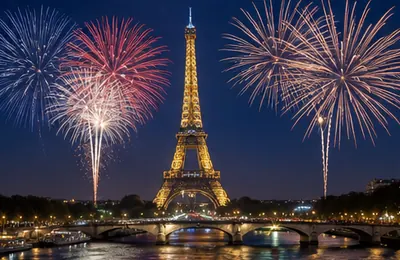 Eiffel Tower fireworks
Millions watch the pyrotechnic display from the Trocadéro and the banks of the Seine.
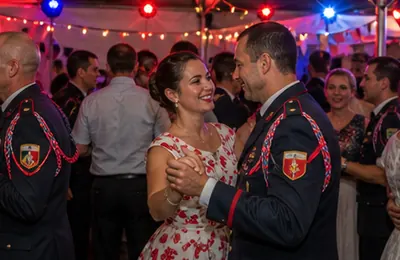 Bal des Pompiers
Fire stations across France open their doors for public dances — a deeply local Bastille Day tradition.
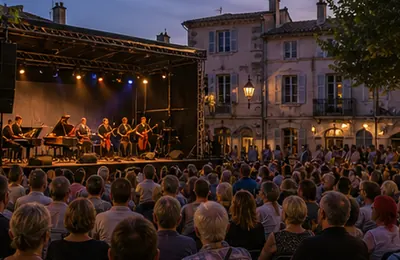 Open-air concerts
Free concerts fill parks and public squares from Paris to Marseille throughout the evening.
Coming years
Bastille Day 2028
- Friday 14 July 2028Next event date
Bastille Day 2029
- Saturday 14 July 2029Event date
Bastille Day 2030
- Sunday 14 July 2030Event date