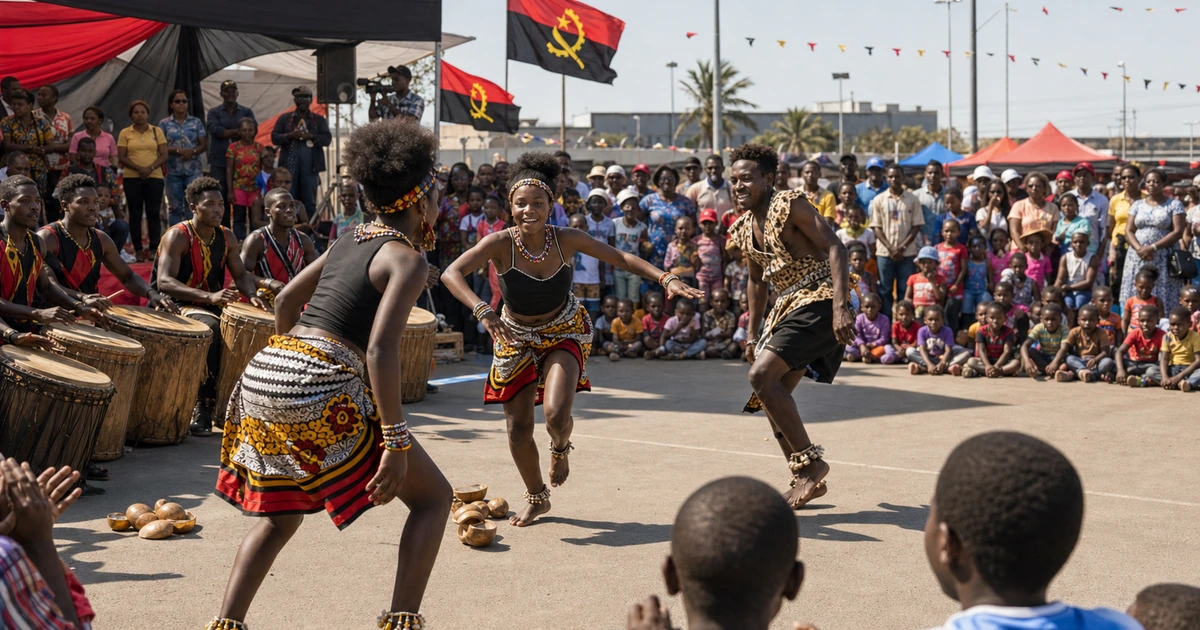
Angola National Day 2026


More National days
National days topic
Return to the National days index for related events.
About the event
The date followed years of anti-colonial struggle and the collapse of Portugal's Estado Novo dictatorship, which opened the way for independence across its African territories. The day often highlights national unity, oil-era rebuilding, Kimbundu and Ovimbundu cultural expression, and the memory of those who fought in the independence movement.
Angolan partner dance and music style now recognised across the Lusophone world.
Why this day
Angola celebrates Independence Day on 11 November, marking the proclamation of independence from Portugal in 1975. The date followed years of anti-colonial struggle and the collapse of Portugal's Estado Novo dictatorship, which opened the way for independence across its African territories.
The celebration is complicated by what followed: independence quickly gave way to a long civil war that lasted until 2002. That makes the day both a liberation anniversary and a reminder of how costly state-building became for ordinary Angolans across regions and generations.
Official ceremonies, concerts, flags and speeches are common, especially in Luanda. The day often highlights national unity, oil-era rebuilding, Kimbundu and Ovimbundu cultural expression, and the memory of those who fought in the independence movement.
Timeline
- 1483Portuguese contact begins along the Kongo coast
- 1961Armed struggle against Portuguese rule intensifies
- 1975Angola declares independence in Luanda
Key figures
Stay for the event
Check-in 10 Nov, check-out 12 Nov 2026 — 2 nights around 11 November 2026. Change the dates to stay longer.
AREA
Find stays in LuandaGetting there
- Celebratednationwide
- CapitalLuanda
- Time zoneWAT (UTC+1)
Host country
- Currency: Angolan kwanza
- Language: Portuguese
- Driving: on the right
- Capital: Luanda
- Phone: +244
- Emergency: 113
- Electricity: 220 V, 50 Hz, plugs C/F
What to eat
Chicken stew with palm oil, okra and garlic, one of Angola's best-known dishes.
Cassava or cornmeal paste served with stews, sauces and grilled fish.
Dried fish or meat cooked with vegetables, palm oil and okra.
Peanut-based chicken or meat stew with deep, nutty flavour.
Grilled fish with beans, cassava and plantain, especially common near the coast.
Cassava leaves cooked with peanut or palm oil, often eaten with funge.
What to drink
Angola's famous lager is common at restaurants, bars and holiday gatherings.
Traditional fermented drink made from corn or pineapple in Angolan homes.
Passion fruit juice is widely served cold in cafes and family meals.
Culture & traditions
Angolan partner dance and music style now recognised across the Lusophone world.
Older Angolan dance music that helped shape later kizomba and popular styles.
The capital's bay and Marginal are natural gathering places for public celebrations.
The mausoleum honours Angola's first president and independence leader.
Coming years
Angola National Day 2027
- Thursday 11 November 2027Next event date
Angola National Day 2028
- Saturday 11 November 2028Event date
Angola National Day 2029
- Sunday 11 November 2029Event date