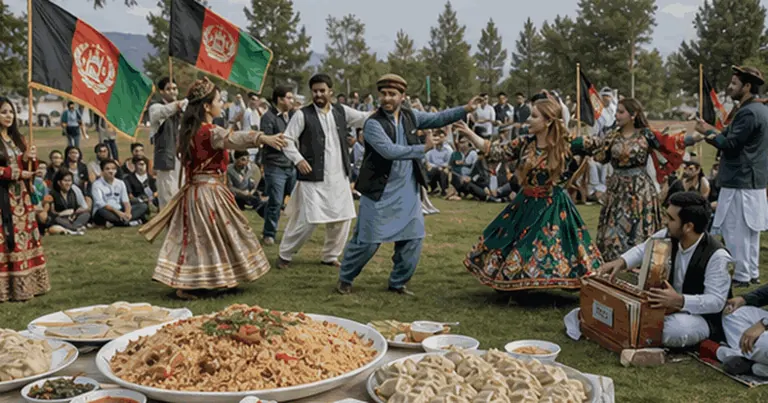
Afghanistan National Day 2027


More National days
National days topic
Return to the National days index for related events.
About the event
Its meaning has shifted through monarchy, republic, communist rule, civil war, Taliban rule, international intervention and the Taliban's return in 2021. Visitors and Afghans alike connect it to Kabul, independence monuments, poetry, flags, family gatherings and a deep culture of hospitality.
The capital remains the symbolic centre of Afghan statehood and change.
Why this day
19 August marks Afghan Independence Day, commemorating the 1919 Treaty of Rawalpindi after the Third Anglo-Afghan War. The date is remembered as the moment Afghanistan regained full control of its foreign affairs from British influence.
The day became a national symbol because Afghanistan had long guarded its autonomy between empires. Its meaning has shifted through monarchy, republic, communist rule, civil war, Taliban rule, international intervention and the Taliban's return in 2021.
Today public observance depends heavily on politics and security, but the date remains part of Afghan national memory. Visitors and Afghans alike connect it to Kabul, independence monuments, poetry, flags, family gatherings and a deep culture of hospitality.
Across Afghan communities, especially in the diaspora, the day can be marked with food, music, poetry and remembrance. It is less a simple festival than a statement of identity after decades of upheaval.
Timeline
- 1919Treaty of Rawalpindi recognises Afghan independence
- 1973Monarchy abolished and republic proclaimed in Kabul
- 2021Taliban returns to power after foreign withdrawal
Key figures
Stay for the event
Check-in 18 Aug, check-out 20 Aug 2027 — 2 nights around 19 August 2027. Change the dates to stay longer.
AREA
Find stays in KabulGetting there
- Celebratednationwide
- CapitalKabul
- Time zoneAFT (UTC+4:30)
Host country
- Currency: Afghan afghani
- Language: Dari, Pashto
- Driving: on the right
- Capital: Kabul
- Phone: +93
- Emergency: 112
- Electricity: 220 V, 50 Hz, plugs C/F
What to eat
Rice with lamb, carrots, raisins and spices, widely treated as the national dish.
Steamed dumplings filled with beef or lamb and topped with yoghurt sauce.
Leek dumplings served with yoghurt, lentils and meat sauce.
Stuffed flatbread filled with potato, greens or pumpkin and fried.
Spiced minced meat patties grilled or fried, especially popular in the east.
Sweet milk, vermicelli and dried fruit dessert served for major holidays.
What to drink
Tea is central to Afghan hospitality and served throughout visits.
Salted yoghurt drink with mint, common with meals.
Rich pink tea with cream, associated especially with Afghan hospitality.
Culture & traditions
The capital remains the symbolic centre of Afghan statehood and change.
Circular dance associated with Pashtun tradition and national performance.
Dari and Pashto poetry carry history, longing and political feeling.
Afghan carpets are major cultural objects and diaspora symbols.
Coming years
Afghanistan National Day 2028
- Saturday 19 August 2028Next event date
Afghanistan National Day 2029
- Sunday 19 August 2029Event date
Afghanistan National Day 2030
- Monday 19 August 2030Event date