Zambia National Day 2026


More National days
National days topic
Return to the National days index for related events.
About the event
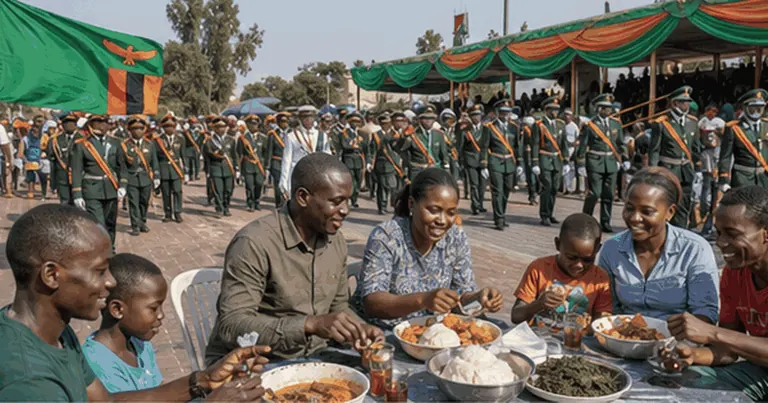
The day became Zambia's main national celebration because independence also placed the country on the front line of southern African liberation politics. Families gather around nshima, grilled meat, fish, vegetables and local beer, while music and football give the day an easy public rhythm.
The capital hosts the main parade, speeches and national performances.
Why this day
24 October marks the day in 1964 when Northern Rhodesia became independent as Zambia. The date created a sovereign state named for the Zambezi River, with Kenneth Kaunda as its first president and copper central to the new economy.
The day became Zambia's main national celebration because independence also placed the country on the front line of southern African liberation politics. Zambia hosted movements from neighbouring countries and paid a high price for opposing white-minority regimes in the region.
Today Independence Day is marked with official ceremonies, parades, speeches, church services, concerts and flags, especially in Lusaka. Visitors see orange-black-red-green colours, school groups, military bands and public references to unity and peace.
Across Zambia, the holiday is relaxed and social. Families gather around nshima, grilled meat, fish, vegetables and local beer, while music and football give the day an easy public rhythm.
Timeline
- 1911Northern Rhodesia formed under British South Africa Company rule
- 1964Zambia gains independence from Britain
- 1991Multi-party democracy returns after one-party rule
Key figures
Stay for the event
Check-in 23 Oct, check-out 25 Oct 2026 — 2 nights around 24 October 2026. Change the dates to stay longer.
AREA
Find stays in LusakaGetting there
- Celebratednationwide
- CapitalLusaka
- Time zoneCAT (UTC+2)
Host country
- Currency: Zambian kwacha
- Language: English
- Driving: on the left
- Capital: Lusaka
- Phone: +260
- Emergency: 112
- Electricity: 230 V, 50 Hz, plugs C/D/G
What to eat
Thick maize porridge eaten with meat, fish or vegetable relishes.
Greens cooked in peanut sauce and served with nshima.
Orchid tuber and peanut cake known as African polony.
Small dried fish fried with tomato and onion.
Free-range chicken stewed or grilled for special meals.
Fried dough balls eaten as snacks with tea.
What to drink
Popular Zambian lager named after Victoria Falls.
Zambian maheu made from maize bran — a slightly sour, filling drink consumed throughout the day at Independence Day events.
Traditional sweet-sour drink made from maize meal and roots.
Culture & traditions
The capital hosts the main parade, speeches and national performances.
Mosi-oa-Tunya is a defining natural symbol shared with Zimbabwe.
Lozi royal boat ceremony is one of Zambia's best-known traditions.
Mining towns shaped labour, music and modern Zambian identity.
Coming years
Zambia National Day 2027
- Sunday 24 October 2027Next event date
Zambia National Day 2028
- Tuesday 24 October 2028Event date
Zambia National Day 2029
- Wednesday 24 October 2029Event date