Uganda National Day 2027


More National days
National days topic
Return to the National days index for related events.
About the event
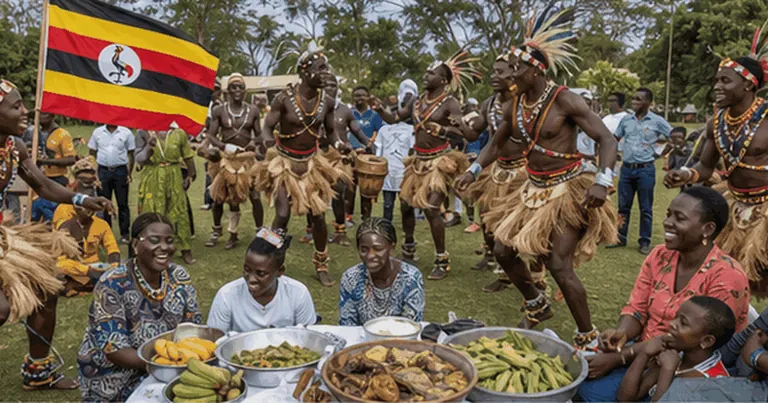
Across Uganda, the day is family-centred and lively: matoke, luwombo, grilled meat, tea, music and regional dances connect the formal state celebration to everyday hospitality. Visitors see the black-yellow-red flag, schoolchildren, military bands, church services and the national crested crane emblem.
The national event combines parade, speeches and regional performances.
Why this day
9 October marks the day in 1962 when Uganda became independent from Britain. The date created a sovereign state from a protectorate built around older kingdoms, especially Buganda, and many other communities around the Great Lakes and Nile basin.
The day became Uganda's central national holiday, although the country's later history was marked by coups, Idi Amin's dictatorship, civil war and political change. Independence therefore carries a strong theme of survival and rebuilding as well as freedom.
Today Independence Day is marked with official ceremonies, parades, speeches, music and cultural performances, often rotating between regions. Visitors see the black-yellow-red flag, schoolchildren, military bands, church services and the national crested crane emblem.
Across Uganda, the day is family-centred and lively: matoke, luwombo, grilled meat, tea, music and regional dances connect the formal state celebration to everyday hospitality.
Timeline
- 1894British protectorate established over Buganda and neighbouring kingdoms
- 1962Uganda gains independence from Britain
- 1986National Resistance Movement takes power after bush war
Key figures
Stay for the event
Check-in 8 Oct, check-out 10 Oct 2026 — 2 nights around 9 October 2026. Change the dates to stay longer.
AREA
Find stays in KampalaGetting there
- Celebratednationwide
- CapitalKampala
- Time zoneEAT (UTC+3)
Host country
- Currency: Ugandan shilling
- Language: English, Swahili
- Driving: on the left
- Capital: Kampala
- Phone: +256
- Emergency: 112
- Electricity: 240 V, 50 Hz, plugs G
What to eat
Steamed green bananas mashed and served with meat or peanut sauce.
Meat, chicken or groundnut stew steamed in banana leaves.
Chapati rolled with eggs and vegetables, a beloved Ugandan street food.
Maize meal staple eaten with beans, greens or meat sauces.
Peanut sauce served with matoke, rice, fish or vegetables.
Lake fish grilled or fried and served with starches.
What to drink
Strong milk tea from highland tea-growing regions.
Banana or grain spirit used in social settings and commercial brands.
Traditional millet beer drunk communally through long straws.
Culture & traditions
The national event combines parade, speeches and regional performances.
Royal history and the Kabaka remain central to cultural identity.
Buganda drum and dance traditions appear at public celebrations.
Jinja's river landscape is one of Uganda's strongest visitor symbols.
Coming years
Uganda National Day 2028
- Monday 9 October 2028Next event date
Uganda National Day 2029
- Tuesday 9 October 2029Event date
Uganda National Day 2030
- Wednesday 9 October 2030Event date