

About the event
The date ended a colonial history that had passed from German Togoland to French and British mandates after World War I, leaving modern Togo with borders shaped by European partition.
The capital hosts official Independence Day parades and speeches.
Why this day
27 April marks the day in 1960 when Togo became independent from France. The date ended a colonial history that had passed from German Togoland to French and British mandates after World War I, leaving modern Togo with borders shaped by European partition.
The day became the national independence celebration under Sylvanus Olympio, Togo's first president, and later through decades of military and party rule. It carries pride in sovereignty alongside ongoing debates about democracy, regional identity and political inheritance.
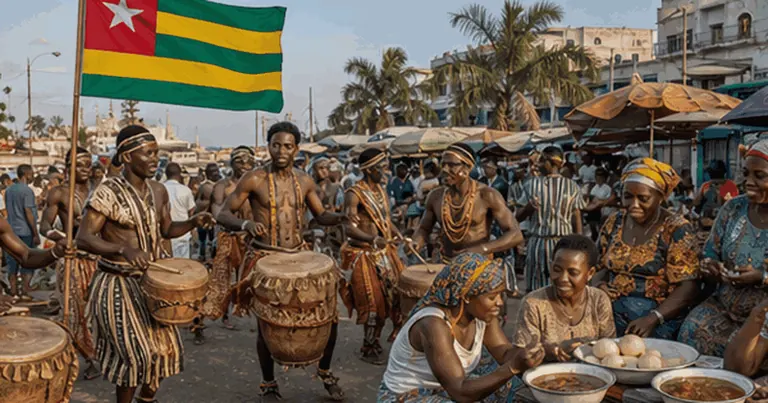
Today Independence Day is marked with official ceremonies, parades, speeches, concerts and flags, especially in Lomé. Visitors see coastal city life, Ewe and Kabye cultural traditions, markets, churches and the red-yellow-green-white flag across public spaces.
Across Togo, the holiday is social and musical. Families gather over fufu, grilled fish, akume, palm wine and beer, while dance, drumming and market life give the day a recognisable local rhythm.
Timeline
- 1884German protectorate of Togoland established
- 1960Togo gains independence from France
- 1967Gnassingbe Eyadema takes power after military coup
Key figures
Stay for the event
Check-in 26 Apr, check-out 28 Apr 2027 — 2 nights around 27 April 2027. Change the dates to stay longer.
AREA
Find stays in LomeGetting there
- Celebratednationwide
- CapitalLome
- Time zoneGMT (UTC+0)
Host country
- Currency: West African CFA franc
- Language: French
- Driving: on the right
- Capital: Lome
- Phone: +228
- Emergency: 117
- Electricity: 220 V, 50 Hz, plugs C/E
What to eat
Pounded yam or cassava dough served with soups and sauces.
Maize dough eaten with okra, tomato or fish sauces.
Spinach or leafy green stew with meat, fish and palm oil.
Coastal fish served with chilli, onions and fried plantains.
Steamed rice or corn cakes with a light sweet flavour.
Groundnut sauce served with rice, meat or vegetables.
What to drink
Traditional millet or sorghum beer used in social settings.
Palm spirit used for toasts and ceremonies.
Cold hibiscus drink served sweet at markets and gatherings.
Culture & traditions
The capital hosts official Independence Day parades and speeches.
The famous fetish market reflects Vodun-linked traditions and healing practices.
UNESCO-listed Batammariba tower houses show northern architectural heritage.
Drum ensembles and dance remain central to ceremonies and festivals.
Coming years
Togo National Day 2028
- Thursday 27 April 2028Next event date
Togo National Day 2029
- Friday 27 April 2029Event date
Togo National Day 2030
- Saturday 27 April 2030Event date