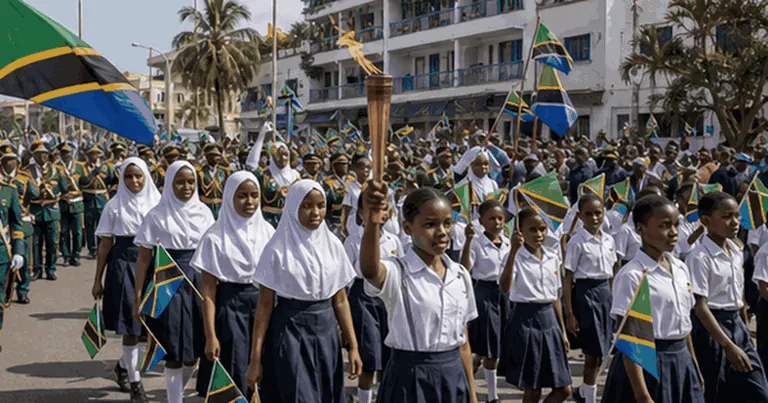
Tanzania National Day 2026


More National days
National days topic
Return to the National days index for related events.
About the event
Tanzania's national story is strongly tied to Swahili language, anti-colonial politics, ujamaa socialism and the unusual union between mainland and island histories. Families gather around pilau, nyama choma, fish, chai and music, while Mount Kilimanjaro, Zanzibar and Swahili culture shape the national image.
The Zanzibar International Film Festival — East Africa's most important film and arts event, held in Stone Town each July.
Why this day
9 December marks the day in 1961 when Tanganyika became independent from Britain. The date is Tanzania's main independence anniversary, while the modern country was formed in 1964 when Tanganyika united with Zanzibar.
The day became a national celebration of sovereignty, unity and Julius Nyerere's leadership. Tanzania's national story is strongly tied to Swahili language, anti-colonial politics, ujamaa socialism and the unusual union between mainland and island histories.
Today Independence Day is marked with official ceremonies, parades, speeches, music and flags, often in Dar es Salaam, Dodoma or another selected city. Visitors see schoolchildren, military bands, taarab and bongo flava influences, and green-yellow-black-blue national colours.
Across Tanzania, the holiday feels both mainland and coastal. Families gather around pilau, nyama choma, fish, chai and music, while Mount Kilimanjaro, Zanzibar and Swahili culture shape the national image.
Timeline
- 1961Tanganyika gains independence from Britain
- 1964Tanganyika and Zanzibar unite as Tanzania
- 1967Arusha Declaration sets ujamaa socialist policy
Key figures
Stay for the event
Check-in 8 Dec, check-out 10 Dec 2026 — 2 nights around 9 December 2026. Change the dates to stay longer.
AREA
Find stays in Dar es SalaamGetting there
- Celebratednationwide
- CapitalDodoma
- Time zoneEAT (UTC+3)
Host country
- Currency: Tanzanian shilling
- Language: English, Swahili
- Driving: on the left
- Capital: Dodoma
- Phone: +255
- Emergency: 112
- Electricity: 230 V, 50 Hz, plugs D/G
What to eat
Grilled Zanzibar spiced chicken marinated in a paste of coriander, cumin, turmeric and coconut — the flavour of the Spice Islands.
Zanzibar fish curry cooked in coconut milk with tomato, chilli and Zanzibar spices — the ocean-derived food of the island coast.
Stiff cornmeal ugali — Tanzania's national starch, eaten by hand with meat stew or sukuma wiki greens at every meal.
Zanzibar flatbread made with egg, onion and meat filling — street-cooked on an iron griddle, the iconic Zanzibar street snack.
Grilled beef, goat or chicken sold from open-air stalls called 'hotels' — the everyday Tanzanian street meal.
Plantain and meat dish cooked in banana leaves — a highland Tanzanian staple from the slopes of Kilimanjaro.
What to drink
Fresh palm sap tapped from coastal coconut palms — sweet and lightly effervescent, a traditional Tanzanian coastal drink.
Zanzibar's spiced chai — black tea brewed with ginger, cardamom, cinnamon and cloves — the most fragrant tea in East Africa.
Fermented millet or banana beer — the communal celebration drink of Tanzania's highland communities.
Culture & traditions
The Zanzibar International Film Festival — East Africa's most important film and arts event, held in Stone Town each July.
The Serengeti-Ngorongoro ecosystem — containing the world's largest wildlife concentration and the annual Great Migration.
Stone Town of Zanzibar — a UNESCO World Heritage city of Arab, Persian, Indian and African architecture and culture.
Mount Kilimanjaro — Africa's highest peak at 5,895m — climbed by tens of thousands yearly and a symbol of Tanzanian grandeur.
Coming years
Tanzania National Day 2027
- Thursday 9 December 2027Next event date
Tanzania National Day 2028
- Saturday 9 December 2028Event date
Tanzania National Day 2029
- Sunday 9 December 2029Event date