South Korea National Day 2027


More National days
National days topic
Return to the National days index for related events.
About the event
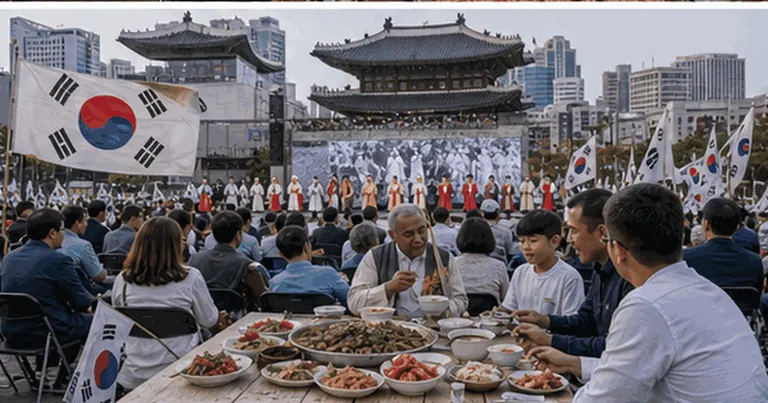
South Korea's Liberation Day marks the end of Japanese colonial rule on 15 August 1945 - the same date, coincidentally, division of the peninsula began. Commemorations centre on Seoul, including a ceremony traditionally attended by the President, and the day is a public holiday marked by flag displays nationwide.
Official ceremonies honour liberation activists and national history.
Why this day
15 August marks Gwangbokjeol, meaning Restoration of Light Day. It commemorates Korea's liberation from Japanese colonial rule in 1945 and, in South Korea, also the establishment of the Republic of Korea in 1948.
The day became one of South Korea's most important national holidays because it carries both liberation and statehood. It is inseparable from colonial memory, national division, the Korean War, democratisation and the continuing hope for peace on the peninsula.
Today Gwangbokjeol is marked with official ceremonies, presidential speeches, flags, patriotic songs and cultural events. Visitors see the Taegeukgi flag on streets and buildings, museum programmes, concerts and a tone that is proud but historically reflective.
Across South Korea, the day may include family outings, memorial visits, food, television specials and public discussion of history. It is less about one parade and more about liberation memory carried through the whole society.
Timeline
- 1945Korea liberated from Japanese colonial rule
- 1948Republic of Korea formally established in Seoul
- 1987June Democracy Movement leads to direct presidential elections
Key figures
Stay for the event
Check-in 14 Aug, check-out 16 Aug 2027 — 2 nights around 15 August 2027. Change the dates to stay longer.
AREA
Find stays in SeoulGetting there
- Celebratednationwide
- CapitalSeoul
- Time zoneKST (UTC+9)
Host country
- Currency: South Korean won
- Language: Korean
- Driving: on the right
- Capital: Seoul
- Phone: +82
- Emergency: 112
- Electricity: 220 V, 60 Hz, plugs C/F
What to eat
Marinated beef grilled or stir-fried with sweet soy flavour.
Fermented vegetables with chilli, garlic and deep national importance.
Glass noodles stir-fried with vegetables and meat for celebrations.
Rice bowl with vegetables, egg, meat and gochujang.
Rice cakes used for holidays, gifts and family rituals.
Grilled pork belly wrapped with lettuce, garlic and sauces.
What to drink
Korean distilled spirit used for toasts and meals.
Milky rice wine with a light fizz and rustic character.
Roasted grain tea served hot or cold in homes.
Culture & traditions
Official ceremonies honour liberation activists and national history.
Flags appear on homes, streets and public buildings.
The Cheonan museum preserves anti-colonial movement memory.
Music, film and television now carry Korean identity globally.
Coming years
South Korea National Day 2028
- Tuesday 15 August 2028Next event date
South Korea National Day 2029
- Wednesday 15 August 2029Event date
South Korea National Day 2030
- Thursday 15 August 2030Event date