Sierra Leone National Day 2027

More National days
National days topic
Return to the National days index for related events.
About the event
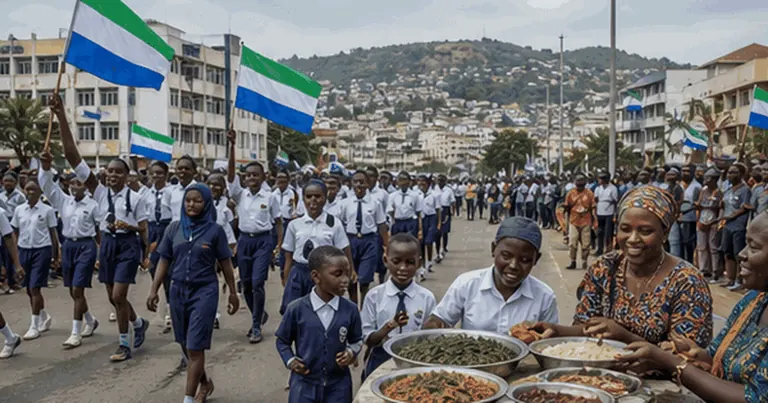
Visitors see green-white-blue colours, beaches, church and mosque gatherings, and a lively public culture shaped by Krio language and music. Rice, cassava leaves, grilled fish, ginger beer and music turn the public holiday into a warm social gathering.
The capital hosts official events, prayers and public Independence Day gatherings.
Why this day
27 April marks the day in 1961 when Sierra Leone became independent from Britain. The date created a sovereign state from a colony whose capital, Freetown, had been founded for formerly enslaved people and later became a major Krio cultural centre.
The day became the national celebration of freedom, but Sierra Leone's later civil war gives independence a sober undertone. Since the war ended in 2002, the holiday has also carried themes of peace, recovery and community resilience.
Today Independence Day is marked with official ceremonies, prayers, music, flags, school activities and street celebrations, especially in Freetown. Visitors see green-white-blue colours, beaches, church and mosque gatherings, and a lively public culture shaped by Krio language and music.
Across Sierra Leone, the day is family-centred and coastal in feel. Rice, cassava leaves, grilled fish, ginger beer and music turn the public holiday into a warm social gathering.
Timeline
- 1787Province of Freedom settlement begins near Freetown
- 1961Sierra Leone gains independence from Britain
- 2002Civil war officially ends after eleven years
Key figures
Stay for the event
Check-in 26 Apr, check-out 28 Apr 2027 — 2 nights around 27 April 2027. Change the dates to stay longer.
AREA
Find stays in FreetownGetting there
- Celebratednationwide
- CapitalFreetown
- Time zoneGMT (UTC+0)
Host country
- Currency: Leone
- Language: English
- Driving: on the right
- Capital: Freetown
- Phone: +232
- Emergency: 019
- Electricity: 230 V, 50 Hz, plugs D/G
What to eat
Ground cassava leaves cooked with meat, fish and palm oil.
Peanut sauce with chicken, beef or fish, served over rice.
Tomato rice with spices and meat or fish for parties.
Fried fish, plantain, akara and other street snacks sold together.
Leafy green stew with palm oil, chilli and meat or fish.
Black-eyed bean fritters served as snacks or breakfast food.
What to drink
Homemade ginger drink with a strong spicy kick.
Traditional fermented palm sap shared in many communities.
Popular lager often served at bars and celebrations.
Culture & traditions
The capital hosts official events, prayers and public Independence Day gatherings.
Krio language, food and architecture give Freetown a distinct Atlantic identity.
The slave-trade site links Sierra Leone to the wider Atlantic diaspora.
Horn-led street music brings energy to processions and celebrations.
Coming years
Sierra Leone National Day 2028
- Thursday 27 April 2028Next event date
Sierra Leone National Day 2029
- Friday 27 April 2029Event date
Sierra Leone National Day 2030
- Saturday 27 April 2030Event date