Rwanda National Day 2027


More National days
National days topic
Return to the National days index for related events.
About the event
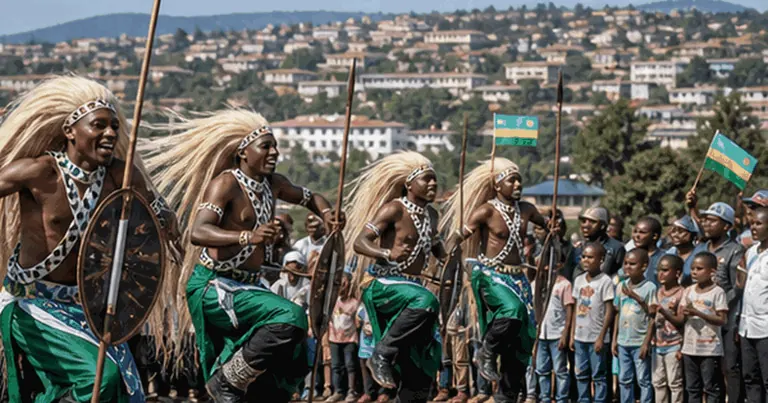
Family gatherings, church services, community work, traditional dance and meals of brochettes, beans and plantains connect daily life to a difficult but resilient public memory. The holiday has a difficult place in Rwanda's history because independence was followed by cycles of violence and exile, culminating in the 1994 genocide against the Tutsi.
Rwandan culture is shaped by hills, cattle symbolism, dance, language unity and post-genocide remembrance. National celebrations often balance pride with a strong language of reconciliation.
Why this day
1 July marks the day in 1962 when Rwanda became independent from Belgium. The date ended colonial rule over a densely populated kingdom whose social categories and politics had been deeply reshaped by German and Belgian administration.
The holiday has a difficult place in Rwanda's history because independence was followed by cycles of violence and exile, culminating in the 1994 genocide against the Tutsi. Modern Rwanda often places stronger public emphasis on Liberation Day on 4 July and Kwibuka remembrance in April.
Today Independence Day is recognised as a national date, while public ceremonies tend to sit within a wider calendar of remembrance, unity and rebuilding. Visitors see a country that presents order, memorials, clean streets, hills, dance and development as part of national identity.
Across Rwanda, the national story is careful and reflective. Family gatherings, church services, community work, traditional dance and meals of brochettes, beans and plantains connect daily life to a difficult but resilient public memory.
Timeline
- 1897German colonial rule begins over the Rwandan kingdom
- 1962Rwanda gains independence from Belgium
- 1994Genocide ends and a new national era begins
Key figures
Stay for the event
Check-in 30 Jun, check-out 2 Jul 2027 — 2 nights around 1 July 2027. Change the dates to stay longer.
AREA
Find stays in KigaliGetting there
- Celebratednationwide
- CapitalKigali
- Time zoneCAT (UTC+2)
Host country
- Currency: Rwandan franc
- Language: English, French
- Driving: on the right
- Capital: Kigali
- Phone: +250
- Emergency: 112
- Electricity: 230 V, 50 Hz, plugs C/E/G
What to eat
Grilled meat skewers, especially goat, served with chips or plantains.
Cassava leaves cooked with peanuts, often served with rice or ugali.
Firm maize or cassava porridge eaten with sauces and stews.
Pumpkin cooked with beans, a homely Rwandan dish.
Fried pork pieces, popular in bars and social gatherings.
Green bananas cooked as a savoury starch with sauce or meat.
What to drink
Fermented milk drink with a tangy taste and pastoral roots.
Traditional banana beer used in social settings.
Highland coffee is a major export and source of national pride.
Culture & traditions
Heroic dance with spears, drums and flowing white manes.
Genocide memorials are central to understanding modern Rwanda.
Monthly community work reflects civic participation and public order.
Long-horned royal cattle remain a powerful cultural image.
Coming years
Rwanda National Day 2028
- Saturday 1 July 2028Next event date
Rwanda National Day 2029
- Sunday 1 July 2029Event date
Rwanda National Day 2030
- Monday 1 July 2030Event date