
About the event
Why Russia celebrates 12 June On 12 June 1990, the Russian Soviet Federative Socialist Republic issued a Declaration of State Sovereignty — asserting the primacy of Russian law over Soviet law.
The historical and symbolic centre of Russia — the fortified complex in Moscow houses the president and St Basil's Cathedral.
Why this day
On 12 June 1990, the Russian Soviet Federative Socialist Republic issued a Declaration of State Sovereignty — asserting the primacy of Russian law over Soviet law. A year later, on 12 June 1991, Boris Yeltsin became the first democratically elected president of Russia. The date was officially adopted as Russian Independence Day in 1992, later renamed Russia Day.
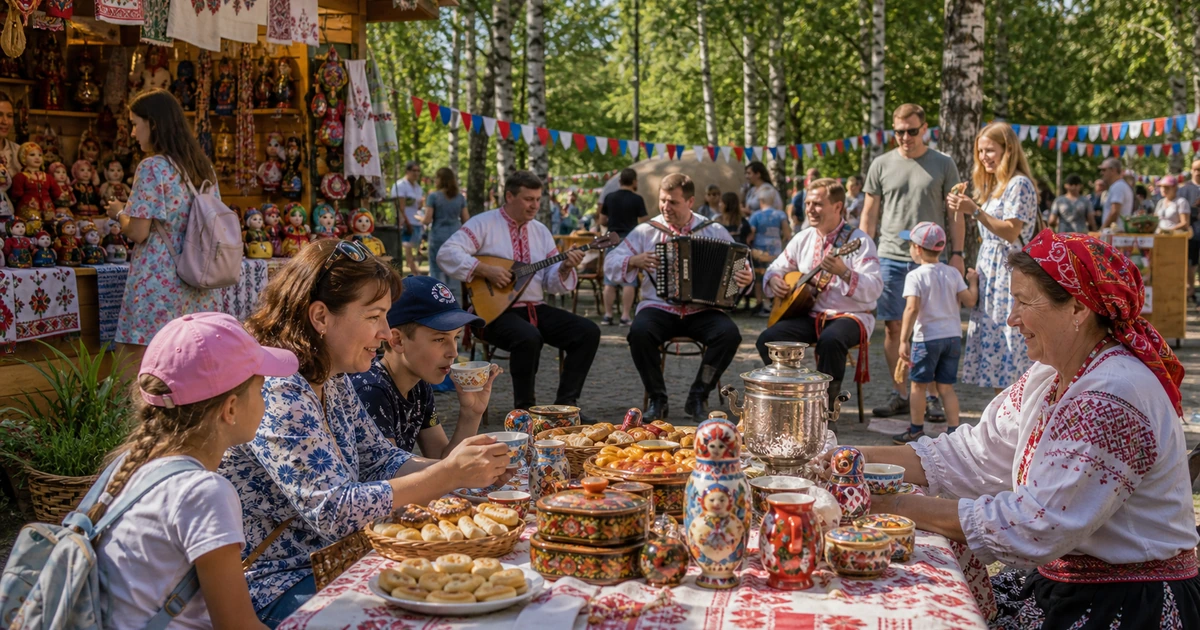
Russia Day celebrates the establishment of the modern Russian Federation as a distinct state separate from the Soviet Union. The holiday was controversial when first introduced — many Russians saw no reason to celebrate independence from a state they themselves dominated. Over time, Russia Day became more of a general patriotic holiday, rebranded around Russian culture, history and national pride.
The day is marked with a presidential address, fireworks displays in Moscow and other major cities, and the Kremlin's ceremony for state awards. Red Square fills with concerts and cultural events. In recent years the holiday has taken on more nationalist overtones as Russia's political direction has shifted.
Timeline
- 1991Russian Federation declares sovereignty from the Soviet Union
- 1993Russian constitution adopted following the constitutional crisis
- 2014Crimea annexed by Russia — significant shift in post-Soviet geopolitics
Key figures
Stay for the event
Check-in 11 Jun, check-out 13 Jun 2027 — 2 nights around 12 June 2027. Change the dates to stay longer.
AREA
Find stays in MoscowHost country
- Currency: Russian ruble
- Language: Russian
- Driving: on the right
- Capital: Moscow
- Phone: +7
- Emergency: 112
- Electricity: 230 V, 50 Hz, plugs C/F
What to eat
Beet soup with beef and sour cream — consumed across all Slavic countries but most associated with Russia and Ukraine.
Small meat dumplings of Siberian origin — boiled and served with butter, sour cream or vinegar.
Thin buckwheat pancakes served with caviar, sour cream, smoked salmon or jam.
Strips of beef in a creamy mushroom sauce — a 19th-century St Petersburg dish that spread worldwide.
Diced potato, chicken, pickles and peas in mayonnaise — Russia's most beloved celebration salad.
Cottage cheese pancakes — pan-fried and served with sour cream and jam for breakfast.
What to drink
Russia's national spirit — consumed neat and ice-cold, the centre of toasting culture.
Fermented rye bread drink — mildly alcoholic, sold from yellow tanks on Moscow streets in summer.
Fermented milk drink — consumed daily as a health and breakfast drink across Russia.
Culture & traditions
The historical and symbolic centre of Russia — the fortified complex in Moscow houses the president and St Basil's Cathedral.
Moscow's world-famous ballet company — among the most prestigious classical ballet companies in the world.
The world's longest railway at 9289 km — crossing eight time zones from Moscow to Vladivostok.
The world's deepest and oldest lake — containing 20% of the world's unfrozen surface fresh water.
Coming years
Russia Day 2028
- Monday 12 June 2028Next event date
Russia Day 2029
- Tuesday 12 June 2029Event date
Russia Day 2030
- Wednesday 12 June 2030Event date