Republic of the Congo National Day 2027


More National days
National days topic
Return to the National days index for related events.
About the event
The Republic of the Congo's national day marks independence from France on 15 August 1960. Celebrations are centred on Brazzaville, the capital, with military parades and civic ceremony held nationwide.
The capital hosts official parades, speeches and music events.
Why this day
15 August marks the day in 1960 when the Republic of the Congo became independent from France. The date ended colonial rule over a Congo River state whose capital, Brazzaville, had once served as the symbolic capital of Free France during World War II.
The day became the country's independence celebration through years of one-party rule, socialist politics, civil conflict and later political transitions. It carries the language of sovereignty, unity and peace in a country closely tied to river trade and oil wealth.
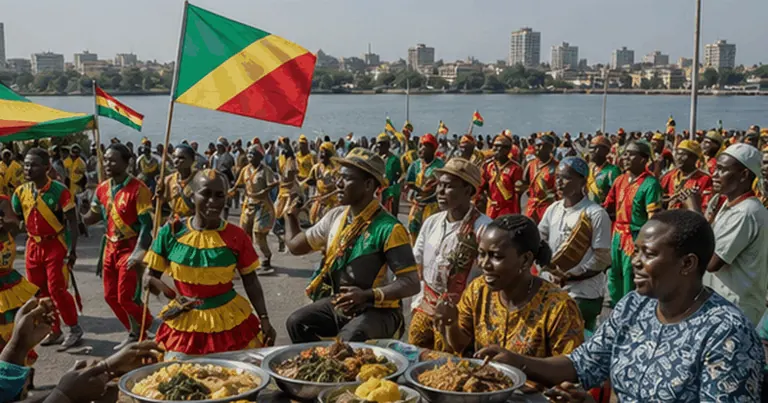
Today Independence Day is marked with official ceremonies, parades, speeches, concerts and flags, especially in Brazzaville. Visitors see a national culture shaped by river life, rumba music, sape fashion, churches and the green-yellow-red flag.
Across Congo, the celebration is social and musical. Families gather around grilled fish, cassava, saka-saka and beer, while dance music and stylish dress give the day a recognisable Brazzaville energy.
Timeline
- 1880French influence expands around Brazzaville and the Congo River
- 1960Republic of the Congo gains independence from France
- 1991National conference opens a multi-party transition
Key figures
Stay for the event
Check-in 14 Aug, check-out 16 Aug 2027 — 2 nights around 15 August 2027. Change the dates to stay longer.
AREA
Find stays in BrazzavilleGetting there
- Celebratednationwide
- CapitalBrazzaville
- Time zoneWAT (UTC+1)
Host country
- Currency: Central African CFA franc
- Language: French, Kikongo
- Driving: on the right
- Capital: Brazzaville
- Phone: +242
- Emergency: 117
- Electricity: 230 V, 50 Hz, plugs C/E
What to eat
Cassava leaves cooked with palm oil, fish or meat.
Fish cooked in leaves with chilli, onion and local spices.
Cassava or maize dough served with sauces and stews.
Leaf-wrapped fish steamed or grilled for smoky flavour.
Fried dough balls eaten as snacks or with beans.
Goat meat grilled and served with chilli, onions and cassava.
What to drink
Popular lager shared in bars and at celebrations.
Traditional fermented palm drink used socially in many regions.
Sweet-spicy ginger drink served cold in markets.
Culture & traditions
The capital hosts official parades, speeches and music events.
Dandy culture turns elegant dress into public performance and pride.
Rumba links Brazzaville and Kinshasa through dance and guitar music.
The river defines geography, trade and the relationship with Kinshasa opposite.
Coming years
Republic of the Congo National Day 2028
- Tuesday 15 August 2028Next event date
Republic of the Congo National Day 2029
- Wednesday 15 August 2029Event date
Republic of the Congo National Day 2030
- Thursday 15 August 2030Event date