Poland Independence Day 2026


More National days
National days topic
Return to the National days index for related events.
About the event
Why Poland celebrates 11 November On 11 November 1918 — the day the Armistice ending World War I was signed — Poland regained its independence after 123 years of partition between Russia, Prussia and Austria.
Rebuilt brick by brick after being 85% destroyed in World War II — a UNESCO World Heritage site.
Why this day
On 11 November 1918 — the day the Armistice ending World War I was signed — Poland regained its independence after 123 years of partition between Russia, Prussia and Austria. The country had literally disappeared from the map of Europe in 1795. The simultaneous collapse of all three partitioning empires at the end of World War I created the conditions for restoration.
The recovery of independence was led by Józef Piłsudski, the military commander and statesman who became the first head of the Polish state. He had spent years organising Polish military forces and prepared for the moment when the partitioning powers would collapse. On 11 November 1918, Piłsudski accepted command of the Polish armed forces in Warsaw.
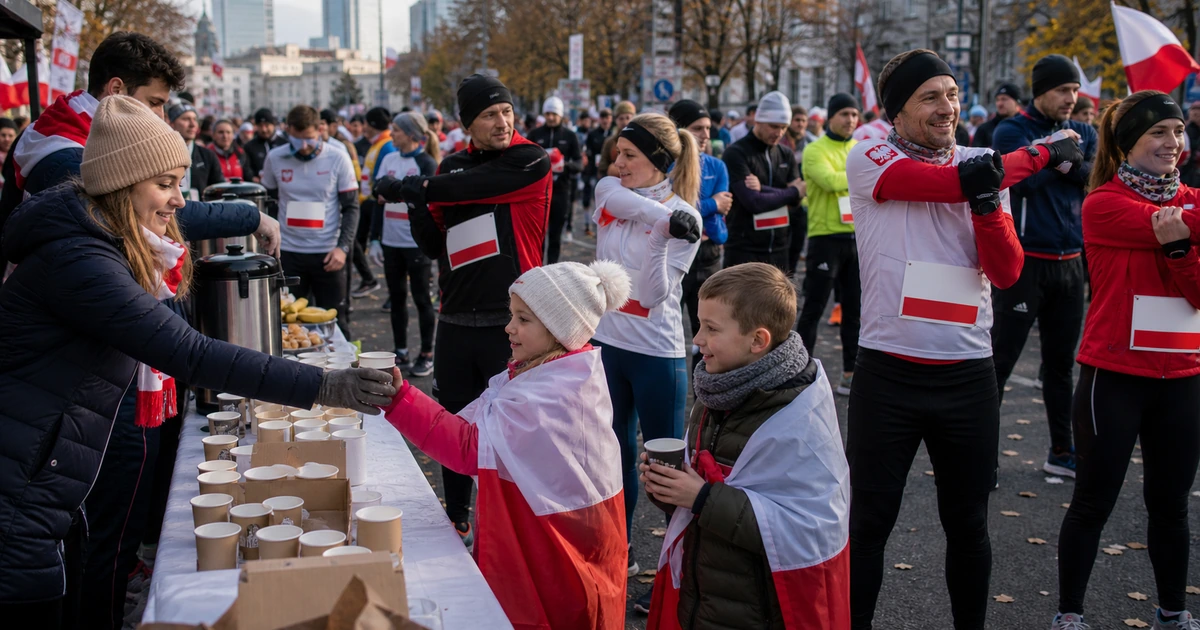
Polish Independence Day is marked with a large march in Warsaw — the Independence March — which has grown into one of the largest nationalist marches in Europe. Official ceremonies at the Tomb of the Unknown Soldier are also held. The day is deeply emotional for Poles — the 123 years of partition, the Warsaw Uprising, the Nazi and Soviet occupations make independence feel precious and hard-won.
Timeline
- 1791Poland adopts the world's second modern written constitution
- 1795Poland partitioned — disappears from the map of Europe for 123 years
- 1918Poland regains independence after World War I
Stay for the event
Check-in 10 Nov, check-out 12 Nov 2026 — 2 nights around 11 November 2026. Change the dates to stay longer.
AREA
Find stays in WarsawGetting there
- Celebratednationwide
- CapitalWarsaw
- Time zoneCET (UTC+1)
Host country
- Currency: Polish zÅ?oty
- Language: Polish
- Driving: on the right
- Capital: Warsaw
- Phone: +48
- Emergency: 112
- Electricity: 230 V, 50 Hz, plugs C/E
What to eat
Boiled dumplings filled with potato and cheese, sauerkraut and mushroom, or meat — served with butter and sour cream.
Hunter's stew of sauerkraut, fresh cabbage and various smoked meats and sausages — improves over days of slow cooking.
Sour rye soup with smoked sausage and hard-boiled egg — served in a bread bowl at Christmas and Easter.
Breaded pork cutlet — Poland's answer to the Wiener Schnitzel, served with mashed potato and sauerkraut.
Cabbage rolls stuffed with pork and rice in tomato sauce — the central Polish comfort food.
Poppy seed roll — sweet yeast cake filled with a thick poppy seed paste, eaten at Christmas.
What to drink
Bison grass vodka from the Białowieża forest — the most internationally recognised Polish spirit.
Tyskie, Żywiec and Lech are Poland's leading lager brands — beer culture has boomed with craft breweries.
Stewed fruit drink — made from sour cherries, plums or apples, drunk hot or cold throughout the year.
Culture & traditions
Rebuilt brick by brick after being 85% destroyed in World War II — a UNESCO World Heritage site.
The 1980s trade union movement that began in Gdańsk's shipyards and led to the fall of communism in Eastern Europe.
Frédéric Chopin — born near Warsaw — is performed at the Royal Baths park concerts every Sunday in summer.
The site of the Nazi death camp near Kraków — visited by over 2 million people annually as a place of remembrance.
Coming years
Poland Independence Day 2027
- Thursday 11 November 2027Next event date
Poland Independence Day 2028
- Saturday 11 November 2028Event date
Poland Independence Day 2029
- Sunday 11 November 2029Event date