Palestine National Day 2026


More National days
National days topic
Return to the National days index for related events.
About the event
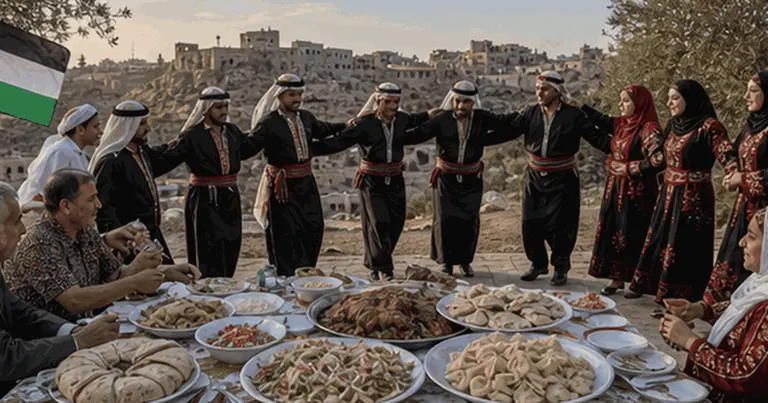
In the West Bank, Gaza, refugee camps and diaspora communities, the day may be marked with flags, speeches, school events, cultural programmes, poetry and remembrance rather than a normal state parade.
Line dance performed at weddings, festivals and national events.
Why this day
15 November marks the Palestinian Declaration of Independence, proclaimed by the Palestine National Council in Algiers in 1988. The date is used as a national day for Palestinian statehood, even though sovereignty remains contested and incomplete.
The day became important because it expresses the Palestinian claim to self-determination after decades of displacement, occupation, exile and failed negotiations. It sits alongside Nakba memory, Land Day and many other dates in a deeply political national calendar.
Today observance varies by place and circumstance. In the West Bank, Gaza, refugee camps and diaspora communities, the day may be marked with flags, speeches, school events, cultural programmes, poetry and remembrance rather than a normal state parade.
Across Palestinian life, national identity is carried through food, embroidery, keys, olive trees, music, dabke and family memory. The day is therefore both political and intimate, public and personal.
Timeline
- 1948Nakba displaces hundreds of thousands of Palestinians
- 1988Palestinian Declaration of Independence proclaimed in Algiers
- 2012UN grants Palestine non-member observer state status
Key figures
Stay for the event
Check-in 14 Nov, check-out 16 Nov 2026 — 2 nights around 15 November 2026. Change the dates to stay longer.
AREA
Find stays in RamallahGetting there
- Celebratednationwide
- CapitalRamallah
- Time zoneEET (UTC+2)
Host country
- Currency: Egyptian pound
- Language: Arabic
- Driving: on the right
- Capital: Ramallah
- Phone: +970
- Electricity: 230 V, 50 Hz, plugs C/H
What to eat
Sumac chicken with onions and olive oil on taboon bread.
Upside-down rice, vegetable and meat dish turned out dramatically.
Cheese pastry with syrup, especially associated with Nablus.
Fried chickpea balls served with tahini, salad and bread.
Layered rice and vegetables cooked with chicken or lamb.
Stuffed pancakes filled with cheese or nuts for festive sweets.
What to drink
Sweet tea with mint is central to hospitality.
Cardamom coffee served at visits, ceremonies and family gatherings.
Tamarind drink served cold during warm seasons and Ramadan.
Culture & traditions
Line dance performed at weddings, festivals and national events.
Regional embroidery patterns preserve village identity and women's craft.
Olive trees symbolise land, continuity and family livelihood.
Poetry gives Palestinian identity one of its strongest public voices.
Coming years
Palestine National Day 2027
- Monday 15 November 2027Next event date
Palestine National Day 2028
- Wednesday 15 November 2028Event date
Palestine National Day 2029
- Thursday 15 November 2029Event date