Our Lady of Meritxell Day 2027


More National days
National days topic
Return to the National days index for related events.
About the event
Despite being one of Europe's smallest states at 468 square kilometres, Andorra has maintained its distinct identity through centuries of European conflict, using its mountain position between France and Spain as a buffer.
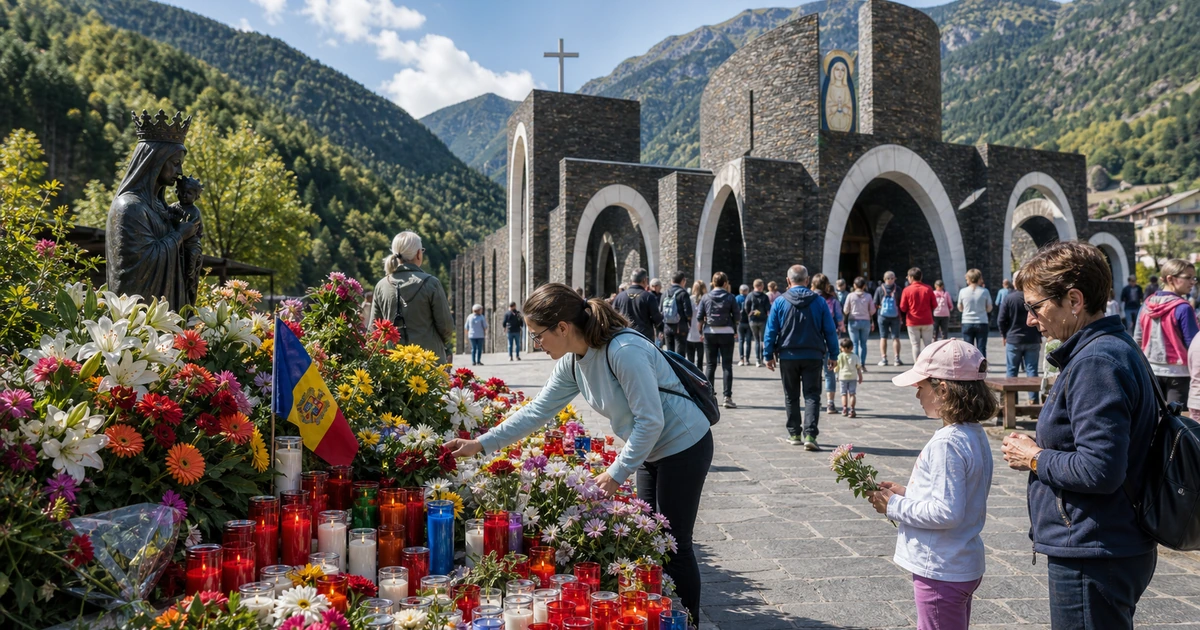
The national sanctuary of Andorra — pilgrimage destination for all Andorrans on 8 September.
Why this day
Andorra celebrates Our Lady of Meritxell Day on 8 September — the feast day of the Virgin of Meritxell, the patron saint of Andorra. The holiday combines the national day with a deeply religious Catalan celebration centred on the sanctuary of Meritxell in the Canillo parish, where Andorrans make a pilgrimage each year.
Andorra is a co-principality jointly ruled by two co-princes — the Bishop of Urgell and the President of France — a unique constitutional arrangement dating from the 1278 Paréage treaty. Despite being one of Europe's smallest states at 468 square kilometres, Andorra has maintained its distinct identity through centuries of European conflict, using its mountain position between France and Spain as a buffer.
The national celebration includes a solemn Mass at the Sanctuary of Meritxell, folk dancing and traditional music in the parishes, and cultural performances across Andorra la Vella. The day is a rare occasion when all of Andorra's seven parishes gather in shared celebration.
Timeline
- 1278Paréage treaty establishes co-principality with Spain and France
- 1866New democratic reform — Andorra modernises its institutions
- 1993Andorra adopts its first written constitution and joins the United Nations
Key figures
Stay for the event
Check-in 7 Sep, check-out 9 Sep 2026 — 2 nights around 8 September 2026. Change the dates to stay longer.
AREA
Find stays in Andorra la VellaHost country
- Currency: euro
- Language: Catalan
- Driving: on the right
- Capital: Andorra la Vella
- Phone: +376
- Emergency: 112
- Electricity: 230 V, 50 Hz, plugs C/F
What to eat
Thick stew of vegetables, beans and pasta with cured sausage — the essential Catalan mountain winter dish.
Mashed potato and cabbage pan-fried with bacon — simple, warming and quintessentially Pyrenean.
Snails cooked with garlic butter and herbs — a Catalan tradition shared across the Pyrenees.
Assorted Andorran cured meats — botifarra sausage, fuet and llonganissa from local producers.
Pan-fried mountain trout caught from Andorra's rivers — served with butter, lemon and herbs.
Flatbread topped with roasted vegetables and anchovies or sausage — the Catalan outdoor bread.
What to drink
Red wine, brandy, orange and lemon — the Spanish festive drink widely served at Andorran celebrations.
Catalan sparkling wine — crisp, festive and the drink of choice at Andorran celebrations.
Andorra's low-tax status makes it a shopping destination — quality spirits from France and Spain at lower prices.
Culture & traditions
The national sanctuary of Andorra — pilgrimage destination for all Andorrans on 8 September.
Andorra's historic parliament building in Andorra la Vella — one of the smallest national parliaments in the world.
Grandvalira and Vallnord are among the Pyrenees' best ski areas — winter tourism drives Andorra's economy.
Andorra has the highest concentration of Romanesque art and architecture in the Pyrenees.
Coming years
Our Lady of Meritxell Day 2028
- Friday 8 September 2028Next event date
Our Lady of Meritxell Day 2029
- Saturday 8 September 2029Event date
Our Lady of Meritxell Day 2030
- Sunday 8 September 2030Event date