Mozambique National Day 2027

More National days
National days topic
Return to the National days index for related events.
About the event
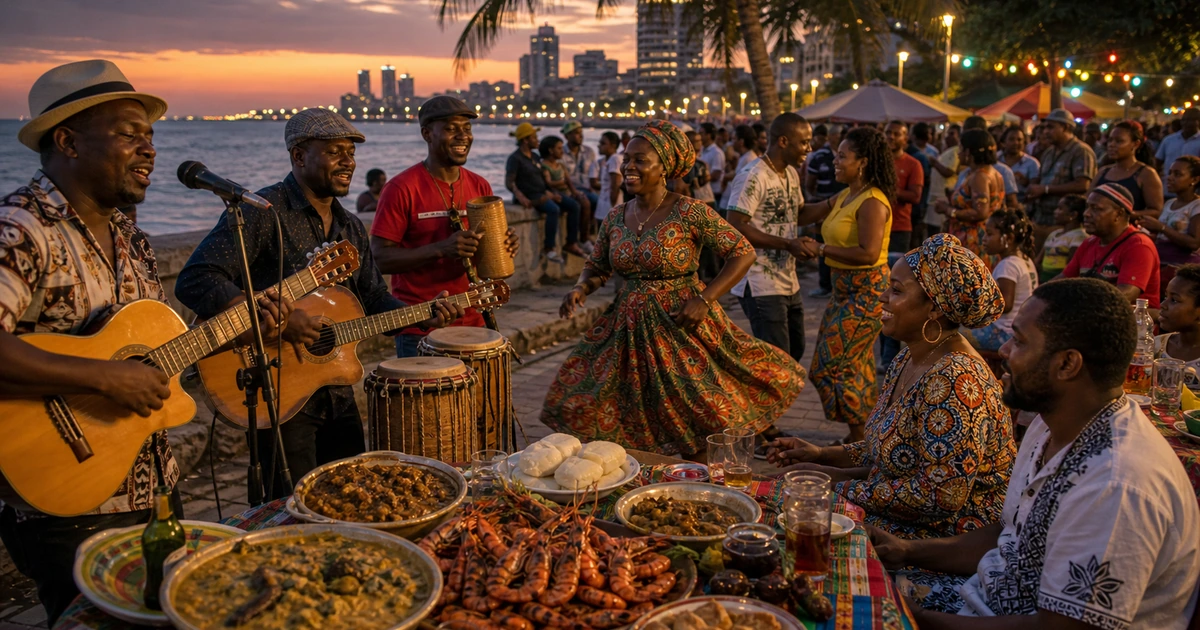
Across Mozambique, the day is also about food and family: peri-peri chicken, prawns, matapa, xima, marrabenta music and beach gatherings turn the holiday into a warm public celebration.
Maputo's vibrant arts scene — music, sculpture and mural art have flourished since independence, with the National Art Museum at its centre.
Why this day
25 June marks the day in 1975 when Mozambique became independent from Portugal. The date followed a decade of armed struggle led by FRELIMO and the wider collapse of Portugal's African empire after the Carnation Revolution in Lisbon.
The day became Mozambique's central national celebration because independence promised freedom after centuries of coastal trade, plantation labour, forced labour and colonial rule. Later civil war made the meaning of peace and unity just as important as sovereignty.
Today Independence Day is marked with official ceremonies, parades, music, speeches and flags, especially in Maputo. Visitors see a country whose national identity is coastal, Lusophone, African and strongly musical, with memories of liberation still prominent in public space.
Across Mozambique, the day is also about food and family: peri-peri chicken, prawns, matapa, xima, marrabenta music and beach gatherings turn the holiday into a warm public celebration.
Timeline
- 1498Vasco da Gama reaches the Mozambican coast
- 1964FRELIMO begins armed struggle against Portuguese rule
- 1975Mozambique becomes independent from Portugal
Key figures
Stay for the event
Check-in 24 Jun, check-out 26 Jun 2027 — 2 nights around 25 June 2027. Change the dates to stay longer.
AREA
Find stays in MaputoGetting there
- Celebratednationwide
- CapitalMaputo
- Time zoneCAT (UTC+2)
Host country
- Currency: Mozambican metical
- Language: Portuguese
- Driving: on the left
- Capital: Maputo
- Phone: +258
- Emergency: 117
- Electricity: 220 V, 50 Hz, plugs C/F/M
What to eat
Mozambique's most famous dish — grilled whole prawns or crayfish from the Indian Ocean in a piri-piri chilli butter sauce.
Coconut-braised chicken with tomato, onion and Mozambican spices — a rich Swahili-influenced celebration dish.
Cornmeal porridge stiffened to ugali consistency — the staple of inland Mozambican communities.
Grilled or fried fresh fish from Lake Malawi or the Mozambique Channel — the most important everyday protein.
Steamed bread rolls from the Portuguese tradition — served with piri-piri sauce or butter in Maputo's cafés.
Grilled cassava chips — fried manioc pieces served with salt and chilli at Mozambican street celebrations.
What to drink
Fresh coconut water tapped from the abundant Indian Ocean coast palms — the natural drink of Mozambique's long coastline.
Mozambique's local lager — brewed in Maputo and available at every outdoor celebration along the coast.
Fermented cashew fruit juice — from Mozambique's cashew orchards, a seasonal celebration drink.
Culture & traditions
Maputo's vibrant arts scene — music, sculpture and mural art have flourished since independence, with the National Art Museum at its centre.
Chopi timbila xylophone orchestras — a UNESCO-listed musical tradition of the Chopi people from the Gaza province.
Island of Mozambique — the tiny UNESCO coral island with 500 years of Portuguese and Arab history, one of Africa's finest heritage sites.
Gorongosa National Park — restored from the devastation of the civil war into one of Africa's most biodiverse ecosystems.
Coming years
Mozambique National Day 2028
- Sunday 25 June 2028Next event date
Mozambique National Day 2029
- Monday 25 June 2029Event date
Mozambique National Day 2030
- Tuesday 25 June 2030Event date