Morocco National Day 2026


More National days
National days topic
Return to the National days index for related events.
About the event
Morocco's path out of colonial rule involved French and Spanish zones, urban nationalist parties, rural resistance and diplomacy, making the story broader than a single declaration.
The king's message is a central feature of official observance.
Why this day
18 November marks Morocco's Independence Day, connected to Sultan Mohammed V's return from exile and the end of French protectorate rule. The date celebrates restored sovereignty under the Alaouite monarchy after years of nationalist mobilisation.
The day became a national celebration because independence was closely tied to the king as a symbol of unity. Morocco's path out of colonial rule involved French and Spanish zones, urban nationalist parties, rural resistance and diplomacy, making the story broader than a single declaration.
Today the day is marked with royal messages, flags, official ceremonies and public displays of national colour. Visitors see the red flag with green star across medinas, schools, government buildings and boulevards from Rabat and Casablanca to Fes and Marrakech.
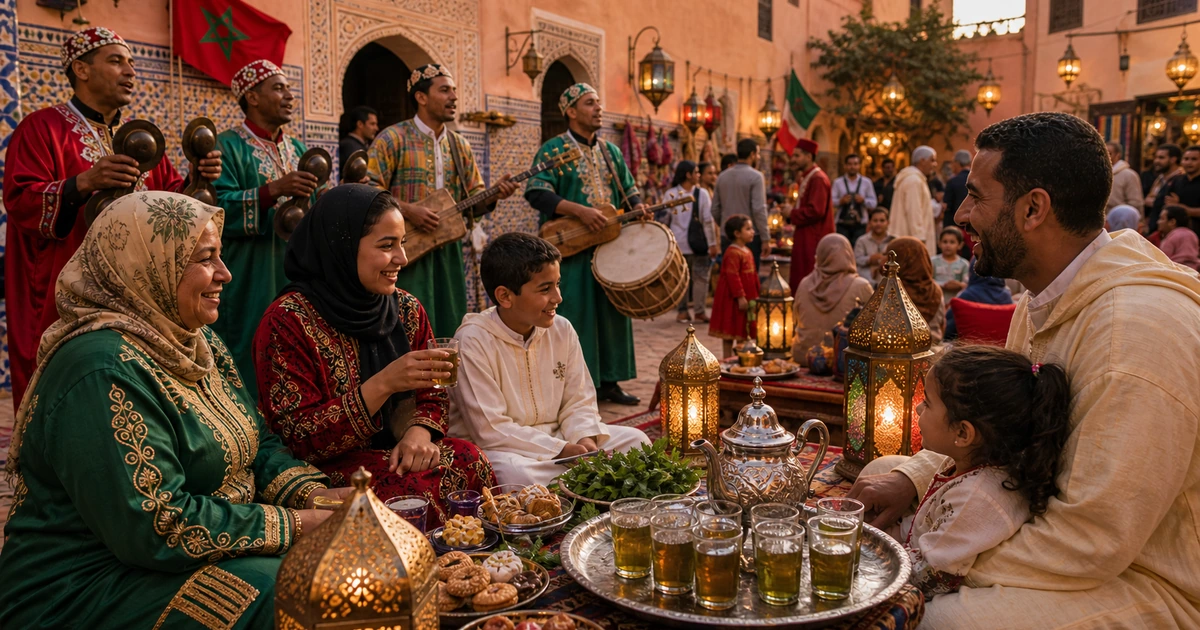
Across Morocco, the holiday sits within a culture of family visits, tea, pastries, city promenades and local pride. The mood is civic and monarchical, with history, religion and everyday hospitality closely connected.
Timeline
- 1912French protectorate begins while Spain controls northern zones
- 1955Sultan Mohammed V returns from exile
- 1956Morocco regains independence from France
Key figures
Stay for the event
Check-in 17 Nov, check-out 19 Nov 2026 — 2 nights around 18 November 2026. Change the dates to stay longer.
AREA
Find stays in RabatGetting there
- Celebratednationwide
- CapitalRabat
- Time zone+01 (UTC+1)
Host country
- Currency: Moroccan dirham
- Language: Arabic, Berber
- Driving: on the right
- Capital: Rabat
- Phone: +212
- Emergency: 112
- Electricity: 220 V, 50 Hz, plugs C/E
What to eat
Steamed semolina with vegetables and meat, traditionally served for Friday meals.
Slow-cooked chicken with preserved lemon, olives and saffron.
Layered pastry with pigeon or chicken, almonds, cinnamon and sugar.
Tomato, lentil and chickpea soup served during Ramadan and gatherings.
Slow-roasted lamb, tender and celebratory, often eaten by hand.
Sesame pastry fried and coated in honey, served at festive tables.
What to drink
Sweet green tea with mint is Morocco's defining hospitality ritual.
Half coffee and half milk, common in Moroccan cafes.
Thick avocado smoothie with milk and almonds, popular in juice shops.
Culture & traditions
The king's message is a central feature of official observance.
The capital carries state institutions, royal sites and national symbolism.
Spiritual music and rhythm from Morocco's African heritage shape festivals.
Leather, tiles, metalwork and textiles make national culture visible to visitors.
Coming years
Morocco National Day 2027
- Thursday 18 November 2027Next event date
Morocco National Day 2028
- Saturday 18 November 2028Event date
Morocco National Day 2029
- Sunday 18 November 2029Event date