Mongolia National Day 2027


More National days
National days topic
Return to the National days index for related events.
About the event
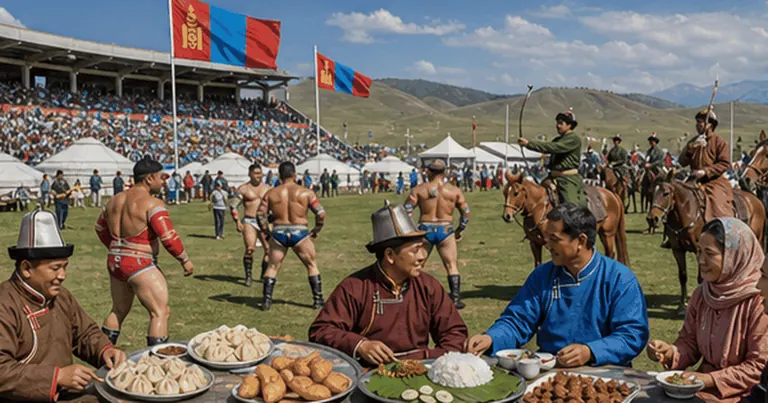
11 July marks the start of Naadam and commemorates Mongolia's 1921 People's Revolution, which established modern Mongolian statehood with Soviet backing. Provinces hold their own games, families eat khuushuur, drink airag, visit relatives and spend long summer days around stadiums, steppe camps and horses.
Wrestlers compete in open tournaments with eagle-like ceremonial gestures.
Why this day
11 July marks the start of Naadam and commemorates Mongolia's 1921 People's Revolution, which established modern Mongolian statehood with Soviet backing. The date sits on top of a much older national memory reaching back to Chinggis Khan and the Mongol Empire.
The day became Mongolia's central national celebration because Naadam turns state history into public sport and nomadic culture. Wrestling, horse racing and archery are called the three manly games, though women now compete in archery and girls in horse racing.
Today Naadam opens with a major ceremony in Ulaanbaatar, with dancers, athletes, soldiers, flags and horsemen. Visitors see deel robes, throat singing, horse culture, wrestling titles and a celebration that feels both ancient and modern.
Across Mongolia, Naadam is local as well as national. Provinces hold their own games, families eat khuushuur, drink airag, visit relatives and spend long summer days around stadiums, steppe camps and horses.
Timeline
- 1206Temujin proclaimed Chinggis Khan and Mongol Empire begins
- 1921People's Revolution establishes modern Mongolian statehood
- 1990Democratic revolution ends one-party communist rule
Key figures
Stay for the event
Check-in 10 Jul, check-out 12 Jul 2027 — 2 nights around 11 July 2027. Change the dates to stay longer.
AREA
Find stays in UlaanbaatarGetting there
- Celebratednationwide
- CapitalUlaanbaatar
- Time zoneULAT (UTC+8)
Host country
- Currency: Mongolian tögrög
- Language: Mongolian
- Driving: on the right
- Capital: Ulaanbaatar
- Phone: +976
- Emergency: 101
- Electricity: 220 V, 50 Hz, plugs C/E/F
What to eat
Fried meat pastries eaten in huge numbers during Naadam.
Steamed dumplings filled with minced meat and onion.
Goat or marmot cooked with hot stones, a dramatic countryside dish.
Fried noodles with meat and vegetables, filling and practical.
Mutton cooked with hot stones in a sealed container.
Dried curd snacks made from fermented milk.
What to drink
Fermented mare's milk, essential to summer hospitality.
Salty milk tea served throughout the day.
Distilled milk spirit used in traditional toasts.
Culture & traditions
Wrestlers compete in open tournaments with eagle-like ceremonial gestures.
Child jockeys race across long steppe distances during Naadam.
Traditional archery links sport, history and ceremonial dress.
Felt tents remain symbols of mobility, family and hospitality.
Coming years
Mongolia National Day 2028
- Tuesday 11 July 2028Next event date
Mongolia National Day 2029
- Wednesday 11 July 2029Event date
Mongolia National Day 2030
- Thursday 11 July 2030Event date