Mauritania National Day 2026


More National days
National days topic
Return to the National days index for related events.
About the event
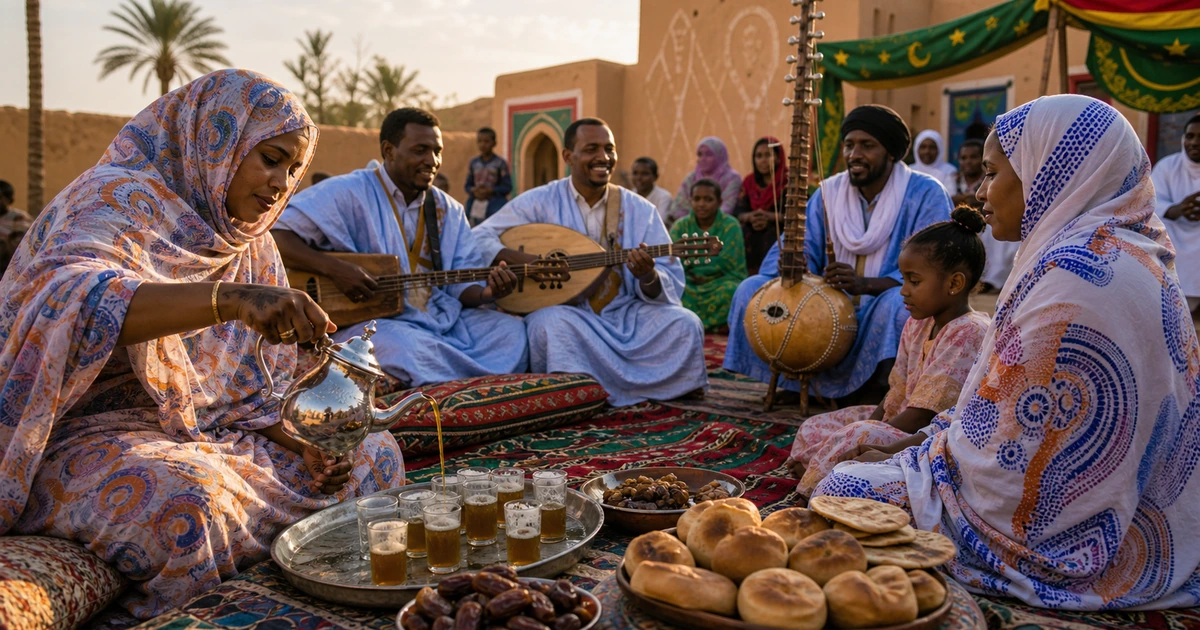
Visitors see flowing daraa robes, tea rituals, desert poetry and a national style that is quieter than many coastal West African celebrations. Families gather around rice, meat, dates and tea, while music, praise poetry and camel imagery connect the modern republic to nomadic memory.
Three rounds of sweet tea structure hospitality and conversation.
Why this day
28 November marks the day in 1960 when Mauritania became independent from France. The date created a sovereign state at the meeting point of the Maghreb and West Africa, with deep Saharan, Arab, Amazigh and sub-Saharan connections.
The day became the national independence celebration for a country whose identity is shaped by desert nomadism, Islamic scholarship, Moorish culture, Soninke, Wolof and Pulaar communities, and the difficult legacy of slavery and social hierarchy.
Today Independence Day is marked with official ceremonies, military parades, speeches, flags and cultural performances, especially in Nouakchott. Visitors see flowing daraa robes, tea rituals, desert poetry and a national style that is quieter than many coastal West African celebrations.
Across Mauritania, the day reflects life between city and desert. Families gather around rice, meat, dates and tea, while music, praise poetry and camel imagery connect the modern republic to nomadic memory.
Timeline
- 1904French colonial administration expands over Mauritanian territory
- 1960Mauritania gains independence from France
- 1991New constitution introduces multi-party politics
Key figures
Stay for the event
Check-in 27 Nov, check-out 29 Nov 2026 — 2 nights around 28 November 2026. Change the dates to stay longer.
AREA
Find stays in NouakchottGetting there
- Celebratednationwide
- CapitalNouakchott
- Time zoneGMT (UTC+0)
Host country
- Currency: Mauritanian ouguiya
- Language: Arabic
- Driving: on the right
- Capital: Nouakchott
- Phone: +222
- Emergency: 101
- Electricity: 220 V, 50 Hz, plugs C/E/F
What to eat
Fish and rice dish shared with Senegal, popular in coastal Mauritanian cooking.
Roasted lamb or goat served for weddings, holidays and major gatherings.
Camel is eaten grilled or stewed, especially in Saharan communities.
Rice with meat, vegetables and spices, common for family meals.
Oasis dates are served with tea and used in desert hospitality.
Steamed grains with meat or sauce, common in Moorish households.
What to drink
Strong sweet green tea poured from height in three small rounds.
Camel or cow milk drink, fresh or fermented, important in nomadic culture.
Cold hibiscus drink found in towns and family gatherings.
Culture & traditions
Three rounds of sweet tea structure hospitality and conversation.
Classical Arabic and Hassaniya poetry carry prestige and memory.
The old caravan town is known for manuscripts and Saharan scholarship.
The capital hosts military ceremonies and official Independence Day events.
Coming years
Mauritania National Day 2027
- Sunday 28 November 2027Next event date
Mauritania National Day 2028
- Tuesday 28 November 2028Event date
Mauritania National Day 2029
- Wednesday 28 November 2029Event date