
About the event
Why Malta celebrates 31 March Malta celebrates Freedom Day on 31 March — the date in 1979 when the last British military forces left the island, ending 179 years of British presence.
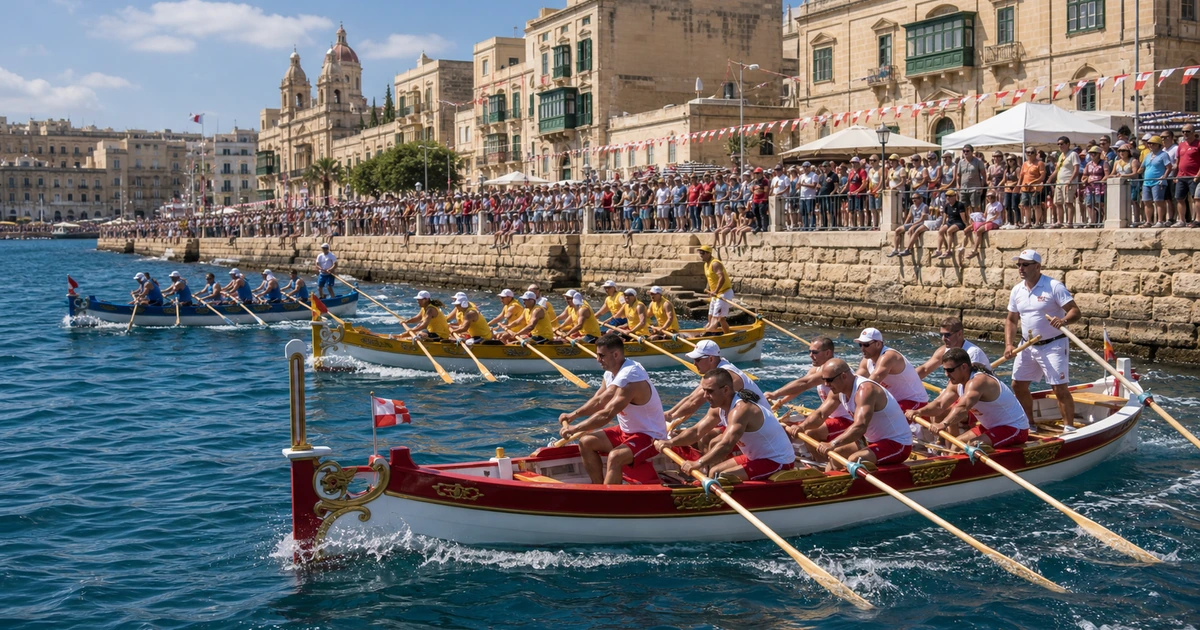
Traditional rowing boat races in Valletta's iconic harbour — the centrepiece of Freedom Day.
Why this day
Malta celebrates Freedom Day on 31 March — the date in 1979 when the last British military forces left the island, ending 179 years of British presence. Malta had gained political independence in 1964, but British military bases remained. The complete withdrawal of foreign troops in 1979 marked what many Maltese see as true freedom.
Malta's history is among the most layered in the Mediterranean. The islands have been ruled by the Phoenicians, Carthaginians, Romans, Arabs, Normans, Knights of St John, French and British in succession. Each left a mark on the language, architecture and culture. Maltese is a unique language — the only Semitic language written in Latin script — that reflects this millennia-long encounter of civilisations.
Freedom Day is marked with a regatta in the Grand Harbour of Valletta — traditional brightly painted rowing boats called dgħajjes race between the bastions. The harbour location is symbolic: it was at Malta's Grand Harbour that the last British ships departed in 1979. A ceremony at the Freedom Monument commemorates the departure.
Timeline
- 1530Knights of St John take possession of Malta from the Spanish crown
- 1964Malta gains independence from Britain
- 1979Last British troops leave Malta — Freedom Day established
Key figures
Stay for the event
Check-in 30 Mar, check-out 1 Apr 2027 — 2 nights around 31 March 2027. Change the dates to stay longer.
AREA
Find stays in VallettaGetting there
- Celebratednationwide
- CapitalValletta
- Time zoneCET (UTC+1)
Host country
- Currency: euro
- Language: English, Maltese
- Driving: on the left
- Capital: Valletta
- Phone: +356
- Emergency: 112
- Electricity: 230 V, 50 Hz, plugs G
What to eat
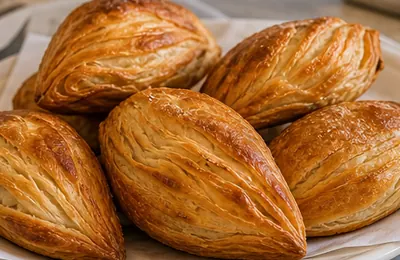 Pastizzi
Flaky pastry parcels filled with ricotta or mushy peas — Malta's most iconic street food, sold 24 hours a day.
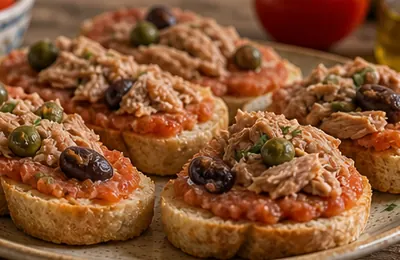 Ħobż biż-Żejt
Maltese bread rubbed with tomato, filled with tuna, olives, capers and vegetables — a daily lunch staple.
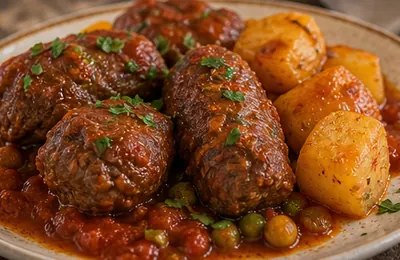 Braġoli
Thin beef olives stuffed with hard-boiled egg and bacon, braised in red wine — a festive Maltese dish.
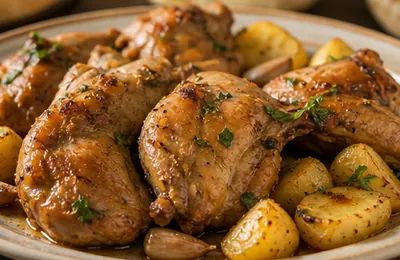 Fenek moqli
Fried rabbit — Malta's national meat dish, eaten on Sundays and at village festas.
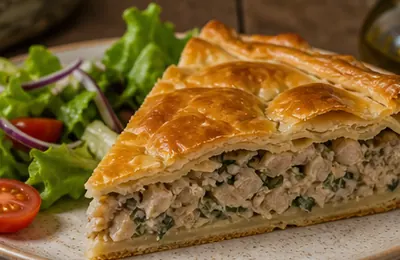 Torta tal-Lampuki
Flaky pastry pie filled with dolphin fish, spinach, olives and capers — made when lampuki are in season.
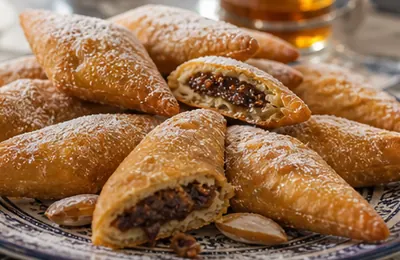 Imqaret
Deep-fried date pastry logs flavoured with anise and orange blossom — sold at village festas.
What to drink
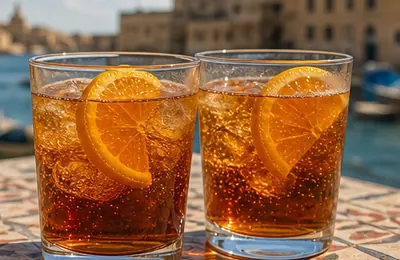 Kinnie
Bitter-sweet Maltese soda made from bitter oranges and herbs — the island's own soft drink brand.
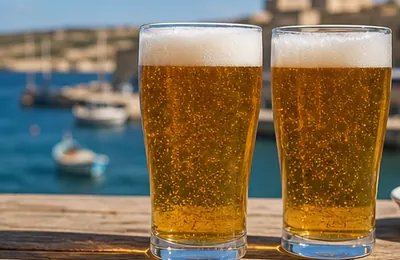 Cisk lager
Malta's national beer — brewed in Valletta since 1928, light and crisp in the Mediterranean heat.
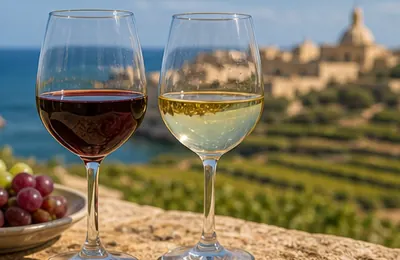 Maltese wine
Wines from the Gozitan hills and central Malta — Marsovin and Delicata produce internationally recognised reds.
Culture & traditions
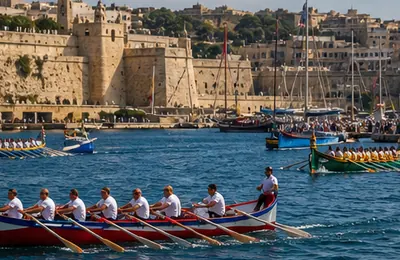 Grand Harbour regatta
Traditional rowing boat races in Valletta's iconic harbour — the centrepiece of Freedom Day.
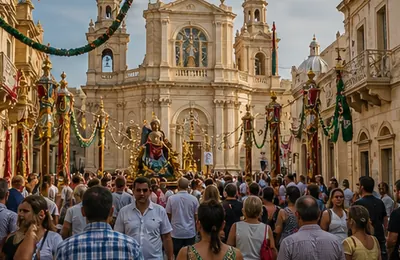 Village festas
Every Maltese village celebrates its patron saint with elaborate fireworks, street decorations and brass bands.
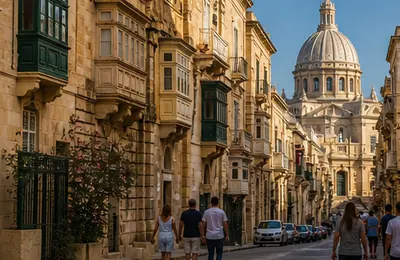 Valletta Baroque
The 16th-century capital designed by the Knights of St John — a UNESCO World Heritage city.
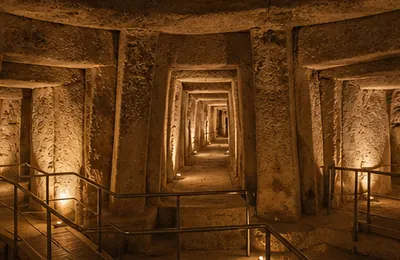 Hypogeum of Ħal Saflieni
Underground prehistoric temple complex from 3600 BC — one of the oldest underground structures in the world.
Coming years
Malta Freedom Day 2028
- Friday 31 March 2028Next event date
Malta Freedom Day 2029
- Saturday 31 March 2029Event date
Malta Freedom Day 2030
- Sunday 31 March 2030Event date