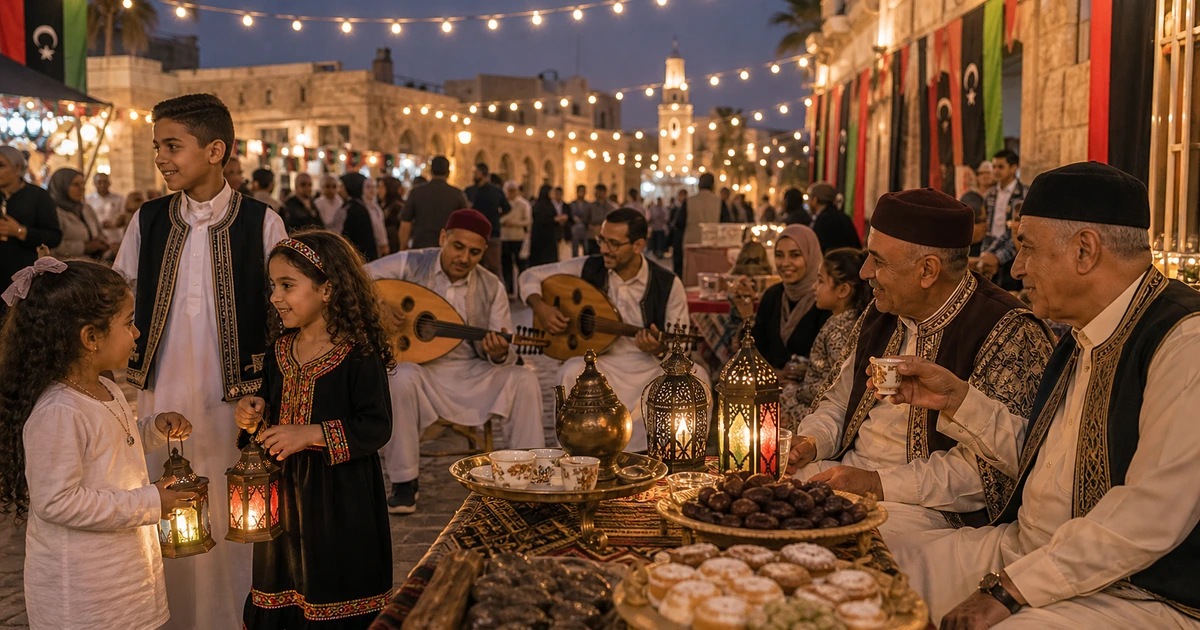
Libya National Day 2026


More National days
National days topic
Return to the National days index for related events.
About the event
Gaddafi's 1969 coup, the Jamahiriya period, the 2011 revolution and years of division all reshaped how Libyans relate to national symbols and anniversaries. Still, food, family visits, Amazigh and Arab traditions, desert hospitality and memories of monarchy and revolution all form part of the national picture.
Markets, mosques and Ottoman-era lanes frame Libya's coastal capital.
Why this day
24 December marks the day in 1951 when Libya became independent as the United Kingdom of Libya under King Idris. It was the first country to gain independence through the United Nations process, after Italian colonial rule and wartime administration.
The date became a national independence reference point, although Libya's later political history changed its public role. Gaddafi's 1969 coup, the Jamahiriya period, the 2011 revolution and years of division all reshaped how Libyans relate to national symbols and anniversaries.
Today the day is recognised as Independence Day, with official statements, flags and public events where security and politics allow. For visitors, Libya's national story is visible in Tripoli, Cyrene, Leptis Magna, desert routes and the Mediterranean coast.
Across Libya, celebration is complicated by regional and political division. Still, food, family visits, Amazigh and Arab traditions, desert hospitality and memories of monarchy and revolution all form part of the national picture.
Timeline
- 1951United Kingdom of Libya becomes independent under King Idris
- 1969Muammar Gaddafi seizes power in a military coup
- 2011Revolution ends Gaddafi's rule after civil war
Key figures
Stay for the event
Check-in 23 Dec, check-out 25 Dec 2026 — 2 nights around 24 December 2026. Change the dates to stay longer.
AREA
Find stays in TripoliGetting there
- Celebratednationwide
- CapitalTripoli
- Time zoneEET (UTC+2)
Host country
- Currency: Libyan dinar
- Language: Arabic
- Driving: on the right
- Capital: Tripoli
- Phone: +218
- Emergency: 190
- Electricity: 230 V, 50 Hz, plugs C/F/L
What to eat
Barley dough mound served with tomato lamb sauce and boiled eggs.
Couscous with lamb, chickpeas and onion sauce, common for gatherings.
Spiced lamb and tomato soup with mint, often served during Ramadan.
Fried potato slices stuffed with minced meat and herbs.
Soft wheat dough served with date syrup or honey for special occasions.
Stuffed sausage of rice, herbs and meat, made for large family meals.
What to drink
Strong sweet tea with mint or peanuts anchors hospitality.
Sweet almond drink served at weddings and festive occasions.
Milk blended with dates, reflecting desert produce and hospitality.
Culture & traditions
Markets, mosques and Ottoman-era lanes frame Libya's coastal capital.
The Roman city is one of North Africa's greatest archaeological sites.
Nafusa mountain communities preserve language, dress and festival traditions.
Tea, dates and tent gatherings remain powerful symbols of Libyan welcome.
Coming years
Libya National Day 2027
- Friday 24 December 2027Next event date
Libya National Day 2028
- Sunday 24 December 2028Event date
Libya National Day 2029
- Monday 24 December 2029Event date