Liberia National Day 2027


More National days
National days topic
Return to the National days index for related events.
About the event
The date is tied to freed and free-born Black settlers from the United States, but also to the much older societies already living along the West African coast. Its meaning is complex: independence created sovereignty, but it also left deep divisions between Americo-Liberian elites and Indigenous communities.
The capital hosts official events, speeches and thanksgiving services.
Why this day
26 July marks the day in 1847 when Liberia declared independence, becoming Africa's first republic. The date is tied to freed and free-born Black settlers from the United States, but also to the much older societies already living along the West African coast.
The day became Liberia's central national holiday because it marks a rare nineteenth-century African republic outside direct European colonial rule. Its meaning is complex: independence created sovereignty, but it also left deep divisions between Americo-Liberian elites and Indigenous communities.
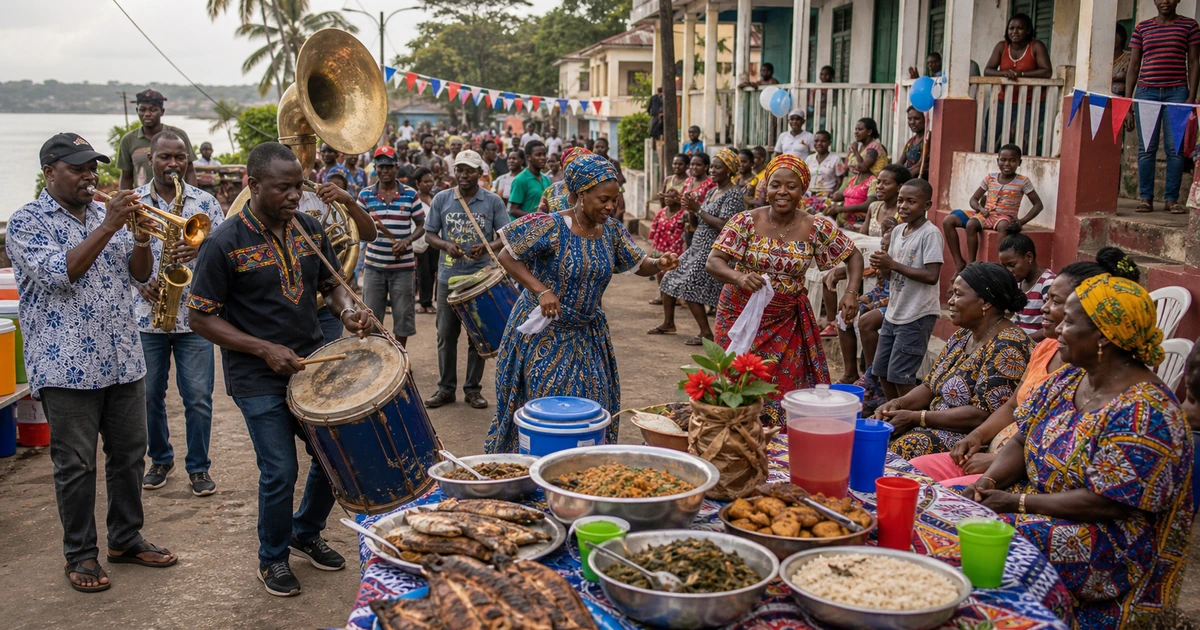
Today Independence Day is marked with official ceremonies, thanksgiving services, parades, speeches and cultural events, especially around Monrovia. Visitors see red-white-blue flags, church gatherings, marching bands and a national story that links Africa and the Atlantic world.
Across Liberia, the holiday is also social and diasporic. Families cook rice dishes, music plays, communities hold football matches and Liberians abroad use the date to reconnect with home.
Timeline
- 1822American Colonization Society settlement begins near Cape Mesurado
- 1847Liberia declares independence as Africa's first republic
- 2005Ellen Johnson Sirleaf elected as Africa's first female president
Key figures
Stay for the event
Check-in 25 Jul, check-out 27 Jul 2027 — 2 nights around 26 July 2027. Change the dates to stay longer.
AREA
Find stays in MonroviaGetting there
- Celebratednationwide
- CapitalMonrovia
- Time zoneGMT (UTC+0)
Host country
- Currency: Liberian dollar
- Language: English
- Driving: on the right
- Capital: Monrovia
- Phone: +231
- Emergency: 114
- Electricity: 120 V, 60 Hz, plugs A/B
What to eat
Tomato rice with chicken, beef or fish, common at Liberian celebrations.
Rich palm-nut sauce with meat or fish, served over rice.
Ground cassava leaves cooked with meat, fish and palm oil.
Bitterball stew with meat, fish and palm oil, loved for its intense flavour.
Cassava or plantain dough eaten with pepper soup or palm sauces.
Fried rice or flour dough balls served as sweet snacks.
What to drink
Homemade ginger drink served cold at family gatherings.
Fermented palm sap used socially in rural and urban settings.
Popular lager commonly served at bars and celebrations.
Culture & traditions
The capital hosts official events, speeches and thanksgiving services.
Coastal communities add maritime history, masks and dance to national culture.
Initiation societies remain important in cultural identity and social life.
Liberians abroad mark 26 July with food, music and community events.
Coming years
Liberia National Day 2028
- Wednesday 26 July 2028Next event date
Liberia National Day 2029
- Thursday 26 July 2029Event date
Liberia National Day 2030
- Friday 26 July 2030Event date