Lesotho National Day 2027


More National days
National days topic
Return to the National days index for related events.
About the event
The date returned sovereignty to a mountain kingdom whose identity had been shaped by Moshoeshoe I, diplomacy, cattle culture and the fortress landscape of Thaba Bosiu. Families gather, churches sing, horse culture appears in public events, and food such as papa, moroho and grilled meat turns the day into a community holiday.
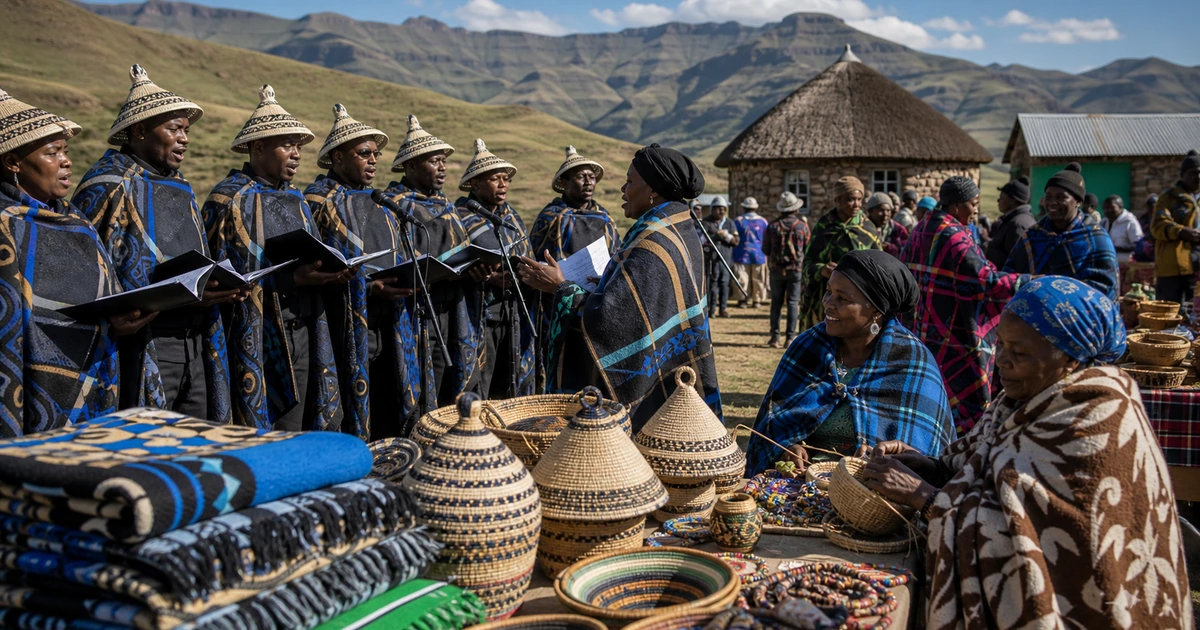
Distinctive wool blankets are worn as clothing and symbols of identity.
Why this day
4 October marks the day in 1966 when Basutoland became the independent Kingdom of Lesotho. The date returned sovereignty to a mountain kingdom whose identity had been shaped by Moshoeshoe I, diplomacy, cattle culture and the fortress landscape of Thaba Bosiu.
The day became the national celebration because Lesotho's statehood is unusually continuous: a kingdom preserved inside southern Africa, surrounded entirely by South Africa. Independence Day therefore honours both the modern state and the older Basotho nation that survived nineteenth-century wars.
Today the day is marked with official ceremonies, royal and government speeches, parades, choirs and cultural performances. In Maseru, visitors see Basotho blankets, mokorotlo hats, mounted horsemen and blue-white-green flags in a setting defined by mountains.
Across Lesotho, the celebration feels local and highland-based. Families gather, churches sing, horse culture appears in public events, and food such as papa, moroho and grilled meat turns the day into a community holiday.
Timeline
- 1824Moshoeshoe I builds the Basotho nation at Thaba Bosiu
- 1868Basutoland becomes a British protectorate
- 1966Lesotho gains independence from Britain
Key figures
Stay for the event
Check-in 3 Oct, check-out 5 Oct 2026 — 2 nights around 4 October 2026. Change the dates to stay longer.
AREA
Find stays in MaseruGetting there
- Celebratednationwide
- CapitalMaseru
- Time zoneSAST (UTC+2)
Host country
- Currency: Lesotho loti
- Language: English, Sotho
- Driving: on the left
- Capital: Maseru
- Phone: +266
- Emergency: 112
- Electricity: 220 V, 50 Hz, plugs M
What to eat
Firm maize porridge served with meat, greens or bean dishes.
Leafy greens cooked with onion, often eaten with papa.
Boiled beans and sorghum or maize, a filling Basotho staple.
Fermented sorghum porridge with a sour flavour, eaten warm or cool.
Sheep and goat meat are important in mountain food culture and celebrations.
Fried dough snacks sold at markets and roadside stalls.
What to drink
Traditional sorghum beer brewed for ceremonies and social gatherings.
Fermented maize porridge drink — slightly sour and thick, served cold at celebrations in Lesotho's highland villages.
Red bush tea is widely drunk across southern African homes.
Culture & traditions
Distinctive wool blankets are worn as clothing and symbols of identity.
The conical hat appears on the flag and in national dress.
The mountain stronghold of Moshoeshoe I is central to Basotho history.
Horse culture remains practical and symbolic in Lesotho's highlands.
Coming years
Lesotho National Day 2028
- Wednesday 4 October 2028Next event date
Lesotho National Day 2029
- Thursday 4 October 2029Event date
Lesotho National Day 2030
- Friday 4 October 2030Event date