Lebanon National Day 2026

More National days
National days topic
Return to the National days index for related events.
About the event
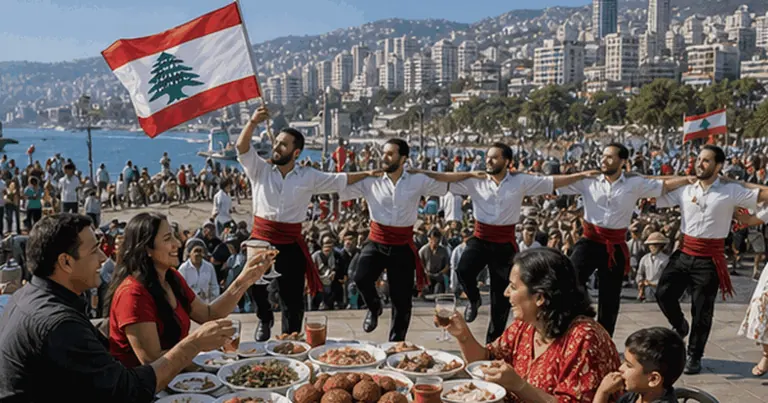
Families gather around mezze, grills, sweets and coffee, while music, neighbourhood life and diaspora connections give the national story warmth beyond formal ceremony. The date is linked to the release of Lebanese leaders imprisoned by French authorities after they moved to remove mandate restrictions from the constitution.
The capital hosts military and civic Independence Day events.
Why this day
22 November marks Lebanon Independence Day, commemorating the end of the French mandate in 1943. The date is linked to the release of Lebanese leaders imprisoned by French authorities after they moved to remove mandate restrictions from the constitution.
The day became Lebanon's central national holiday because it represents sovereignty, constitutional politics and the delicate balance between religious communities. Later civil war, occupation, reconstruction and crisis have made independence both cherished and fragile.
Today Independence Day is marked with military ceremonies, flags, school events, speeches and cultural programming, especially in Beirut. Visitors see cedar flags, army presence, mountain and coastal imagery, and a public mood that often mixes pride with political frustration.
Across Lebanon, the holiday is social and food-rich. Families gather around mezze, grills, sweets and coffee, while music, neighbourhood life and diaspora connections give the national story warmth beyond formal ceremony.
Timeline
- 1920Greater Lebanon proclaimed under French mandate
- 1943Independence leaders released and mandate rule ends
- 1989Taif Agreement helps end the civil war
Key figures
Stay for the event
Check-in 21 Nov, check-out 23 Nov 2026 — 2 nights around 22 November 2026. Change the dates to stay longer.
AREA
Find stays in BeirutGetting there
- Celebratednationwide
- CapitalBeirut
- Time zoneEET (UTC+2)
Host country
- Currency: Lebanese pound
- Language: Arabic, French
- Driving: on the right
- Capital: Beirut
- Phone: +961
- Emergency: 112
- Electricity: 220 V, 50 Hz, plugs A/B/C/D/G
What to eat
Parsley, bulgur, tomato and lemon salad with bright herbal flavour.
Bulgur and minced meat shaped raw, baked or fried.
Chickpea and tahini dip served with olive oil and pita.
Skewers of lamb, chicken and kafta cooked over charcoal.
Flatbread topped with za'atar, cheese or minced meat.
Layered pastry with nuts and syrup for festive sweets.
What to drink
Anise spirit mixed with water and served with mezze.
Bekaa Valley wines are among the region's most respected.
Small strong coffee served at visits and after meals.
Culture & traditions
The capital hosts military and civic Independence Day events.
The cedar tree links flag, mountains and ancient identity.
Line dancing brings weddings, festivals and national events together.
The ancient port city connects Lebanon to deep Mediterranean history.
Coming years
Lebanon National Day 2027
- Monday 22 November 2027Next event date
Lebanon National Day 2028
- Wednesday 22 November 2028Event date
Lebanon National Day 2029
- Thursday 22 November 2029Event date