Kyrgyzstan National Day 2027


More National days
National days topic
Return to the National days index for related events.
About the event
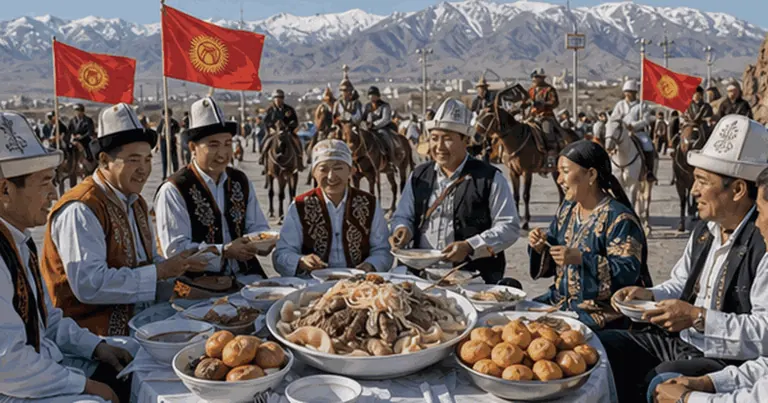
Families gather over beshbarmak, boorsok, tea and kumis, while horses and epic Manas memory give the celebration a nomadic feel. Visitors see red flags with the tunduk symbol, white kalpak hats, komuz music and mountain imagery.
Bishkek's main square hosts Independence Day concerts and ceremonies.
Why this day
31 August marks the day in 1991 when Kyrgyzstan declared independence from the Soviet Union. The date created a sovereign mountain republic whose identity draws on nomadic heritage, Turkic language, epic poetry and the Tian Shan landscape.
The day became the central national celebration because it marked a break from Soviet rule while leaving many Soviet-era institutions, borders and memories in place. Later revolutions made sovereignty, democracy and clan politics recurring themes in public life.
Today Independence Day is marked with concerts, speeches, horse games, flag displays and public events in Bishkek and regional centres. Visitors see red flags with the tunduk symbol, white kalpak hats, komuz music and mountain imagery.
Across Kyrgyzstan, the day connects city squares with jailoo pasture culture. Families gather over beshbarmak, boorsok, tea and kumis, while horses and epic Manas memory give the celebration a nomadic feel.
Timeline
- 1916Central Asian uprising against Russian imperial rule
- 1991Kyrgyzstan declares independence from the Soviet Union
- 2010New constitution follows revolution and unrest
Key figures
Stay for the event
Check-in 30 Aug, check-out 1 Sep 2026 — 2 nights around 31 August 2026. Change the dates to stay longer.
AREA
Find stays in BishkekGetting there
- Celebratednationwide
- CapitalBishkek
- Time zoneKGT (UTC+6)
Host country
- Currency: Kyrgyzstani som
- Language: Kyrgyz, Russian
- Driving: on the right
- Capital: Bishkek
- Phone: +996
- Emergency: 101
- Electricity: 220 V, 50 Hz, plugs C/F
What to eat
Boiled sheep with noodles and a rich broth — Kyrgyzstan's national dish, slow-cooked whole and served at celebrations.
Fried dough pockets filled with seasoned lamb and onion — the Central Asian pastry found across Kyrgyzstan's markets.
Thin dough filled with lamb and onion, pinched closed and steamed — the Kyrgyz manti eaten at family celebrations.
Handmade noodles with stewed lamb and vegetables — Kyrgyzstan's most widely eaten everyday noodle dish.
Dense wheat flatbread baked on a griddle — the Kyrgyz everyday bread eaten with honey, butter or meat broth.
Lamb liver fried with onion and spice — a Kyrgyz celebration appetiser eaten before the main beshbarmak feast.
What to drink
Fermented mare's milk — the Kyrgyz national drink with a sour, slightly effervescent character from the horse-herding nomadic culture.
Fermented cow's milk — lighter and more accessible than kumis, drunk daily across Kyrgyzstan's rural communities.
Strong black tea with milk and sometimes salt and butter — the Kyrgyz warming drink of high-altitude nomadic tradition.
Culture & traditions
Bishkek's main square hosts Independence Day concerts and ceremonies.
The monumental oral epic is a core symbol of Kyrgyz identity.
Horseback team game shows skill, strength and pastoral heritage.
White felt hats are a visible marker of Kyrgyz national dress.
Coming years
Kyrgyzstan National Day 2028
- Thursday 31 August 2028Next event date
Kyrgyzstan National Day 2029
- Friday 31 August 2029Event date
Kyrgyzstan National Day 2030
- Saturday 31 August 2030Event date