Kenya National Day 2026


More National days
National days topic
Return to the National days index for related events.
About the event
Nyama choma, music, church events, road trips and gatherings connect the official national story to everyday Kenyan social life. The same date also marks Kenya becoming a republic in 1964, so the holiday carries both independence and republican meaning.
Maasai jumping dance (adumu) — red-cloaked Maasai warriors compete to jump highest in a performance of strength and culture.
Why this day
12 December marks Jamhuri Day, the date when Kenya became independent from Britain in 1963. The same date also marks Kenya becoming a republic in 1964, so the holiday carries both independence and republican meaning.
The day became Kenya's most important national holiday because it follows the long struggle against colonial rule, including land dispossession, detention camps and the Mau Mau uprising. Independence is remembered through both state ceremony and the wider story of freedom fighters and civic nation-building.
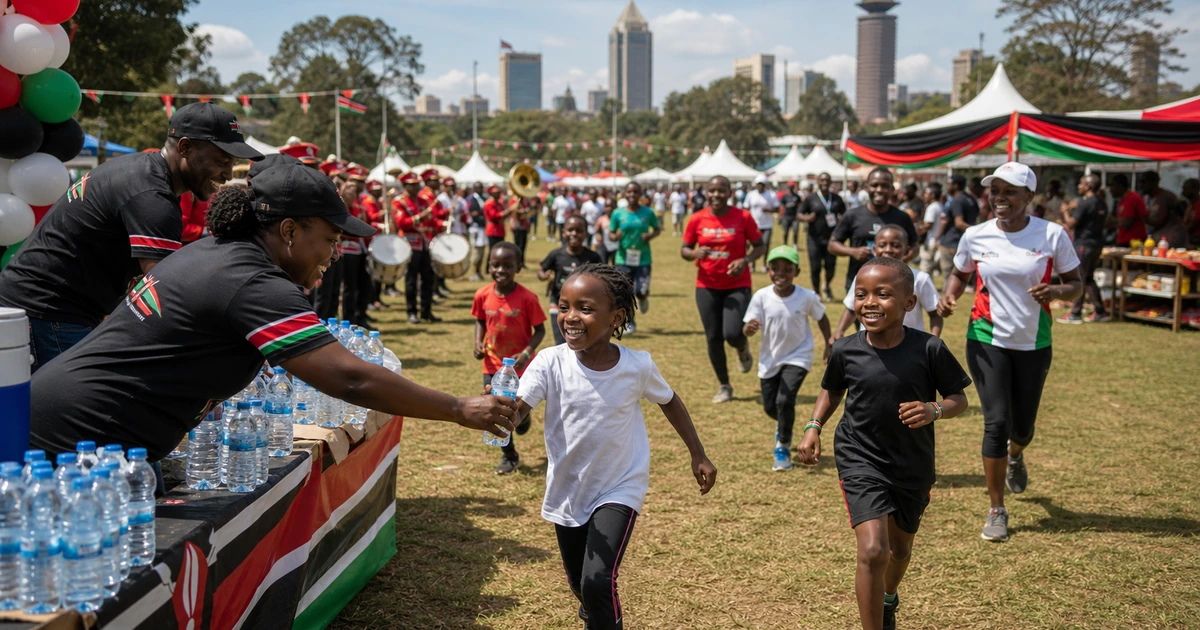
Today Jamhuri Day is marked with a major presidential ceremony, military parade, cultural performances and awards, often at a stadium in Nairobi. Visitors see flags, school groups, choirs, athletes, military bands and the red-black-green-white colours across the city.
Across Kenya, the day is also a family and travel holiday. Nyama choma, music, church events, road trips and gatherings connect the official national story to everyday Kenyan social life.
Timeline
- 1895British East Africa Protectorate established
- 1963Kenya gains independence from Britain on Jamhuri Day
- 1964Kenya becomes a republic one year after independence
Key figures
Stay for the event
Check-in 11 Dec, check-out 13 Dec 2026 — 2 nights around 12 December 2026. Change the dates to stay longer.
AREA
Find stays in NairobiGetting there
- Celebratednationwide
- CapitalNairobi
- Time zoneEAT (UTC+3)
Host country
- Currency: Kenyan shilling
- Language: English, Swahili
- Driving: on the left
- Capital: Nairobi
- Phone: +254
- Emergency: 112
- Electricity: 240 V, 50 Hz, plugs G
What to eat
Kenyan beef or lamb stew slow-cooked in an earthen pot — the definitive Kenyan celebration dish, fragrant with coriander and coconut.
Dense Kenyan cornmeal porridge — stiff and filling, eaten with sukuma wiki greens, beans or meat stew.
Collard greens sautéed in onion, tomato and oil — Kenya's most widely eaten vegetable side, accompanying ugali at every table.
Slow-cooked beef and offal stew in a rich sauce — popular at Kenyan celebrations and roadside nyama choma restaurants.
Kenyan grilled meat — whole goat or beef cuts roasted over coals and served with salt, onion and ugali.
Sweet and starchy Kenyan maize corn on the cob — roasted on charcoal and rubbed with lemon and salt at outdoor markets.
What to drink
Fresh sap tapped from the cocos palm in coastal Kenya — sweet and cloudy when fresh, a traditional Swahili coast drink.
Kenya's famous high-altitude tea — grown at 6,000 feet in the Great Rift Valley, producing a rich, aromatic brew drunk with milk.
Fermented sorghum beer — amber, lightly sour and drunk communally from a gourd with a long straw at celebrations.
Culture & traditions
Maasai jumping dance (adumu) — red-cloaked Maasai warriors compete to jump highest in a performance of strength and culture.
The Great Migration — 1.5 million wildebeest crossing the Mara River; Kenya's most spectacular natural spectacle.
Lamu Old Town — a living UNESCO Swahili town on the Kenyan coast, the oldest continuously inhabited settlement in East Africa.
Kenya's Safari Rally (Safari Rally Kenya) — a WRC round through the Great Rift Valley, one of the most dramatic motorsport events in the world.
Coming years
Kenya National Day 2027
- Sunday 12 December 2027Next event date
Kenya National Day 2028
- Tuesday 12 December 2028Event date
Kenya National Day 2029
- Wednesday 12 December 2029Event date