Japan National Day 2027


More National days
National days topic
Return to the National days index for related events.
About the event
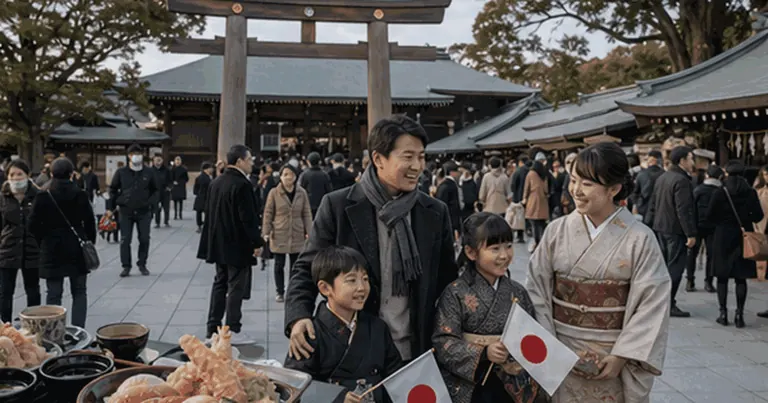
Families travel, visit shrines, shop or eat out, while the deeper national story sits in the imperial calendar, Shinto symbolism and the red sun flag. The day was celebrated before World War II as Kigensetsu, then abolished after the war and re-established in 1966 as National Foundation Day.
Japanese culture balances ancient court and shrine traditions with modern design, anime, technology, food craft and seasonal festivals. National Foundation Day is one small window into that long continuity.
Why this day
11 February marks National Foundation Day in Japan, based on the traditional date of Emperor Jimmu's accession in 660 BCE. The date is mythic rather than documentary, but it connects modern Japan to imperial origin stories and early state identity.
The day was celebrated before World War II as Kigensetsu, then abolished after the war and re-established in 1966 as National Foundation Day. Its modern form is intentionally quieter, encouraging reflection on the country rather than militarised celebration.
Today the day is a public holiday with flags, shrine visits, civic events and some nationalist ceremonies, but it is not a loud street festival. Visitors see a Japan where national identity is often expressed through restraint, seasonal ritual, food and local tradition.
Across Japan, the day may simply feel like a winter day off. Families travel, visit shrines, shop or eat out, while the deeper national story sits in the imperial calendar, Shinto symbolism and the red sun flag.
Timeline
- 660 BCETraditional accession date of Emperor Jimmu
- 1947Post-war constitution redefines emperor and state
- 1966National Foundation Day re-established as public holiday
Key figures
Stay for the event
Check-in 10 Feb, check-out 12 Feb 2027 — 2 nights around 11 February 2027. Change the dates to stay longer.
AREA
Find stays in TokyoGetting there
- Celebratednationwide
- CapitalTokyo
- Time zoneJST (UTC+9)
Host country
- Currency: Japanese yen
- Language: Japanese
- Driving: on the left
- Capital: Tokyo
- Phone: +81
- Emergency: 110 / 119
- Electricity: 100 V, 50/60 Hz, plugs A
What to eat
Vinegared rice with fish or vegetables, Japan's best-known food globally.
Seafood or vegetables fried in a light crisp batter.
Buckwheat noodles served hot or cold, often linked to seasonal rituals.
Grilled chicken skewers served at casual gatherings and festivals.
Rice balls filled with salmon, plum or kelp for portable eating.
Pounded rice cakes used in seasonal and ceremonial sweets.
What to drink
Sencha and matcha carry everyday and ceremonial importance.
Rice wine used for toasts, shrine rituals and festive meals.
Marble-stopper soda associated with festivals and nostalgia.
Culture & traditions
Some people mark the day with prayers at Shinto shrines.
The holiday is tied to Japan's mythic first emperor.
Flags appear at public buildings and some civic events.
Japanese public culture often expresses identity through season and ceremony.
Coming years
Japan National Day 2028
- Friday 11 February 2028Next event date
Japan National Day 2029
- Sunday 11 February 2029Event date
Japan National Day 2030
- Monday 11 February 2030Event date