Ivory Coast National Day 2027

More National days
National days topic
Return to the National days index for related events.
About the event
Ivory Coast's national day marks independence from France on 7 August 1960. Celebrations are centred on Yamoussoukro, the country's political capital, and Abidjan, its largest city and commercial centre, with military parades and civic ceremony held nationwide.
The economic capital supplies concerts, nightlife and public holiday energy.
Why this day
7 August marks the day in 1960 when Cote d'Ivoire became independent from France. The date is tied to Felix Houphouet-Boigny, the country's first president, who led the transition from French colony to sovereign West African republic.
The day became the national celebration of a country that soon built one of West Africa's strongest economies on cocoa, coffee, ports and migration. It also carries the memory of later political crises, making unity and civic stability recurring themes in official ceremonies.
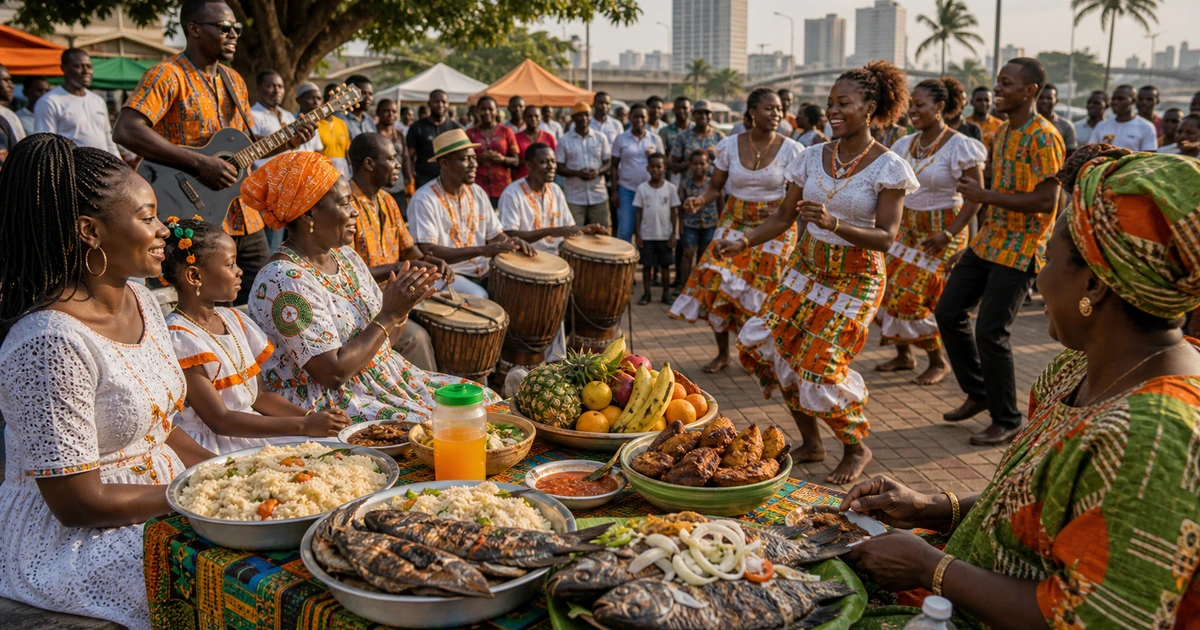
Today Independence Day is marked with parades, official speeches, music and cultural performances, often rotating between major cities. Abidjan supplies the energy, while Yamoussoukro gives the state ceremony a formal capital setting.
Across the country, the day feels urban, musical and food-rich: zouglou and coupé-décalé, grilled fish, attiéké, bright orange-white-green flags and family gatherings all sit beside the official programme.
Timeline
- 1893Cote d'Ivoire becomes a French colony
- 1960Independence from France proclaimed under Felix Houphouet-Boigny
- 1983Yamoussoukro becomes the official political capital
Key figures
Stay for the event
Check-in 6 Aug, check-out 8 Aug 2027 — 2 nights around 7 August 2027. Change the dates to stay longer.
AREA
Find stays in AbidjanGetting there
- Celebratednationwide
- CapitalYamoussoukro
- Time zoneGMT (UTC+0)
Host country
- Currency: West African CFA franc
- Language: French
- Driving: on the right
- Capital: Yamoussoukro
- Phone: +225
- Emergency: 110
- Electricity: 230 V, 50 Hz, plugs C/E
What to eat
Fermented cassava couscous with grilled fish, onions and chilli sauce.
Attiéké served with fried tuna, tomato, onion and hot pepper.
Chicken stew cooked slowly with vegetables in a sealed pot.
Fried ripe plantains served with chilli sauce and grilled meat or fish.
Palm-nut sauce with meat or fish, eaten with rice or foutou.
Pounded plantain and cassava served with rich sauces.
What to drink
Cold hibiscus drink popular at family events and street stalls.
Palm wine drunk fresh in villages and informal gatherings.
Popular lager commonly served in Ivorian bars and restaurants.
Culture & traditions
The economic capital supplies concerts, nightlife and public holiday energy.
The vast basilica is a striking symbol of Houphouet-Boigny's capital project.
Student-born urban music gives Ivorian celebrations a distinctive voice.
Western and central communities preserve masquerades used in ceremonies and festivals.
Coming years
Ivory Coast National Day 2028
- Monday 7 August 2028Next event date
Ivory Coast National Day 2029
- Tuesday 7 August 2029Event date
Ivory Coast National Day 2030
- Wednesday 7 August 2030Event date