
Greek Independence Day 2027


More National days
National days topic
Return to the National days index for related events.
About the event
Why Greece celebrates 25 March On 25 March 1821, the Greek War of Independence against Ottoman rule traditionally began when Bishop Germanos of Patras raised the flag of revolution at the Monastery of Agia Lavra in the Peloponnese.
The Parthenon and the Acropolis of Athens — the most recognisable ancient monument in the world, central to Greek identity.
Why this day
On 25 March 1821, the Greek War of Independence against Ottoman rule traditionally began when Bishop Germanos of Patras raised the flag of revolution at the Monastery of Agia Lavra in the Peloponnese. The date — also the Feast of the Annunciation in the Orthodox calendar — was chosen as the symbolic starting point of the uprising that would eventually lead to Greek independence.
Greece had been under Ottoman rule since the fall of Constantinople in 1453 — nearly 400 years. The independence struggle drew support from philhellenes across Europe, including the poet Lord Byron who died in Greece fighting for the cause. The successful conclusion of the war in 1830 inspired independence movements across the world.
Independence Day is marked with a large military parade in Athens along Vassilissis Sofias avenue, attended by the President and Prime Minister. Student parades take place in cities, towns and villages across the country. The day coincides with the Orthodox Feast of the Annunciation, giving it both a patriotic and religious character.
Timeline
- 1821Greek War of Independence begins — Bishop Germanos raises flag at Agia Lavra
- 1827Battle of Navarino — Britain, France and Russia destroy Ottoman fleet
- 1830London Protocol — Greek independence internationally recognised
Stay for the event
Check-in 24 Mar, check-out 26 Mar 2027 — 2 nights around 25 March 2027. Change the dates to stay longer.
AREA
Find stays in AthensGetting there
- Celebratednationwide
- CapitalAthens
- Time zoneEET (UTC+2)
Host country
- Currency: euro
- Language: Greek
- Driving: on the right
- Capital: Athens
- Phone: +30
- Emergency: 112
- Electricity: 230 V, 50 Hz, plugs C/F
What to eat
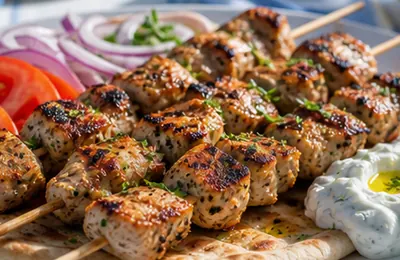 Souvlaki
Skewered grilled pork or chicken in pitta with tomato, onion and tzatziki — the definitive Greek street food.
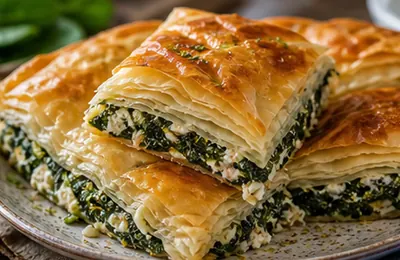 Spanakopita
Flaky filo pastry filled with spinach, feta and egg — eaten at bakeries and family tables across Greece.
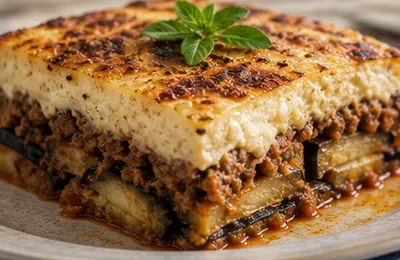 Moussaka
Layered aubergine, potato, spiced minced beef and béchamel — Greece's most internationally known dish.
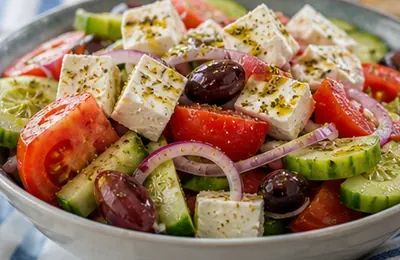 Horiatiki salad
Greek village salad of tomato, cucumber, onion, olives and a thick slab of feta — dressed only with olive oil.
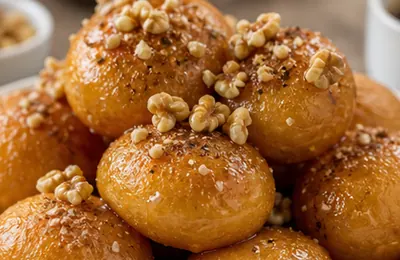 Loukoumades
Honey-soaked deep-fried dough balls with cinnamon and sesame — sold at street stalls during celebrations.
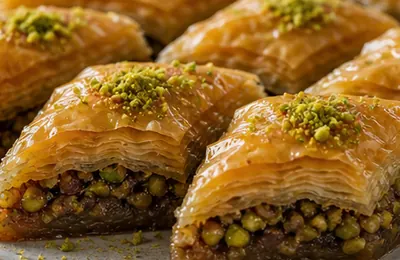 Baklava
Layers of filo pastry with walnuts and pistachios soaked in honey syrup — a shared Ottoman and Greek sweet.
What to drink
 Ouzo
OuzoAnise-flavoured spirit — drunk with ice and water at seaside tavernas alongside seafood mezze.
 Retsina
White wine flavoured with pine resin — unique to Greece and among the world's most ancient wine styles.
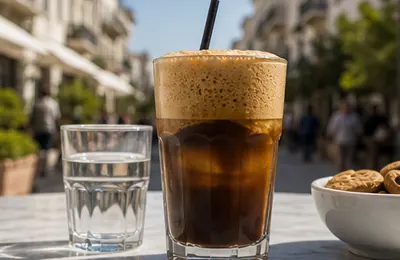 Frappe
Foamy instant iced coffee shaken with water and milk — invented in Thessaloniki in 1957 and beloved across Greece.
Culture & traditions
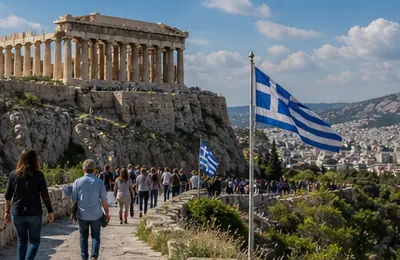 Acropolis
The Parthenon and the Acropolis of Athens — the most recognisable ancient monument in the world, central to Greek identity.
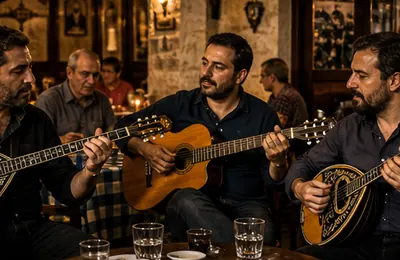 Rebetiko music
UNESCO-listed Greek urban blues — born in the port cities of the early 20th century, now a national treasure.
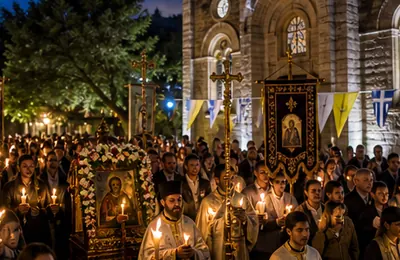 Easter celebrations
Greek Orthodox Easter is the most important celebration of the year — midnight liturgies, fireworks and lamb on the spit.
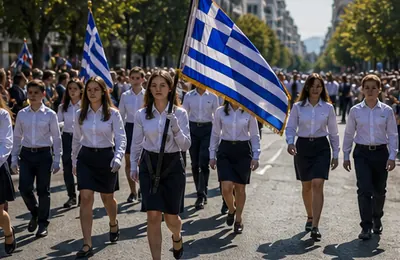 Student parades
School children in traditional dress parade through every Greek city and village on 25 March.
Coming years
Greek Independence Day 2028
- Saturday 25 March 2028Next event date
Greek Independence Day 2029
- Sunday 25 March 2029Event date
Greek Independence Day 2030
- Monday 25 March 2030Event date