Ghana National Day 2027


More National days
National days topic
Return to the National days index for related events.
About the event
Kwame Nkrumah framed Ghana's independence as inseparable from the liberation of the whole continent, and Accra became a political and cultural centre for anti-colonial movements across Africa and the diaspora.
Kente woven silk and cotton textile — the most recognisable African fabric, woven in Bonwire near Kumasi, worn at national events worldwide.
Why this day
6 March marks the day in 1957 when the Gold Coast became independent as Ghana. It was the first sub-Saharan African colony to break from European rule, making the date a landmark not only for Ghanaians but for the wider African independence movement.
The day quickly became a symbol of Pan-African possibility. Kwame Nkrumah framed Ghana's independence as inseparable from the liberation of the whole continent, and Accra became a political and cultural centre for anti-colonial movements across Africa and the diaspora.
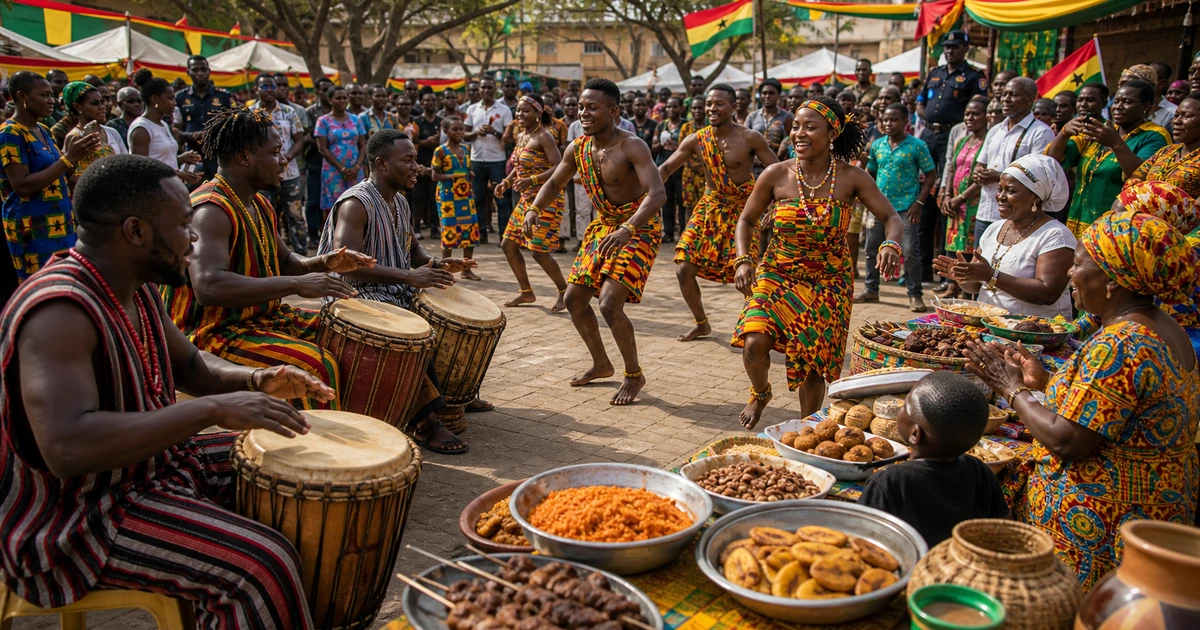
Today Independence Day is marked with parades, school marches, official speeches, music and flags, especially around Accra. Visitors see kente colours, brass bands, military display, church gatherings and a public mood that connects national pride with Pan-African memory.
Across Ghana, the celebration is also social: families gather, radio plays highlife and hiplife, and food tables move between jollof rice, grilled fish, kelewele and chilled drinks. The day feels civic, musical and warmly public.
Timeline
- 1471Portuguese traders reach the Gold Coast coast
- 1957Ghana becomes the first sub-Saharan colony to gain independence
- 1960Republic proclaimed with Kwame Nkrumah as president
Key figures
Stay for the event
Check-in 5 Mar, check-out 7 Mar 2027 — 2 nights around 6 March 2027. Change the dates to stay longer.
AREA
Find stays in AccraGetting there
- Celebratednationwide
- CapitalAccra
- Time zoneGMT (UTC+0)
Host country
- Currency: Ghanaian cedi
- Language: English
- Driving: on the right
- Capital: Accra
- Phone: +233
- Emergency: 191
- Electricity: 230 V, 50 Hz, plugs D/G
What to eat
Fermented cassava dough ball served with light soup or groundnut soup — Ghana's most widely eaten staple, pulled apart by hand at the table.
Red stew of tomatoes, onion and palm oil with beef or fish — the base sauce of Ghanaian cooking, eaten with rice or fufu.
Grilled tilapia from the Volta Lake seasoned with shito pepper sauce — served at every outdoor celebration along the Ghanaian coast.
Young taro leaves simmered with onion, tomatoes and protein in a thick, nutritious stew — a Ghanaian coastal and Akan tradition.
Grilled plantain sold from charcoal stoves on Accra's streets — eaten plain or with groundnut paste as a quick meal.
Cornmeal porridge cooked to a stiff consistency — a Ghanaian staple eaten with groundnut soup or okra stew.
What to drink
Fresh sap from the oil palm — tapped at dawn and drunk throughout the morning before it fully ferments in Ghana's highland palm belt.
Deep crimson hibiscus infusion — refreshingly tart, mixed with ginger and sweetened, served at Ghana's outdoor celebrations.
Traditional fermented sorghum or maize beer — golden, lightly sour and drunk communally from calabash gourds.
Culture & traditions
Kente woven silk and cotton textile — the most recognisable African fabric, woven in Bonwire near Kumasi, worn at national events worldwide.
The stool of the Ashanti King — a sacred golden throne symbol of Ashanti sovereignty, displayed at the Manhyia Palace Museum.
Ghana's March 6 independence day celebrations — the first Black African independence from European rule, led by Kwame Nkrumah.
Panafest and Emancipation Day — annual events in Ghana inviting the African diaspora back to the motherland, marked with ceremonies at Cape Coast Castle.
Coming years
Ghana National Day 2028
- Monday 6 March 2028Next event date
Ghana National Day 2029
- Tuesday 6 March 2029Event date
Ghana National Day 2030
- Wednesday 6 March 2030Event date